


Tell Us About Yourself
Keeping the Skies Safe
The Bachelor of Science in Aviation Safety teaches students how to identify hazards, manage risk, lead safety management systems and prepare for challenges. Students will learn to think critically and anticipate the needs of a dynamic and ever-changing industry.Embry‑Riddle Aeronautical University is an established leader in aviation safety education, including the Boeing Center for Aviation and Aerospace Safety on our Daytona Beach, Florida, campus and the Robertson Safety Institute on our Prescott, Arizona, campus.

What You'll Learn
In 120 credit hours (40 courses), our experienced and specialized faculty will guide you through the intricacies of aviation safety. You will learn about the key pillars of aviation operations, including maintenance, air traffic control, airport operations and flight operations, along with subjects critical to safety, such as weather, accident investigation, human factors and safety management systems.
The program also focuses on safety leadership, ethics and new areas of emphasis in aviation safety, like uncrewed and autonomous systems, data science and crisis communications.
Key Benefits

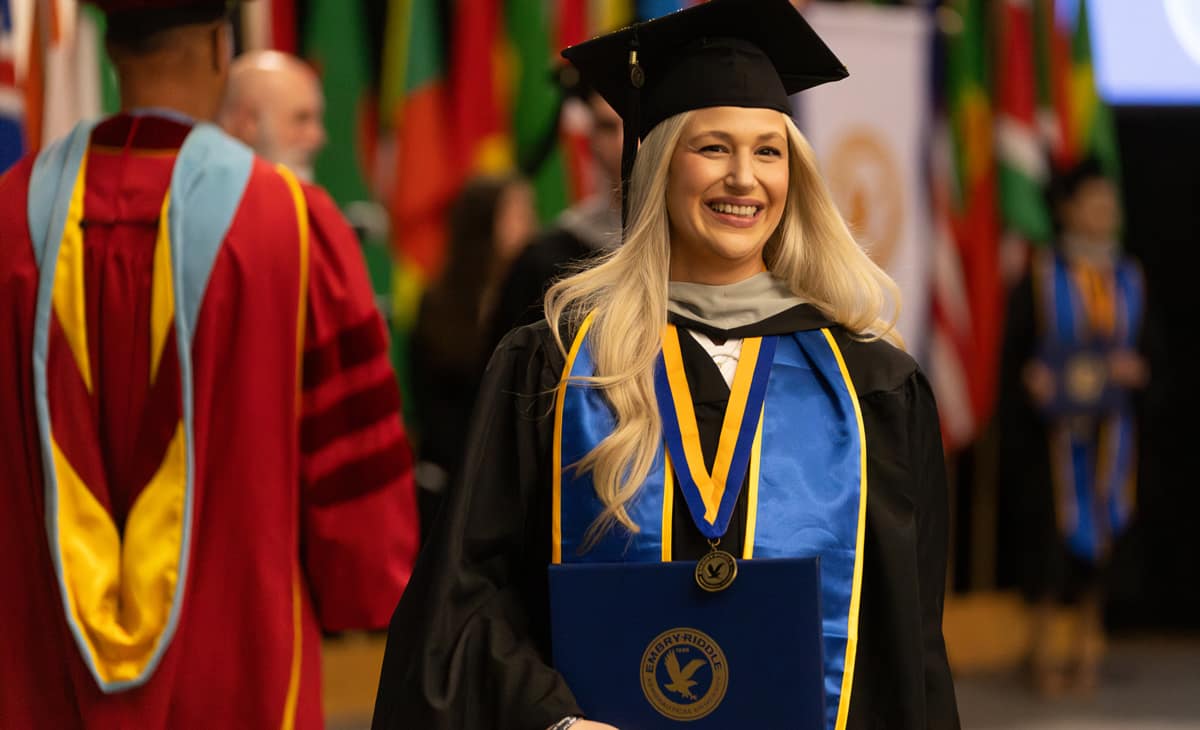

Program Outcomes
Earning a B.S. in Aviation Safety at Embry‑Riddle not only opens doors to employment but also offers the opportunity to pursue further education through the combined program pathway — allowing you to begin graduate-level courses in your final semester and complete the M.S. in Aviation Safety.
Potential Employers
|
Potential Careers
|

Upcoming Start Dates
Embry-Riddle Worldwide offers multiple start dates a year to bring you the most flexible online learning experience.
Next term begins January 11, 2027!
Additional upcoming terms:
- February 8, 2027
- March 22, 2027
Embry-Riddle By the Numbers


