
141-150 of 282 results
-
NASA’s Embry-Riddle High-Altitude Science Experiment Rig (ERHASER)
PI Pedro LLanos
CO-I Sathya Gangadharan
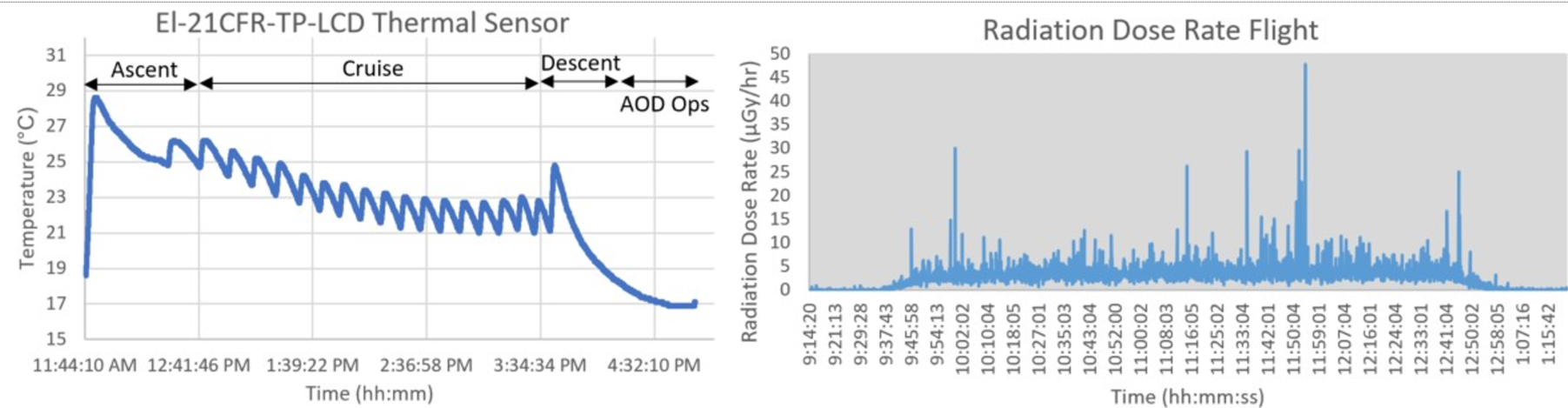
The purpose of this study aboard the NASA’s Airborne Science Program WB-57 aircraft was to assess the effect of radiation on murine naïve and activated T lymphocytes (T cells) and to test the effectiveness of thermal, radiation and flight tracking technology in biological scientific payloads. Flight cells were kept under proper environmental conditions by using an active thermal system, whereas the levels of radiation were measured by NASA’s Timepix radiation sensor during ascent, cruise at 60,000 feet, and descent.
Exposure to space radiation may place astronauts at significant health risks. This is an under-investigated area of research and therefore more knowledge is needed to better plan long-term space missions. We cultured cells in specific cytokines known to increase their viability and exposed them to either flight or had them as ground controls. In addition, an Automatic Dependent Surveillance-Broadcast (ADS-B) device was utilized to track the state vector of the aircraft during flight. The aims of this pilot research study were:
Aim 1: The first aim was to study the position of the aircraft using the ADS-B device for subsonic or supersonic flights through triangulation from communication nodes along the Gulf of Mexico, which had never done before. We aimed to get insights into some challenges the Federal Administration Aviation (FAA) is facing with integrating the newly emerging era of suborbital space vehicles into the National Air Space.
Aim 2: The second objective was to test the effects of radiation using the Timepix, a sensor that had flown on NASA’s Exploration Flight Test (EFT)-1 On December 5, 2014, and that had never flown before aboard this aircraft to study the radiation levels at 60,000 ft.
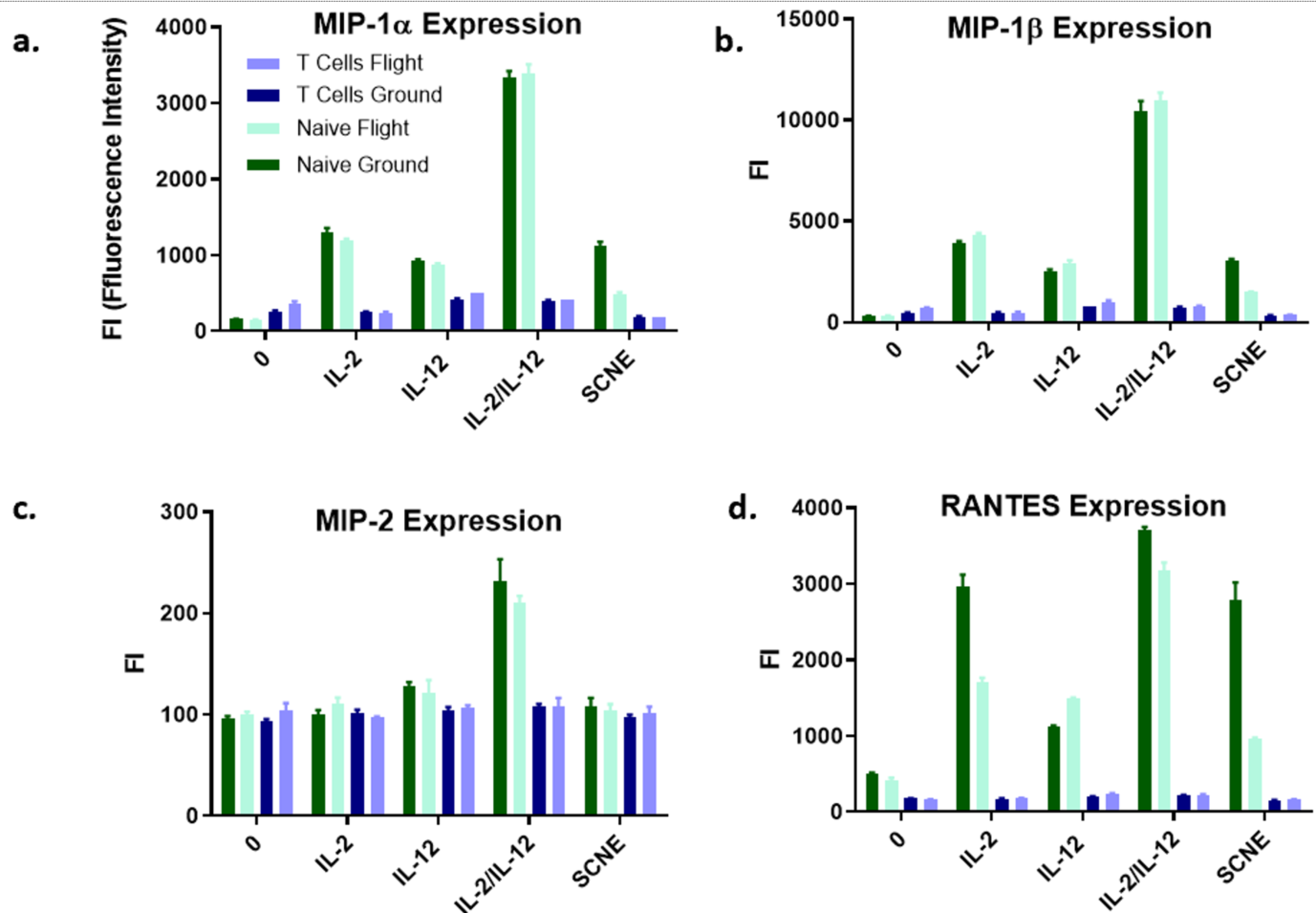
Aim 3: Next, we wanted to assess the radiation levels on the immune cells, also called T cells. We used both naïve and activated murine T cells, which were supplemented with cytokines IL-2 and IL-12, as well as treated with the novel supercritical CO2 extract of neem tree Azadirachta indica (SCNE). Interleukin-2 (IL-2) is a potent T cell growth factor used for T cell expansion and treatment of several types of cancer [23]. IL-12 is involved in the differentiation of naive T cells into the T helper cells. It is also known as a T cell-stimulating factor, and a promising agent in cancer immunotherapy [24]. These two cytokines facilitate their effect by targeting the immune system. We sought to investigate whether exposure to radiation and other flight stressors would have any effect on these cells, especially at the 60,000 feet, where peak galactic cosmic rays (GCR) scattering of secondary particles occurs. Given the cytokines' ability to alter the cellular processes and the role of supercritical extract as the natural compound with pluripotent properties, we wanted to test whether supplementing cells with these additives would rescue the cells of radiation damage. We performed the phenotypic analysis of the cells and assessed their ability to release cytokines.
Aim 4: The fourth objective included the development of an Environment Control Life Support System (ECLSS) NanoLab, which could be used to host and sustain the cells at the desired temperature while other variables are being tested.
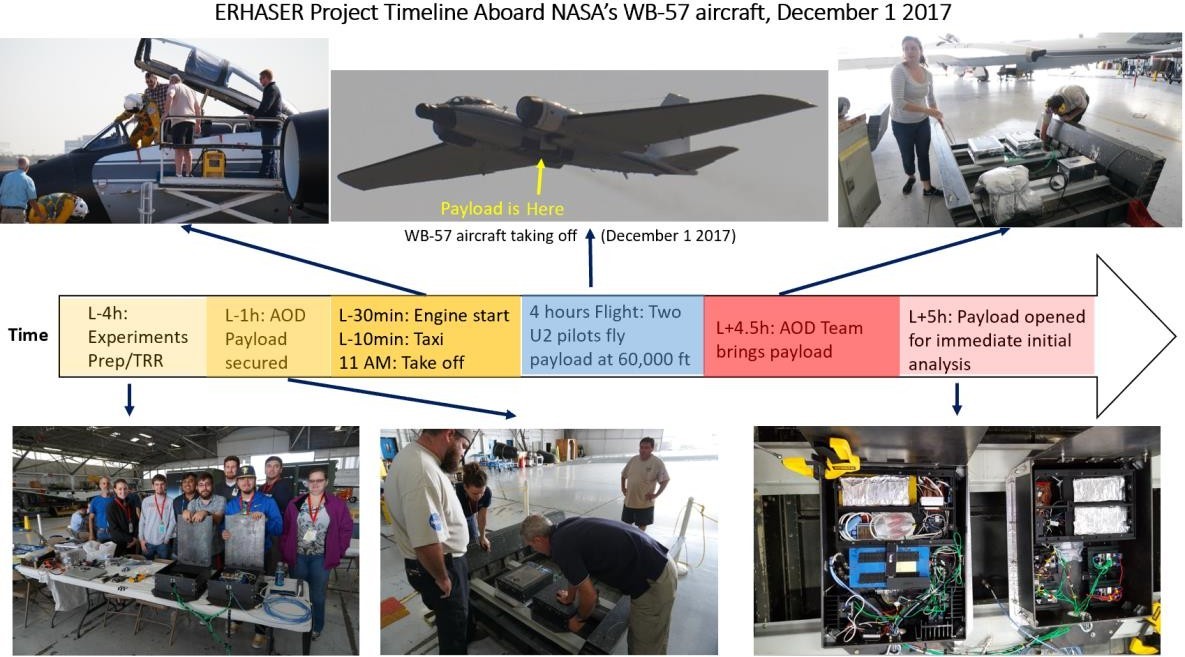
Below: Timeline of the airborne research experiment.
Below left: Temperature profile during flight. Below right: Total radiation dose during flight.
Below: Example of effects of flight on the expression of cytokines of T cells and Naïve cells.
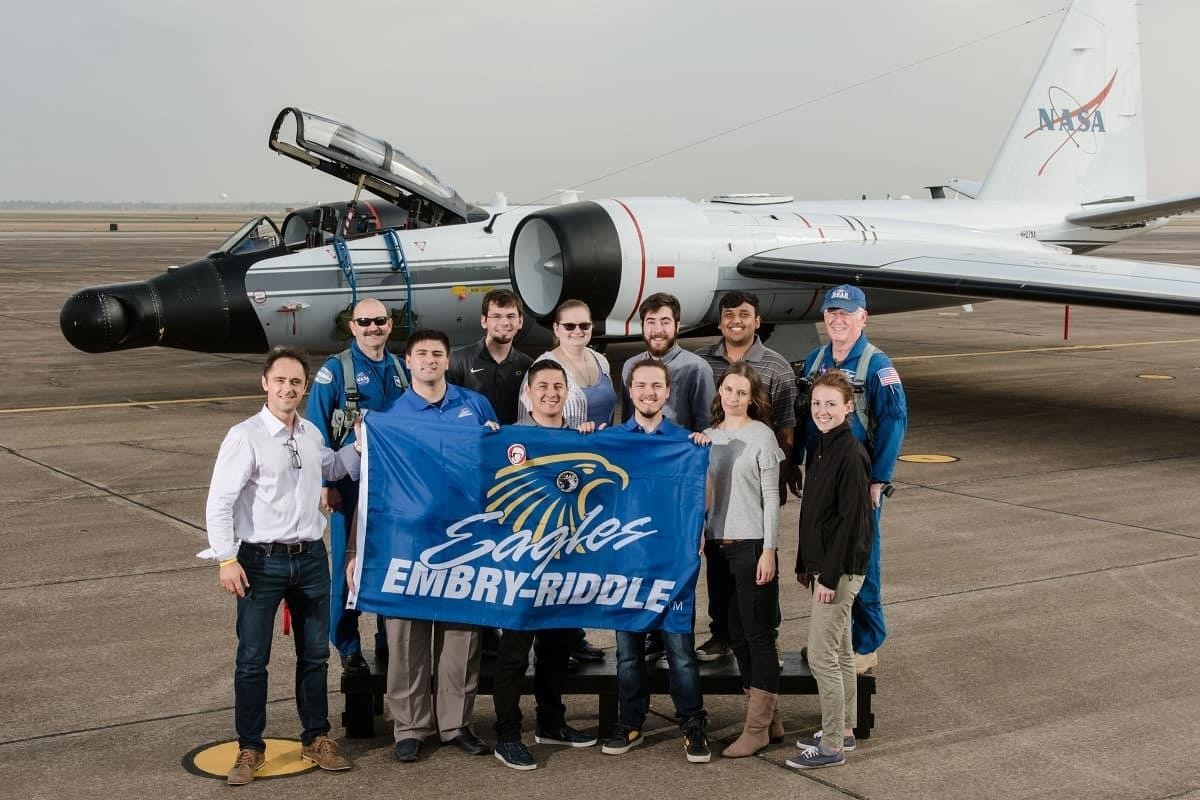
Below: ERAU team picture at NASA’s Ellington Field, Houston, Texas, 2019.
Categories: Faculty-Staff
-
REU Site: Exploring Aerospace Research at the Intersection of Mechanics, Materials Science, and Aerospace Physiology
PI Foram Madiyar
CO-I Alberto Mello
This Project is founded by National Science Foundation, under REU site. This project aims to educate students and promote scientific research in materials and aerospace science that encompasses not only building lighter and smarter materials for aerospace applications but also understanding the impact of the space environment on physiological and biological changes.
This Site will focus on multidisciplinary research in aerospace engineering, chemistry, and applied space biology with a goal of improving future space materials science and human diagnostic technology by exposing students to the challenges in these areas and the research going on to solve them. Undergraduate students for a ten-week summer will be recruited for the program. The student recruitment will start in Nov 2021 and the first summer research will be held in the period of May 16 to July 18, 2022.
The ERAU-REU program is dedicated to the ideals of diversity, equity, accessibility, and inclusion and we ensure a safe and comfortable environment for all scholars. Please contact us if you have any questions or concerns about the housing accommodations or other aspects of the program.
Students from underrepresented groups in the sciences, veterans, disabled, or are early in their undergraduate coursework (rising sophomores or juniors) are especially encouraged to apply.
Research Areas:
1 - Additive Manufacturing of Shape-Stabilized Phase-Change Materials (PCMs)
Mentor: Prof. Sandra Boetcher (https://faculty.erau.edu/Sandra.Boetcher)
The goal of the proposed research is to manufacture shape-stabilized PCMs via additive manufacturing.
2 - Space Radiation: Study of Intracellular Reactive Oxygen Species
Mentor: Prof. Hugo Castillo (https://faculty.erau.edu/Hugo.Castillo)
The goal of this project is to produce a standardized technique to measure the intracellular concentration of ROS in different species of bacteria and yeast, in relation to chronic exposure to sub-lethal doses of ionizing radiation using a low-dose gamma irradiator allowing to quantify the oxidative stress status of the cell concerning DNA damage.
3 - Investigating Micro- and Nano-Plastics in the Confined Environment of Space Flight.
Mentor: Prof. Marwa El-Sayed (https://faculty.erau.edu/Marwa.ElSayed)
The proposed study aims to characterize atmospheric MNP in indoor environments. The goals of the study are 1) identification of the sizes, shapes and size distribution of MNP in the atmosphere, 2) characterization of the chemical composition of atmospheric MNP, 3) determination of the degradation processes and 4) identification of the health issues associated with these particles.
4 - Investigation of Space Biomechanics and Additive Manufacturing of the Orthopedics
Mentor: Prof. Victor Huayamave (https://faculty.erau.edu/Victor.Huayamave)
The participants will learn about (1) current state of space biomechanics research, (2) segmenting anatomical images to develop finite element models, and (3) 3D printed components using additive manufacturing. The computational pipeline will be introduced to the predictive power of the FEM to assess the structural integrity of the hip joint under microgravity conditions.
5 - Fabrication of a Flexible, Stretchable, and Self-Healable Platform for Aerospace Applications
Mentors: Prof. Foram Madiyar, Prof. Daewon Kim (https://faculty.erau.edu/Foram.Madiyar, https://faculty.erau.edu/DaeWon.Kim)
The goal of this project is to investigate the use of polymers not only having tunable electrical and thermal properties, but also reversible bond chemistry that imparts materials high stretchability, exceptional toughness, and self-healability.
6 - On-Site Biomarker Sensing using Flexible Transistors on Skin
Mentor: Prof. Foram Madiyar (https://faculty.erau.edu/Foram.Madiyar)
The goal of the project is to design a wearable technology for the real-time screening, diagnosis and multiplex detection of different biomarkers.
7 - Biofidelic Piezoresistive Nanocomposite Multiscale Analysis
Mentor: Prof. Sirish Namilae (https://faculty.erau.edu/Sirish.Namilae)
In the proposed research, we will further engineer the electro-mechanical response of the structure through (a) varying the constituents in the silicone matrix and (b) engineering the interface mechanical properties in the core layer.
8 – Fractography using Scanning Electron Microscopy
Prof. Alberto Mello (https://faculty.erau.edu/Alberto.Mello)
This research aims to cover scanning electron microscope (SEM) operation, including energy dispersive spectroscopy (EDS) and stress analysis. The student will cut and prepare fractured specimens, observe the crack surface under SEM to identify the local pit formation at the plate edge, find the point of crack initiation, and determine the propagation path.
9 - Investigation of Photoresponsive and Thermally Stable Monomeric Structures for Space Applications
Mentor Prof. Javier Santos (https://faculty.erau.edu/Javier.SantosPerez)
The goal of the project is to investigate the photoresponsive and thermally stable monomeric structures to sense damage, fractures, and changes to space infrastructures.
10 - Investigating Methods to Minimize the Gap between Pre and Post-Space Flight Syndrome
Mentor: Prof. Christine Walck (https://faculty.erau.edu/Christine.Walck)
We propose to design an optimized lower extremity force acquisition system (LEFAS) that integrates with a lower-body negative pressure (LBNP) box and subject-specific protocols for improved fitness results by taking a computationally simulated optimization approach.
Categories: Faculty-Staff
-
JET-AIRFRAME INTERACTIONS FOR NOISE SUPPRESSION
PI Reda Mankbadi
JET-AIRFRAME INTERACTIONS FOR NOISE SUPPRESSION
The Embry-Riddle team developed a passive noise suppression technology utilizing the interactions of the airframe with the jet plume. In this technology, the flat surface of the airframe adjacent to the jet plume is modified to create a slightly wavy surface instead. Such design modification can be applied to the existing design concepts with engine mounted under the wing, as well as, the top-mounted engine configurations.
The near-field perturbations are reflected by the wavy surface to create an excitation wave to amplify the jet and the shear layer instability. The wavy-surface parameters are designed such that the excitation frequency is the harmonic of the fundamental frequency responsible for the peak noise. Through nonlinear fundamental-subharmonic interaction, the sound source and its radiated far-field noise are reduced.
To verify this concept, high-fidelity simulations of a supersonic rectangular jet in the vicinity of the airframe surface were carried out. Results show that when the flat airframe surface is reduced by a wavy one, the radiated sound was reduced by 3.7dB for top-mounted engine, and by 2.6dB for under-airframe engine.


Implemntation of wavy surface design to suppress jet-surface interaction noise.
(Left) Top-mounted engine configuration, (Right) Conventional enginr-under airframe design


Acoustic spectra at the far-field observer 42 diameters away from the nozzle exit
(Left) Engine mounted on top of airframe, (Right) Engine mounted under the wing
Categories: Faculty-Staff
-
E-cigarette nicotine deposition and persistence on glass and cotton surfaces
PI Cheri Marcham
CO-I Beverly Wood
CO-I Evan Floyd
CO-I Susan Arnold
This study examined whether nicotine from electronic cigarette aerosols deposits on indoor surfaces and how long it persists. Using controlled chamber experiments, the research demonstrated that nicotine readily deposits on both glass and cotton surfaces and remains detectable for several days, with substantially longer persistence on cotton materials, indicating potential for thirdhand nicotine exposure.
In a laboratory chamber study, glass and cotton (terrycloth) surfaces were exposed to electronic cigarette aerosol for one hour and then monitored for nicotine persistence over a 72-hour period. Surface nicotine concentrations were measured at multiple time points using GC/MS analysis and modeled to estimate decay rates by material type. Results showed significantly higher initial nicotine deposition and longer persistence on cotton compared to glass, with modeled return to background levels occurring after approximately four days for glass and sixteen days for cotton. These findings suggest that nicotine from e-cigarette aerosols can persist long enough on indoor surfaces to contribute to potential thirdhand exposure and warrant further investigation into chemical transformation and health implications.Categories: Faculty-Staff
-
Viability and application of mounting personal PID VOC sensors to small unmanned aircraft systems
PI Cheri Marcham
CO-I Scott Burgess
CO-I Patti Clark
CO-I Joseph Cerreta
This project evaluated the feasibility of using small unmanned aircraft systems (sUAS) equipped with commercial photoionization detectors to remotely detect and characterize airborne volatile organic compounds. Internal ERAU College of Aviation funding supported interdisciplinary field testing, student involvement, and dissemination through national conferences and a peer-reviewed journal publication.
ERAU College of Aviation internal funding awarded in 2018–2019 supported an interdisciplinary investigation into the viability of mounting commercial off-the-shelf photoionization detector (PID) sensors on small unmanned aircraft systems for remote detection of volatile organic compounds. The project involved faculty from the Graduate, Flight, and Worldwide programs, along with both graduate and undergraduate students, and included controlled field data collection conducted in May–June 2019. Simulated fuel spill scenarios were used to compare VOC measurements collected by sUAS-mounted sensors with traditional hand-held monitoring methods. Results demonstrated that sUAS-mounted PID sensors can provide comparable measurements under certain configurations, while also identifying limitations related to rotor wash, sensor placement, and tether length. Findings were presented at the 2020 Virtual American Industrial Hygiene Conference and Exhibition and the 2021 University Aviation Association Annual Collegiate Aviation Conference & Expo, and were published in Collegiate Aviation Review International in January 2021.
Categories: Graduate
-
Fundamental Experimental and Numerical Combustion Study of H2 Containing Fuels for Gas Turbines
PI Scott Martin
This project is a University Turbine Systems research grant funded by the Department of Energy. In collaboration with the University of Central Florida, Purdue University and the University of New Mexico, Embry‑Riddle will develop fundamental data and modeling of H2 and NH3 fuels for gas turbine power plants.
Categories: Faculty-Staff
-
Human Factors Awareness Training for FAA Aviation Safety Specialists Within Aircraft Certification and FAA Flight Standards
PI Scott Martin
In this project, which is funded by the FAA, Embry‑Riddle and Kent University will develop training for individuals within the FAA’s Aviation Safety Flight Standards Service who have expertise and job responsibilities related to the evaluation of aircraft systems design, maintenance, operations, procedures and pilot performance.
Categories: Faculty-Staff
-
Modeling Plume Afterburning Shutdown With a Double-Conditioned CMC
PI Scott Martin
This project will develop the double conditioned Conditional Moment Closure (CMC) turbulent combustion model for afterburning shutdown of hypersonic rocket exhaust plumes.
This is an Army Sequential Phase II STTR program in collaboration with Reaction Systems Inc., University of Central Florida and Propulsion Systems Inc. This project will develop the double conditioned Conditional Moment Closure (CMC) turbulent combustion model for afterburning shutdown of hypersonic rocket exhaust plumes.
Categories: Faculty-Staff
-
The impact of corporate social responsibility communication on corporate reputation
PI Doreen McGunagle
CO-I Dixie Button
The goal of this research project is to analyze the ethics of social media used by U.S. airlines. In particular, how the four major carriers, Southwest Airlines, Delta, United, and American Airlines Group, stack up against each other in terms of privacy and the ethical use of information obtained via social media sites such as Facebook.
Corporate social responsibility (CSR) is increasingly more important for firms in today’s global marketplace and effective communication of CSR initiatives is vital toward enhancing a company’s reputation and its sales revenues. With this consideration, the reputations of firms in the Aerospace and Defense (A & D) industry worldwide, in conjunction with their use of social media were examined to validate a link between the use of social media to communicate CSR activities and a firm’s reputation ranking.
Methodology involved a qualitative content analysis of the online and social media presence of the top 20 A & D companies from the Deloitte Toche Tohmatso Limited (DTTL) 2014 Global A & D financial performance study. Data from six indicators of CSR: environment, community relations, diversity, employee relations, human rights, and client comments was examined.
According to the findings, firms utilizing social media for CSR communication should expect improved reputation ratings. All top 20 A & D companies publish at least four CSR indicators on social media platforms. The conclusion reached is that while CSR content via social media can lead to higher reputation ratings, companies need to strategically choose the ideal number of CSR indicators, to position themselves in the global marketplace.
Categories: Faculty-Staff Graduate
-
Seaplane design analysis: Focus on structure factor optimization
PI Alberto Mello
CO-I Soham Bahulekar
CO-I Sergio Butkewitshch
CO-I Wesley Queiroz
In this work, a design optimization is being investigated considering possible hydrodynamic and structural advantages aiming to reduce the structure weight factor, with a trade-off between fluid dynamics and structural aspects.
Seaplanes are known to have mandatory design characteristics that lead to disadvantages in comparison to landplanes what limit their use as regular passenger commuters. The main design points to consider are that seaplanes have higher structure weight factor due to hull with its specific shape that creates higher drag than the fuselage of a landplane. They also have higher trim drag because of the need of placing the propellers far from the water surface. All these drawbacks reduce payload capability of seaplanes. In this work, a design optimization will be investigated considering possible hydrodynamic and structural advantages aiming to reduce the structure weight factor, with a trade-off between fluid dynamics and structural aspects, increasing payload capability. An optimized structure may lead to a more effective use of seaplanes as cargo or passenger commuters. A SEAMAX M-22 currently being assembled in the ERAU Research Park hangar will be used for result comparisons.
Categories: Graduate
141-150 of 282 results