



Continuing the Family Legacy of Space Exploration
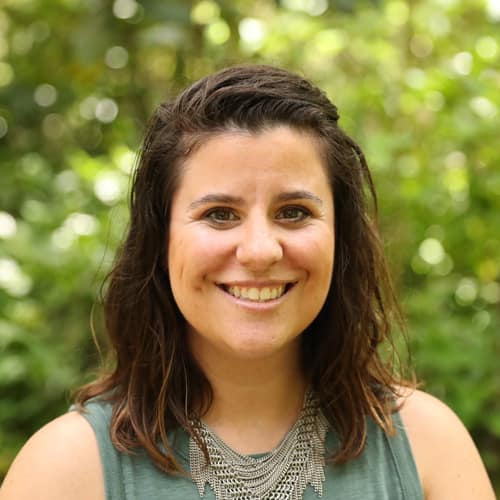
Kati Callahan
Dr. Andy Aldrin is an associate professor and the program coordinator for the Worldwide College of Aviation’s Master of Space Operations. He holds a Ph.D. in Political Science, an MBA and an M.A. in Science, Technology and Public Policy. He is the President of the Aldrin Family Foundation, an organization dedicated to STEM education that has served more than 300 elementary schools and universities.
And if the last name sounds familiar, that’s because he’s the youngest son of Buzz Aldrin, the famed astronaut and engineer.
Why is space exploration essential for improving life on Earth?
We talk a lot about the many ways space directly impacts our lives — it is essential for our understanding of the Earth, everything from weather to climate change. As a global power, our nation is heavily dependent on space systems for communication, intelligence and situational awareness.
GPS (global positioning system) is now part of our everyday life, so its importance is often overlooked. When you think about it, there are few sectors of the economy that aren't dependent on it. Services like Google Maps, Uber and weather forecasting rely on GPS, not just making everyday life easier — we depend on it.
How have your own studies excited your passion for space?
I never intended to be a space cadet. I started life as a Sovietologist, and I wrote my dissertation on how the Soviet Union beat the United States into space. Then the Soviet Union went away, which, of course, wasn't good for my career path. So, as often happens in life, I had to pivot.
I was always fascinated by the disconnect between public perceptions of “space” and what was really happening behind the scenes — the economics, industrial applications, technology and management of it. I loved the whole aerospace industry, and I wanted to contribute in my own way.
What fuels your work with the Aldrin Family Foundation?
My dad was always supportive of bringing the excitement of space to kids in school. The mission of the foundation is to bring the excitement of space into the classroom, igniting curiosity. And it's not just about STEM. We employ project-based learning, which teaches kids to be curious and innovative.
The most important aspect of what we do is teaching the importance of communication skills — because the greatest ideas are useless if you’re unable to communicate them.
What was it like for you when your dad was on his missions?
You know, we had a house that was at the end of the cul-de-sac, and three of the five houses behind us belonged to astronauts. In my elementary school, it was common to be an astronaut's kid — it was a normal part of life. We talked about space around the kitchen table, and it was kind of part of my childhood.
I think that’s why it wasn't until the 40th anniversary of the moon landing, in 2009, that I realized just how big a deal it really was. That’s when I gained a much deeper appreciation for my dad’s missions.
What is unique about Embry-Riddle's Master of Space Operations?
Unlike other universities, we train people to understand the ecosystem of space and the environment in which they work. In the space industry, a lot of economic, business and political decisions must be made.
With Embry-Riddle's Master of Space Operations, we're taking people who already have an established career and providing them with a deeper understanding of the overall space ecosystem. We are preparing the decision makers to make better-informed decisions.
"I think the next truly great journey of global humanity is going to Mars, and I believe it will have a positive effect. It doesn't fundamentally change the geopolitics of the world, but it does allow us to find ways in which nations can work together."

A Family Rooted in Space Exploration
Growing up, space was a normal part of Dr. Andy Aldrin’s life. In this photo, he dons his father Buzz Aldrin’s astronaut helmet and gloves — a symbol of a legacy that continues today. As program coordinator for Embry-Riddle’s Master of Space Operations, Dr. Aldrin is shaping future leaders to make better-informed decisions in the evolving space industry.
Insights
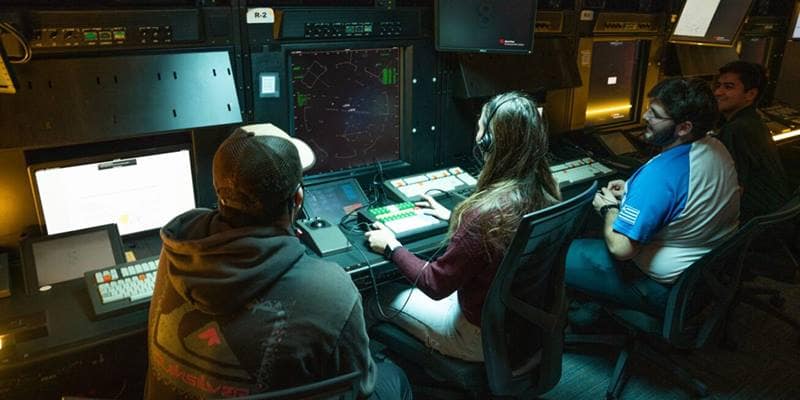 Worldwide College of Aviation Associate Professor Dr. Linda Vee Weiland shares insights and knowledge on the air traffic industry.
How to Become an Air Traffic Controller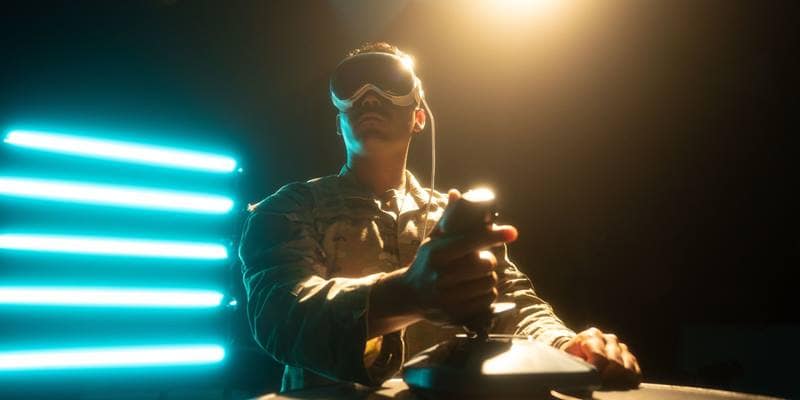 Explore human factors psychology, a field that blends psychology, engineering and design to improve safety, efficiency and user experience.
What is Human Factors Psychology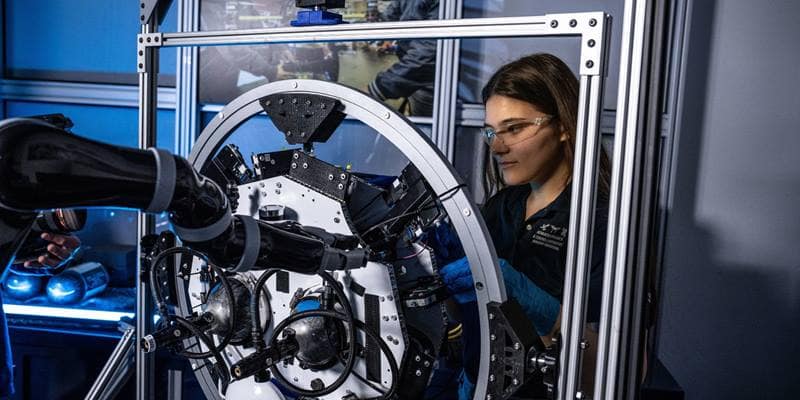 Learn how to become an aerospace engineer at Embry-Riddle Aeronautical University. Discover diverse careers, hands-on experiences and specializations in the aerospace industry.
How to Become an Aerospace Engineer
