


Hands-On Learning at the Medical Examiner's Office
Student Guest Blog by Olivia Robbins
Working Inside the Medical Examiner’s Office
During the summer of 2025, I had the amazing opportunity to join the Pinal County Medical Examiner’s Office (PCMEO) as a Forensic Technician Intern. During this time, my duties were focused on assisting the forensic technicians and the forensic pathologist in the morgue before, during and after postmortem examinations.
Outside of examinations, I would clean the autopsy suite and restock supplies so that we were ready for the next day. I was also assigned a few other morgue cleaning tasks and some organization and documentation projects to work on.
Supporting Autopsies and Evidence Collection
During examinations, I would aid by helping to remove the decedents' clothing and belongings as well as transporting them to and from locations. When evidence was needed from the decedents, I helped with the collection, packaging and securing of such. Furthermore, I helped with documentation necessary for evidence, specimens and autopsy data.
Moreover, I would also collect fingerprints on the decedents. When appropriate, I would collect various specimens including vitreous and various blood samples, and thigh and liver specimens. Initially, I learned to remove the dura and pituitary gland from the skull after someone else had their brain removed. Later I learned how to perform cranial eviscerations to remove the brain myself and later got to help in an organ-by-organ evisceration by removing a kidney and spleen.
Observing Investigators at Death Scenes
As an intern, I also got to attend death scenes with the medicolegal death investigators. I attended multiple scenes with different investigators. I saw a range of scene types and a wide variety of the investigator’s duties which allowed me to understand what their job entails and have a great appreciation for the work they do.
Expanding My Knowledge Beyond the Morgue
I had many incredible opportunities to expand my knowledge beyond just what I would have learned inside the morgue or with investigators. I attended several of the monthly lectures that PCMEO puts on for professionals where I learned about a variety of topics. I also attended lectures for interns and multiple virtual educational classes. I was able to attend a firearms lecture and live demonstration put on by Pinal County Sherrif’s Department for the PCMEO office. Furthermore, I got to tag along with the forensic technicians to watch an embalming. I was fortunate enough to observe a forensic odontologist, neuropathologist and forensic anthropologist perform examinations as well. The wide range of experiences I had outside of my usual duties were truly amazing and helped me to gain an even greater understanding of PCMEO and the surrounding community.
Another fun experience I had was making “maggot art.” This is where we would collect maggots, then later dip them into paint and place them on a canvas. The maggots then wriggle around leaving paint trails and create a unique piece of art. I made two pieces of maggot art, and one was put on display in the morgue with the rest of the maggot art made by earlier interns and employees. I got to keep the other as a memento.
In addition to all these experiences and knowledge I gained, I also was given the opportunity to write a case review on an interesting case I assisted with. This paper was sent to the American Board of Medicolegal Death Investigators (ABMDI) for consideration to be published in their monthly newsletter. If it does get published, it would get hung on the “accomplishment wall” at the office.


Applying Classroom Training to Real Cases
The three years of classes I had under my belt before starting this internship were crucial to my level of success. Without classes like Investigative Methods and Forensic Science, Instrument Analysis and Trace Evidence, Toxicology and Anatomy and Physiology I and II, I would not have been as successful as I was. My foundational knowledge from these classes helped me to learn quickly and understand methodologies and reasonings. Overall, the things I have learned at Embry-Riddle combined with my passion and tenacity made me an exceptional intern.
Growing Into the Role and Looking Ahead
I had a wide range of duties and opportunities as an intern and many of which were hands-on and real-world experiences. While I initially struggled with acclimating to the job due to the overwhelmingly new and fast-paced environment, I eventually adjusted. By the end, I walked into the office with more confidence and even more eagerness to learn. Even if I do not continue in this field, I have found a deep understanding and love for this line of work. This experience was eye-opening, and I will be taking what I have learned with me into any career field I end up in.
Related Stories
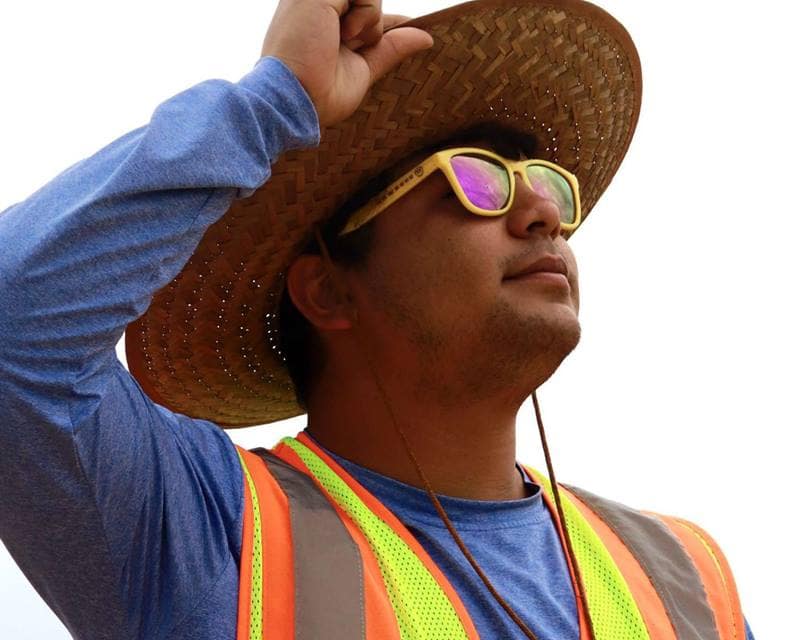 UAS student Adrian Bates-Domingo's (‘22, ‘23) participation in Embry‑Riddle's summer programs gave him field experience he couldn’t get anywhere else.
Uncrewed Aircraft Systems (UAS): I Know What You Flew Last Summer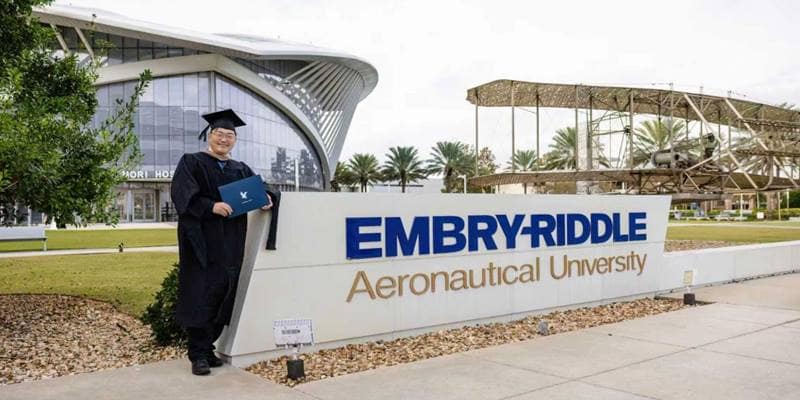 Qilong Guo (’25) left a leadership role to pursue Aviation Finance at Embry-Riddle, using ISTAT connections to build a global career bridging Asia and North America. His journey shows that reinvention is possible with the right mindset and courage.
Mid-Career Reset Leads to Aviation Finance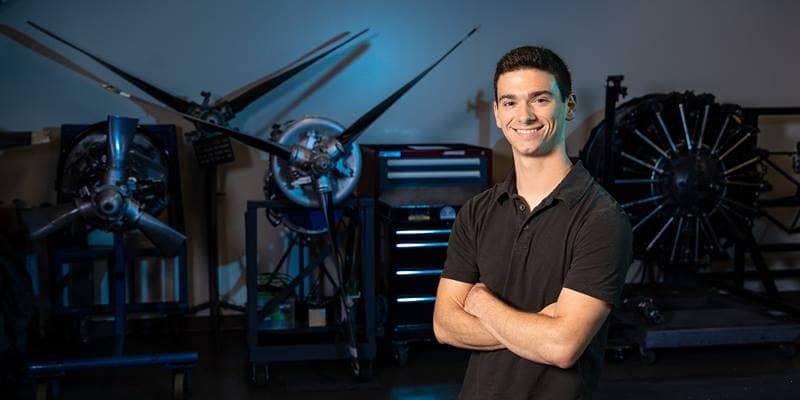 Nicolas Napoleoni’s Embry‑Riddle journey started on the flight deck and has moved to the hangar as part of the Aviation Maintenance Science program.
Aviation Maintenance Science Major Finds Embry-Riddle Offers Best of All Worlds
