


Inside the Making of a Cyber Defender

Donna Toboyko
Early Exposure to Cybersecurity’s Impact
That sense of purpose began before college. Internships with Uber and Cox Communications offered Theuerkauf his first behind-the-scenes look at how deeply technology shapes everyday life. He saw how essential secure systems are to keeping people connected and how much expertise it takes to protect and restore them.
“Seeing how much responsibility there is behind the scenes made me want to understand systems at that level,” he said. “Cyber Intelligence and Security felt like the right path because it’s about protecting what people rely on every day.
Why Embry-Riddle Prescott
Theuerkauf chose Embry-Riddle’s Prescott Campus for its intelligence-focused approach and close-knit learning environment. What he found exceeded his expectations.
“Smaller classes, professors who’ve worked at places like the CIA, FBI, DOD and NASA, and classmates who are just as driven. It pushes you to take things seriously,” he said.
“And being surrounded by mountains doesn’t hurt.”
Learning From Mentors, Not Just Lectures
Inside the classroom, mentorship has played a key role in Theuerkauf’s growth.
“Professor Heath Van Horn’s courses don’t just teach you to pass a test. They teach you to understand how systems really work,” he said.
In "CI 120 - Introduction to Cyber Intelligence" and "CS 213 – Introduction to Computer Networks," he learned networking fundamentals and hands-on skills, such as building Wi-Fi networks and segmenting systems.
Professor Terry Reinsch’s "CI 201- Introduction to Linux, Unix, Windows and Scripting" provided practical experience in Bash scripting and user management that he applied in capture-the-flag competitions. “I was able to take what I learned in class and apply it directly,” Theuerkauf said.
“One of the things I love about Embry-Riddle is the teachers who go above and beyond for their students,” he added.
Professor Oyku Ozsoy’s class was especially meaningful, helping him build confidence in his coding skills. “Through her guidance, I learned to approach coding with a stronger understanding and more positive mindset,” he said.
Ozsoy said building strong connections with students is essential to their success. “Brett is curious and persistent, and through encouragement, practice and reflection, he developed a more confident approach to learning,” she said, noting his growth in technical skills, communication and collaboration.
Several professors have also provided career guidance and shared professional opportunities, helping Theuerkauf connect classroom learning to real-world cybersecurity.
“That environment pushes me further than I’d push myself alone,” he said.
Competing and Creating in Cybersecurity
Theuerkauf quickly put his classroom foundation into action through capture-the-flag (CTF) competitions, where teams solve cybersecurity challenges under pressure. He has competed in regional and national events, including the NCAE Cyber Games, where his teams placed among the top competitors in the Southwest.
He also helps build the challenges himself. As part of Embry-Riddle’s student-led Astro CTF development team, Theuerkauf designs cybersecurity scenarios for high school and college students across Arizona. Created in partnership with the university’s Air Force ROTC detachment, the competition brings hundreds of participants to the Prescott Campus each semester.
“It’s about bridging education and practice,” he said. “We’re creating scenarios that mirror real threats, and seeing students solve them reminds me why I got into cyber in the first place.”
Leadership Beyond the Cyber Lab
Theuerkauf’s leadership extends well beyond cybersecurity. He is the president and co-founder of the Embry-Riddle Hiking Club, which quickly grew into one of the most active organizations on the campus, earning an Outstanding Student Award in its first semester.
This year, he also helped launch the Eagle Gym Club after identifying a need for structured strength training and fitness support on campus.
“Community is everything,” he said. “Our members are why I show up every week.”
Outside the university, Theuerkauf is an active member of the Civil Air Patrol’s Prescott Squadron, serving as a mission radio operator, mission scanner and activities officer. He is certified in preventive search and rescue for the state of Arizona and serves as a cyber instructor, preparing cadets for competitions.
Together, these experiences reinforce his classroom learning and reflect a commitment to service, leadership and teamwork.
Looking Ahead in a Changing Cyber Landscape
Theuerkauf is particularly interested in digital forensics and defensive analysis — work that involves reconstructing cyber incidents, understanding adversary behavior and strengthening defenses. He is also closely watching the impact of artificial intelligence on cybersecurity.
“AI is changing how attacks happen and how we defend against them,” he said. “At the same time, old systems still pose risks, especially in critical infrastructure.”
Advice for Future Cyber Students
What motivates Theuerkauf through challenges is a focus on growth and that of the communities he helps build. His advice to future Cyber Intelligence and Security students is simple: start early and get involved.
“Dive in on day one,” he said. “Break things, fix them, talk to your professors and find people who push you to grow. That early confusion is where you rise through the ranks the fastest. Find friends who lift you up. Keep your schedule flexible so you do not burn out. It is much easier to succeed when you are not running on empty.”
At Embry-Riddle, Theuerkauf is doing more than studying cyber intelligence. He’s becoming the kind of leader the field needs.
Insights
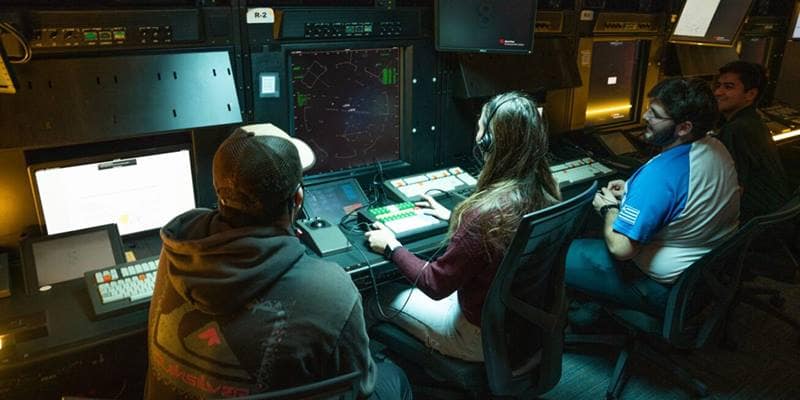 Worldwide College of Aviation Associate Professor Dr. Linda Vee Weiland shares insights and knowledge on the air traffic industry.
How to Become an Air Traffic Controller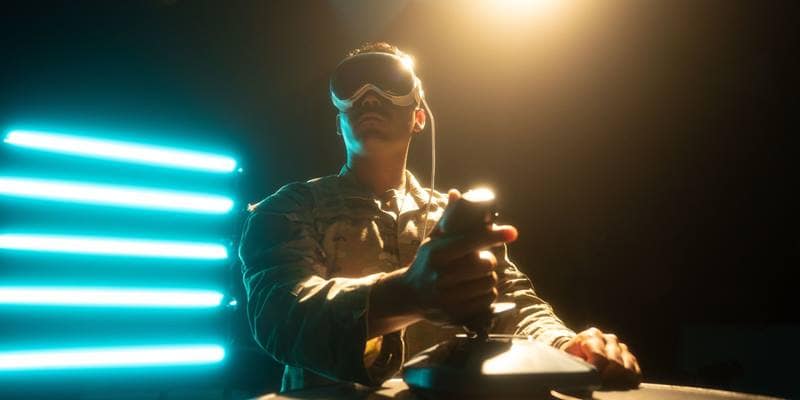 Explore human factors psychology, a field that blends psychology, engineering and design to improve safety, efficiency and user experience.
What is Human Factors Psychology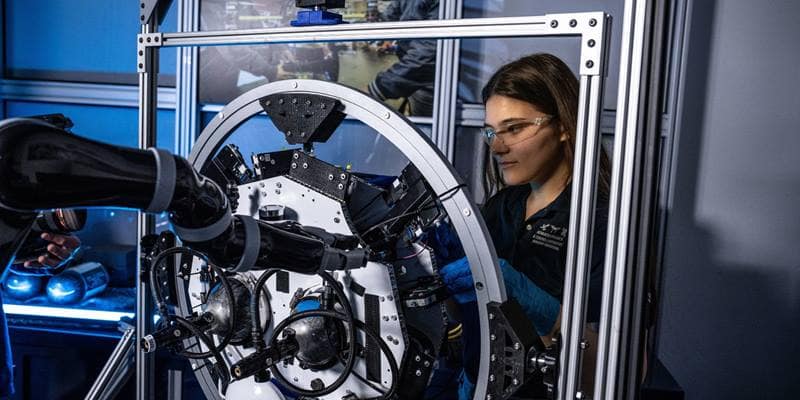 Learn how to become an aerospace engineer at Embry-Riddle Aeronautical University. Discover diverse careers, hands-on experiences and specializations in the aerospace industry.
How to Become an Aerospace Engineer
