


Keeping Order in an Untamed World

Kim Sheeter
"It's a cross between a college campus, a military base and a mining town," he says. "Dorm-style living and a galley like a campus; strong military support for airlift; and a big industrial backbone — power plant, wastewater, vehicle maintenance — to keep science moving."
As NSF's government representative, Tunstall keeps everything on pace. As the Emergency Operations Director, he acts when something goes wrong. As a Special Deputy U.S. Marshal, he handles federal law-enforcement issues that arise.
The scale is staggering. In peak summer: 1,000 people, 200 scientists and 800 people keeping them alive. "The other 800 are the support professionals who make science possible — cooks, heavy equipment operators, carpenters, mechanics and power-plant techs," he says.
The U.S. operates alongside New Zealand just a mile and a half away, sharing resources, power and search-and-rescue coordination. Aviation is the lifeline: C-130s and other aircraft connect McMurdo to Christchurch and the South Pole, while helicopters and Twin Otters push science into the field.
The environment doesn't just challenge logistics — it enables science impossible anywhere else. NASA launches balloons into the upper stratosphere that expand to three times the size of a football field, carrying instruments to study the atmosphere as they circle Antarctica. Another project uses LIDAR — light imaging detection and radar — to measure magnesium levels in the atmosphere, comparing them to other planets for signs of life and helping map the surface of Mars for future missions.
The Path to the Great White South
Tunstall's journey began with military aviation — Marine Corps and Coast Guard, where he soloed the T-34 in 1992 — followed by two decades in Alaska that made Antarctica feel familiar. After retiring from the Coast Guard, he joined the Department of the Interior's Office of Aviation Services, leading pilot and aircraft inspections for unique missions: mountain flying, long-line operations, wildlife capture and volcano studies. An audit trip to Antarctica in 2014 changed everything. In 2022, he stepped into McMurdo's top post.
A Cool Head in a Cold Climate
The work is equal parts orchestration and improvisation. When an aircraft reported low fuel and a whiteout at the airfield, Tunstall's team spun up emergency crews and waited through tense radio silence until the jet broke out and landed safely. Another day, a medical emergency required a mid-winter medevac through marginal conditions. "Down here, the hospital is hours away, not minutes," he notes. "My military background taught me to compartmentalize and rely on a strong team."
Leadership on the harshest continent also means patience. "It's so remote that everything takes longer," he says. "Sometimes people ask why the galley hasn't had fresh vegetables in two weeks. The answer might be weather delays or aircraft maintenance. You learn to explain the 'why' and bring folks along."
Working with scientists requires a different mindset than military command. "In the Marine Corps, it was order-centric —'do this, no questions asked.' The Coast Guard was still military, but required more explanation. With scientists, it's different again: they're mission-driven, focused on getting their research done, so you often need to explain the why, especially around safety. A geologist might want to fly straight to a volcano, but I have to reinforce that the pilot must be uniquely qualified, just as on an airline. It's about balancing their urgency for discovery with the realities of risk."
He is collaborative but not compromising when it comes to safety.
Other Duties as Required
Sometimes leadership means life-and-death decisions. Sometimes it means penguins.
Wildlife rules require everyone to stay 15 feet away, but Emperor’s curiosity doesn't read policy. "We'll get a call: a penguin has parked itself on the runway," Tunstall says, laughing. "Only trained personnel can 'herd' them, usually the fire department. I have to approve it first. Last season, a skua (a large seabird) just sat on a road for an hour and refused to move. Safety comes first — for people and animals."
Infrastructure is a constant challenge. The station's ice pier failed last season; the Navy construction battalion built a temporary causeway while crews prepare a permanent barge pier. "The Seabees are beloved here," he says. "Their trade skills touch everything."
There are points of interest as unique as the environment itself. Scott's Hut sits preserved from his 1911 expedition, supplies still stacked as his doomed party left them. The "McMurdo Modern Arts Gallery" showcases sculptures made from scrap by visiting scientists. "For morale, we have three gyms, hiking, skiing and clubs — it's a small town with big weather," Tunstall says.
Advanced Studies Sharpened Leadership Skills
Tunstall credits Embry-Riddle with sharpening his leadership and opening doors at the right time. Stationed at Elizabeth City, N.C., he completed his Master's in Aeronautical Science with a focus on Human Factors through on-site and online courses. "The instructors were wonderful," he says. "They came after their day jobs to teach at five or six in the evening. The flexibility let me keep serving while advancing."
In his next chapter, he plans to return to his home base in Portsmouth, Rhode Island. Perhaps he will return to the classroom. "I'd love to teach," he says. "I was blessed with mentors who pushed me without micromanaging. Being a professor feels like a way to give back — to pass on what I've learned in aviation and extreme environments. Embry-Riddle left a lasting impression on me, and I'd like to pay that forward."
Related Stories
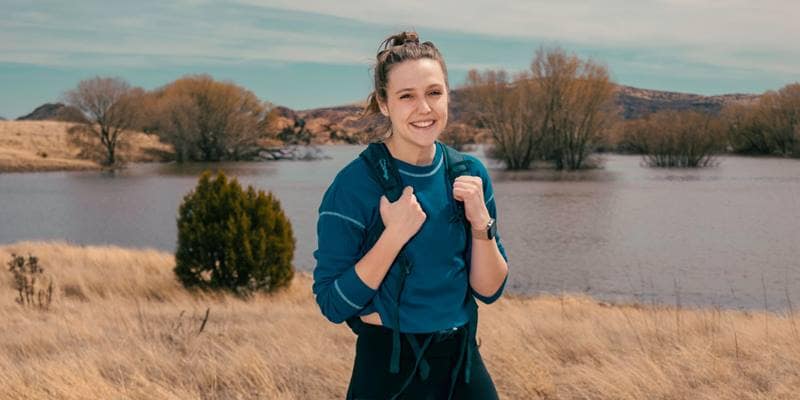 Emma Rash is wrapping up her undergraduate career at Embry‑Riddle. On top of being a student, much of her time is spent working in the field she is most passionate about: housing.
Housing Supervisor Extraordinaire: Unexpected Passions Found at Embry‑Riddle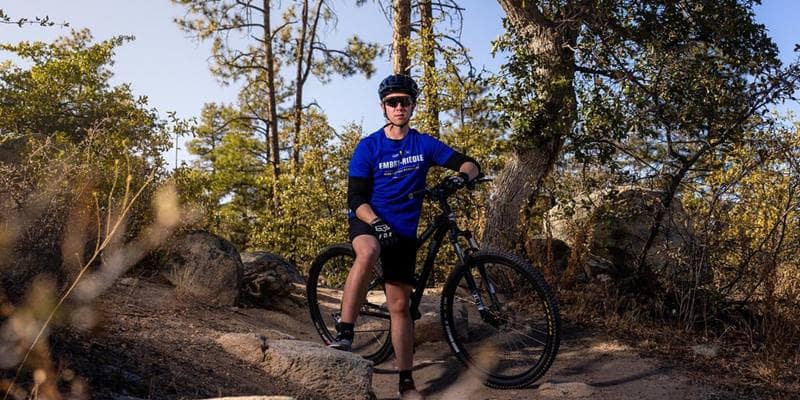 Discovering Prescott's Mountain Biking Scene
Prescott’s thrilling mountain biking scene offers Embry-Riddle students the perfect balance of adventure and community.
 Simulation Science, Games and Animation student Paige Cody returned to her Arizona high school to inspire the next generation of creators.
Gaming Science Major Helps the Next Generation Level Up
