


Noah Evans is Taking Flight with Experimental Aircraft
Amelia Stutsman
Growing up watching Apollo program documentaries and drawing airplanes, Noah Evans (’27) took an early interest in all things aviation. At 16, he took his first flight lesson at a local school, eventually working there washing airplanes. Through this role, Noah sat in on flight training sessions, further cementing the idea that he wanted to pursue a career in aviation.
When considering where he would continue his education after high school, Embry-Riddle's Daytona Beach, Florida, campus felt like a natural choice.
“I visited campus during a summer program my freshman year of high school. During the week here, I got to explore campus and learn about the many degree programs and opportunities Embry-Riddle had to offer,” he said. “I fell in love with the campus and tight-knit community, and it became my top choice when I decided to pursue an Aerospace Engineering degree.”
Baja SAE and SGA: Making His Mark on Campus
Throughout his time at Embry-Riddle, Noah has been involved with the Baja SAE Team, an organization that competes in national collegiate endurance events, Housing and Residence Life and the Student Government Association.
“Being in communities like these has provided invaluable opportunities for me to grow academically and interpersonally and helped me give back to a school that has done so much for me,” he said.
Recently, Noah also helped charter a chapter of the Society of Flight Test Engineers.
“We’re hoping to grow student awareness of this exciting engineering discipline, and we plan on having many professional development events and growing career opportunities for our members,” he shared.
Noah also prioritized research involvement early on during his academic career, joining the Aviation Safety Systems Lab and the Applied Perception and Performance Lab during his first year on campus.
“These labs were key in teaching me the importance of extracurricular experience,” he said. “In the Aviation Safety Systems Lab, I learned about the Human Factors Analysis and Classification System and how much I could improve my Microsoft Excel skills!”
“In the Applied Perception and Performance Lab, I worked on understanding human reactions in a driving environment and grew my MATLAB skills while learning about fast Fourier transform algorithms.”
Building from the Ground Up
After completing an internship at Kane Aviation in Roanoke, Virginia, Noah became interested in researching wingtip devices, or winglets, which are aerodynamic devices attached to the ends of aircraft wings to reduce lift-induced drag.
This prompted him to start Mako Winglets, a company centered around researching and developing wingtip device technology and bringing it to the experimental aircraft industry.
“I recruited some friends to help me with some modeling, and we drew up some plans for a scale prototype,” he shared. “We presented our findings for this project at the 2024 TREP Expo and have presented some of our other projects at the Student Research Symposium and Discovery Day events each year.”
“This year we hope to file for an LLC and have our first products to market by this summer,” he said. “We’ve grown the team into seven awesome individuals, who make this whole thing possible. It’s truly been a pleasure to work with them since the beginning, and we’re just getting started!”


Gaining Professional Experience
During the summer of 2025, Noah landed an internship at Lockwood Aircraft Corporation in Sebring, Florida.
“The company is known for its tandem seat, twin-engine experimental aircraft, the AirCam,” he explained. “The AirCam was originally built by Phil Lockwood in 1995 for National Geographic photography of the rainforests of the Congo, where engine redundancy was a must-have. There are now over 250 AirCams in service.”
Noah connected with Mr. Lockwood and the company’s chief engineer during Embry-Riddle's 2024 fall semester Career Expo. After traveling to Sebring for an interview and tour of Lockwood Aircraft’s facilities, Noah knew it was where he wanted to spend his summer.
“During my internship, I focused on continued airworthiness of the second and third generations of our AirCams, as well as a firewall forward kit for Van’s Aircraft’s RV-9A,” he said. “I had the privilege to flight test both of these aircraft, which further cemented my interest in the flight test engineering discipline.”
“Some of my most memorable moments came from visiting EAA AirVenture Oshkosh and working the show with the Lockwood group. We got an AirCam into the main airshow and met the F-22 and F-35 Demo Teams,” he shared. “I also enjoyed every day with the great people who make up the Lockwood family. I can’t thank them enough and am excited to return this summer.”
Focusing on the Future
Over his time at Embry-Riddle, Noah has truly embraced the idea of the Embry-Riddle family, spanning degree programs, graduation years and campuses.
“I feel like I’ve built an Embry-Riddle family here, and they each have had a key role in my success, from late nights studying in the Lehman Building to club meetings and even the occasional beach day,” he said.
“The number of connections I’ve made with graduates of the Daytona Beach, Prescott and Worldwide campuses is unreal. I have met several alumni who have become great mentors, and they have helped jumpstart my career goals.”
Noah also credits his success to Embry-Riddle's STEM focus and the like-mindedness of students, faculty and staff to continuously learn and innovate.
“The opportunities are extremely valuable,” he said. “There is a campus organization for almost everything imaginable, professors who will bend over backwards to help you and a dedicated staff working behind the scenes to ensure student success.”
After Noah graduates, he hopes to pursue a master’s degree in Flight Test Engineering from the National Test Pilot School (NTPS) in Mojave, California, and then follow his dream of building a career in flight testing.
Insights
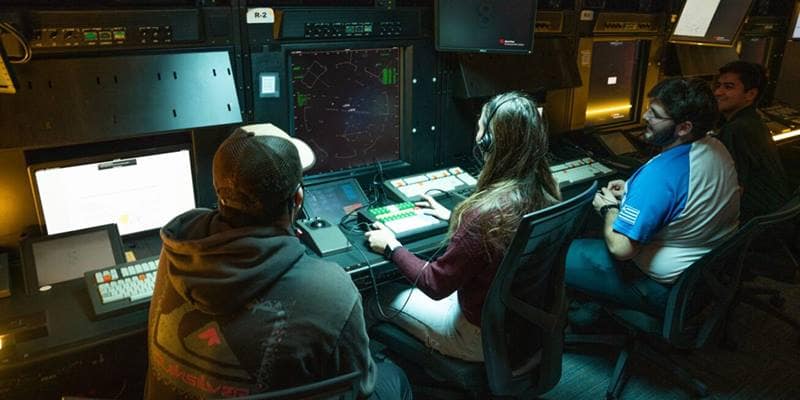 Worldwide College of Aviation Associate Professor Dr. Linda Vee Weiland shares insights and knowledge on the air traffic industry.
How to Become an Air Traffic Controller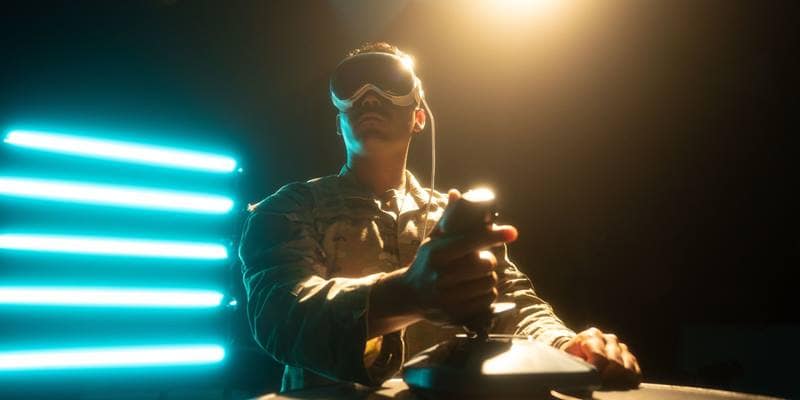 Explore human factors psychology, a field that blends psychology, engineering and design to improve safety, efficiency and user experience.
What is Human Factors Psychology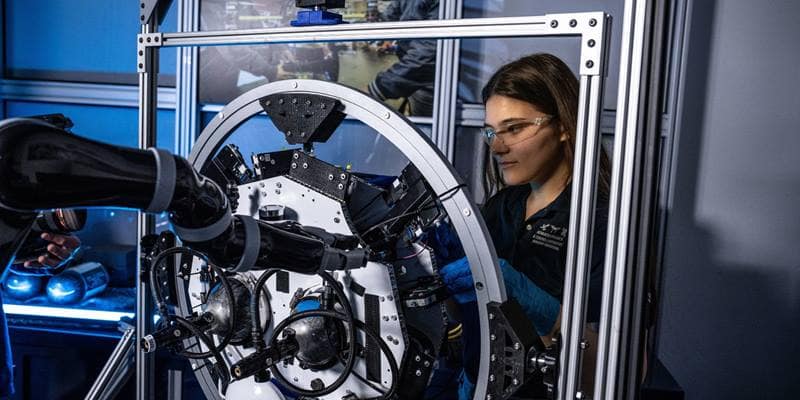 Learn how to become an aerospace engineer at Embry-Riddle Aeronautical University. Discover diverse careers, hands-on experiences and specializations in the aerospace industry.
How to Become an Aerospace Engineer
