


An Inside Look into the Embry-Riddle Student-Athlete Experience

Christina Lewandowski
What does it take to be a student-athlete and student worker? Connor Goepfert (’27) spends over 20 hours every week training and competing on Embry-Riddle Aeronautical University’s varsity rowing team while excelling in his studies and staying involved across the Daytona Beach Campus.
Connor entered Embry-Riddle with the goal of majoring in Aeronautical Science, but upon discovering that the major was full for the year, he chose to pursue a B.S. in Uncrewed Aircraft Systems (UAS) with a minor in Project Management. This decision would allow him to continue his rowing career and pursue his passions in an equally fulfilling way.
“My dad is an MQ-9 pilot in the Air Force and explained to me how quickly uncrewed aircraft systems were being implemented everywhere,” he said. “Most operations now are autonomous and require coordination between numerous systems and teams, so I felt that having a background in project management was a perfect complement to my major.”
Connor explained how he balances his commitments and has prepared for his UAS internship at Censys Technologies this summer.
What initially interested you about Embry-Riddle, and how did you decide to attend?
When I was researching universities, I discovered that Embry-Riddle was the only one where I could row for a varsity program and have the aviation education that I was looking for.
At the end of my senior year of high school, I decided to continue rowing in my college career, so making the choice to go to Embry-Riddle was easy.
What is the key to balancing being a student-athlete and a student worker?
Prioritization. Picking the thing that needs to be done most urgently and getting that done in whatever available time there is.
It helps me to stick to the same routine every day, because the windows I have to complete my work are consistent. Putting a time limit on Instagram helps, too.
Are there any projects or assignments from your UAS classes that have stuck with you?
When I took UAS Systems Architecture and Integration (AS 241) last year, we spent the semester designing a hypothetical company and its UAS. I made a system of fixed-wing drones that circle the perimeter of overseas military bases autonomously.
I modeled the aircraft in computer-aided design (CAD) software and did the rough calculations to prove it could fly and accomplish the mission. That was the first time I got to work in an area of UAS beyond operation, and it was a lot of fun.
How has your grasp of UAS evolved during your time at Embry-Riddle?
My understanding of UAS has completely changed and grown because of my experiences at Embry-Riddle. Before coming here, I had flown a drone for maybe five minutes.
Now heading into my senior year, a few of my teammates and I are working on our own aircraft through a company we started called Chrp. From knowing nothing about the UAS world three years ago to now working towards contributing something new— it’s very cool.
How has interacting with UAS in a research setting deepened your understanding and appreciation of the field?
Research has honestly been where I have learned the most. Working with the operations that I was learning in the classroom gave me a whole new perspective on uncrewed systems.
Classes give you a great understanding, of course, but involving yourself outside of the classroom is so important. Most of the significant lessons I have learned in UAS came from mistakes I made in actual operations.
What do you hope to accomplish during your senior year?
I want to finish my senior year feeling fully prepared to enter the workforce.
I also want to contribute to the rowing team as much as I can, since it is becoming clear how little time I have left with my teammates.
I want to have a positive impact on my team and the culture itself. The people I have met through rowing, and the time and early mornings spent together, have shaped my time here more than anything else.
What have you taken away from your time at Embry-Riddle so far?
My biggest takeaway has been that things are what you make of them.
In high school, I did not go out of my way to get involved in much beyond what was required of me. I knew that taking on a full-time student-athlete schedule would force me to fully commit instead of backing away.
Every meaningful experience I have had here came from something I chose to step into.
If you could give one piece of advice to an Embry-Riddle student just starting out, what would it be?
I would tell a new student to get involved in as much as you can, as early as you can. That’s a lesson that took me so long to learn. It always feels easier to stay in your dorm and keep to yourself, but everyone is just as nervous as you are.
Even more than high school, college will become what you make of it.

Setting Goals as Graduation Approaches
As he prepares for his senior year and future career, Connor anticipates feeling proud of all he has accomplished as an Embry-Riddle student.
“I want to make significant contributions at my summer internship and finish off strong in rowing and my coursework,” Connor said. “In the long term, my plan is to pursue a master’s degree and build upon the foundation in project management that I started with my minor.”
Insights
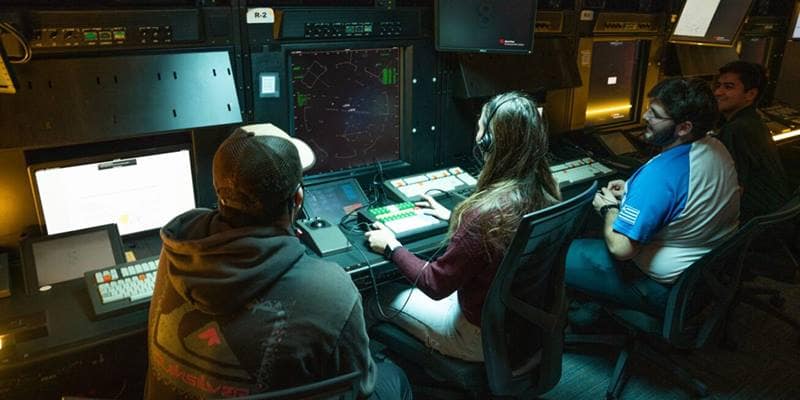 Worldwide College of Aviation Associate Professor Dr. Linda Vee Weiland shares insights and knowledge on the air traffic industry.
How to Become an Air Traffic Controller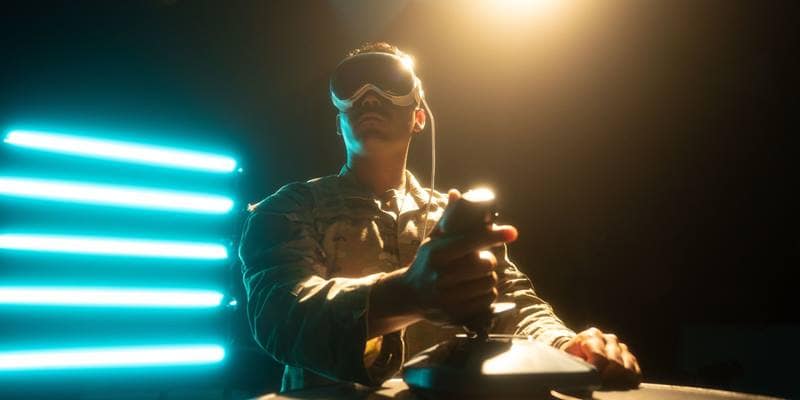 Explore human factors psychology, a field that blends psychology, engineering and design to improve safety, efficiency and user experience.
What is Human Factors Psychology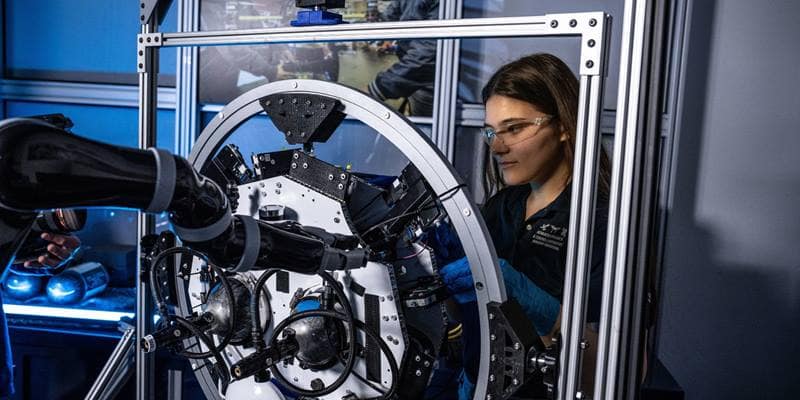 Learn how to become an aerospace engineer at Embry-Riddle Aeronautical University. Discover diverse careers, hands-on experiences and specializations in the aerospace industry.
How to Become an Aerospace Engineer
