

- Category
- Impact
- Date
- March 23, 2026
Brian Green (’26), a Daytona Beach Campus student pursuing a B.S. in Aerospace Engineering, developed his passion that began at a young age and was inspired by his father, an engineer and private pilot. Weekend trips to the local municipal airport, listening to tower communications as aircraft took off and landed, left a lasting impression.
“Those moments made aviation feel alive to me,” Green said. “I didn’t just see airplanes — I heard how everything worked together.”
By middle school, he realized he could combine his interests in engineering and aviation through aerospace engineering. He tailored his high school coursework accordingly, preparing for a future in the field.
Discovering Embry‑Riddle
Green didn’t initially know about Embry‑Riddle Aeronautical University. That changed when a postcard arrived during college application season.
After traveling from Texas to Florida to visit campus, his decision became clear.
“I applied almost immediately,” Green said. “Embry‑Riddle quickly became my top choice.”
Now a senior, Green says the experience has exceeded his expectations. He credits the university’s access to mentors, resources and hands-on opportunities for shaping both his academic and professional growth.
“These are connections and lessons I know I’ll carry well beyond graduation,” he said.
Mentorship and Momentum
Support from faculty and mentors has been central to Green’s growth. One influential mentor was Alijah McDonald, a fellow aerospace engineering student and a student ambassador for The Boeing Company.
“Alijah helped me navigate internships and understand what a career at Boeing could look like,” Green said. “Watching his journey from student to professional showed me what was possible.”
Green’s first campus involvement came through the Embry‑Riddle Future Space Explorers and Developers Society, where he gained hands-on rocketry experience and earned his Level 1 High Power Rocketry Certification.
He later served as a Boeing student ambassador, helping connect students with Boeing recruiters and opportunities.
“Being a Boeing student ambassador showed me how classroom knowledge translates into real-world impact,” he said.
Green also served as vice president of the Aerospace Engineering Student Advisory Board, working with faculty and administrators on curriculum alignment, ABET-related discussions and student advocacy.
“Seeing how academic programs are shaped behind the scenes changed my perspective,” he said.
Building a Boeing Career
Green’s Boeing journey began in 2024 through the Engineering Development Program, an internship that was based on Embry‑Riddle’s campus, where he worked on the MQ-25 Stingray program — the U.S. Navy’s first operational carrier-based uncrewed aircraft.
“Contributing to a platform that is shaping the future of autonomous aviation was unreal,” he said.
In 2025, Green transitioned on-site to Boeing’s facility in Mascoutah, Illinois, continuing work on the same program. He later continued supporting the program part-time in a remote manufacturing engineering role while completing his education at Embry‑Riddle in Daytona Beach.
“Seeing work I authored implemented on the shop floor within hours changed how I see engineering,” Green said. “It showed me how fast analysis becomes action in an integrated environment.”
Saying Yes to Opportunity
Innovation continues to draw Green to aerospace engineering, while helping others keeps him motivated. As a Boeing student ambassador, he helped fellow students with resumes, coordinated Boeing Day and assisted with on-site interviews during Boeing Week.
“One of the biggest lessons I’ve learned is to say yes, even when something feels daunting,” he said. “You figure out the logistics along the way.”
That mindset, he said, creates momentum and prevents stagnation.
“Each opportunity opens new paths and expands your skill set,” he said.
His proudest achievement is securing a flight test engineer internship, a rare opportunity at the intern level, which he sees as the result of preparation and mentorship.
“It reflects years of preparation and the support of incredible mentors,” he said.
Looking back, Green encourages students to take initiative.
“I earned my first internship through a simple LinkedIn message,” he said. “What made me stand out wasn’t perfection — it was passion and curiosity.”
As graduation approaches, Green’s goal is clear: to become a full-time flight test engineer at The Boeing Company.
“Embry‑Riddle gave me the opportunities, connections and confidence to pursue it,” he said. “This university helped turn a childhood fascination into a career path.”
“Say yes, take chances and don’t wait until everything feels figured out.”
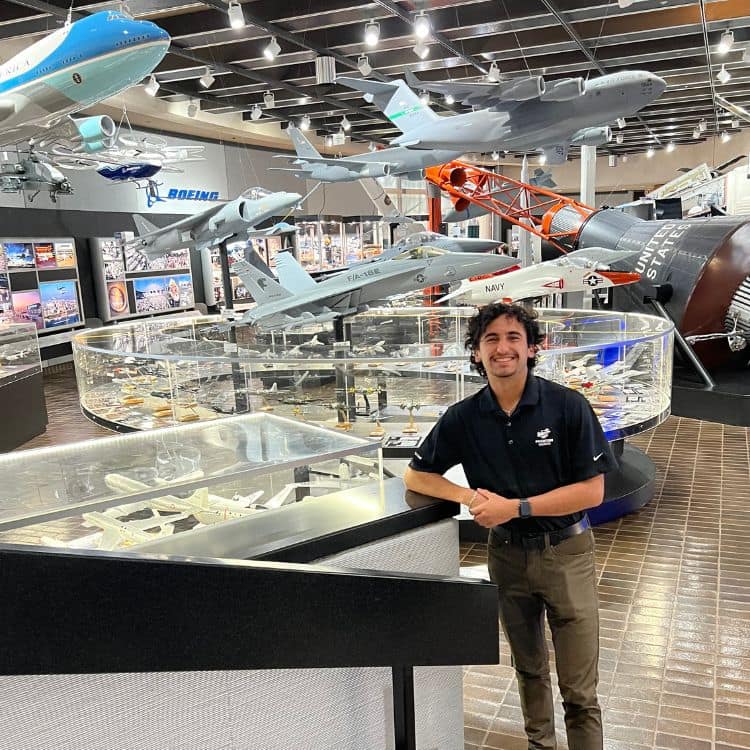
A Future in Motion
Brian’s journey reflects how the right environment can shape both direction and opportunity. At Embry‑Riddle, he found the hands-on experience, mentorship and industry exposure that helped him turn early interests into a clear career path. Each step — from the classroom to real-world projects — built the confidence and skills needed to move forward. Now, he’s stepping into the next phase of his career with a strong foundation and a clear sense of where he’s headed.
Related Stories


