
Project Details
This project aims to serve the national interest by improving undergraduate education in data science. This project will develop and deliver ten Data Sciences (DS) courses to students from a consortium of eleven diverse universities by using a flexible distributed learning (DL) platform. This consortium will provide increased opportunities for DS instruction at institutions with limited infrastructure and resources, including seven minority-serving institutions. The courses will adapt the United States military's advanced DL technology to an academic setting in order to harness the power of artificial intelligence (AI) in tailoring optimal learning experiences for the specific needs of each individual student. Pervasive DL technologies help to overcome inefficiencies found at individual institutions due to small enrollments and limited faculty expertise. At least two hundred undergraduates will gain research experiences from taking the consortium's DS coursework, participating in a summer research workshop, and obtaining a DS consortium certification. To broaden this project’s overall impact on equal learning opportunities and social mobility this project will recruit students from diverse backgrounds.
The project aims to implement data-driven pedagogical research on innovative DL practices across diverse universities through the use of adaptive distributed learning (ADL). The difference between DL and ADL courses is that the latter utilizes the interoperable data exchange standard of the U.S. Department of Defense to leverage the power of AI, big data, and communication technologies. ADL provides learning that can be personalized and delivered anytime and anywhere to an individual student. The adaptation of ADL technologies in an academic setting remains largely untested and would benefit greatly from an analysis of its efficacy. The consortium is organized into four organizational clusters headed by Embry-Riddle Aeronautical University (FL), the University of North Texas, and Florida A&M University. Institutions within each cluster include Bethune-Cookman University (FL), California State University at Los Angeles, Hampden-Sydney College (VA), Jackson State University (MS), Jarvis Christian College (TX), Lane College (TN), Morgan State University (MD), and Simmons University (MA). Leveraging the combined physical and intellectual resources of this alliance of diverse institutions with DL technology provides students at these institutions with the opportunity to pursue DS training on par with what would be expected in a research university setting, thereby removing barriers that may exist for these students to prepare for competition in the STEM job marketplace.
The NSF IUSE: EHR Program supports research and development projects to improve the effectiveness of STEM education for all students. Through the Engaged Student Learning track, the program supports the creation, exploration, and implementation of promising practices and tools.
This award reflects NSF's statutory mission and has been deemed worthy of support through evaluation using the Foundation's intellectual merit and broader impacts review criteria.
Research Team
Principal Investigators
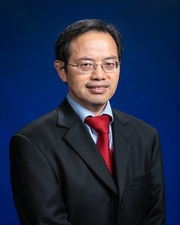
CO-Investigators

Associate Professor
- Mathematics Department
- Daytona College of Arts & Sciences