
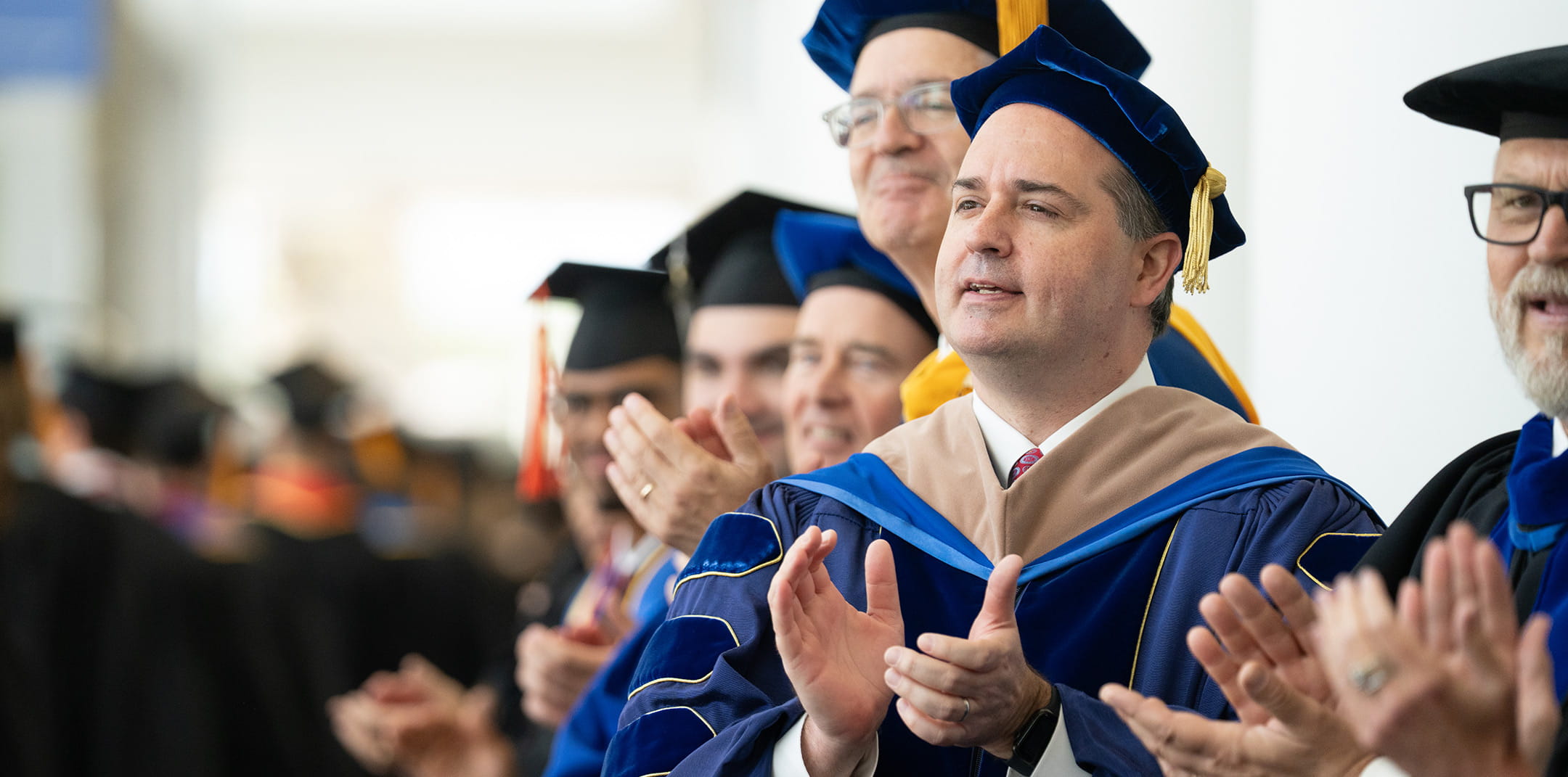

Embry-Riddle faculty bring deep industry experience, advanced research expertise and global perspectives into the classroom. Across campuses, you’ll learn from professors, researchers and professionals who lead in fields like aerospace engineering, aviation, cybersecurity, business and space systems. With more than 2,600 faculty systemwide and strong industry partnerships, they combine teaching with real-world impact and innovation.

Faculty Directory
Search faculty by name, campus, college or department to explore expertise, research areas and academic backgrounds.
Faculty Directory

Asia Campus Faculty
Meet faculty at ERAU Asia who bring international experience, industry insight and global perspectives to programs in aviation, engineering and business.
Asia Campus Faculty

Fulbright Scholar and Specialist Programs
Learn how Embry-Riddle faculty engage in global teaching, research and collaboration through the prestigious Fulbright Program.
Fulbright Scholar
Related Resources
Faculty News

Researchers, Students Share Progress on Embry-Riddle-Led NASA Project Advancing Next-Generation Aircraft Safety
A NASA project designed to enhance safety in advanced air mobility (AAM) aircraft, such as air taxis and medical emergency drones, developed new layers of collaboration among NASA officials, project leaders, researchers and students from Embry-Riddle Aeronautical University and other partnering institutions at a meeting marking the project’s first year.
October 26, 2026
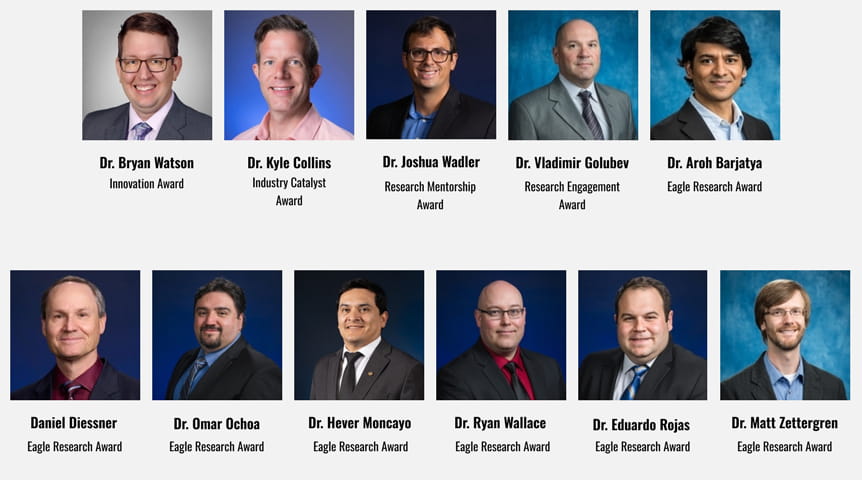
Embry-Riddle Honors 11 Faculty Members With 2026 Research Awards
Eleven Embry-Riddle Aeronautical University faculty members have been recognized for their research accomplishments through the university’s Research Awards Program.
October 20, 2026

Embry-Riddle Undergrads Participate in Chandra Astrophysics Workshop at Harvard
For two Embry-Riddle Aeronautical University students, a summer research trip to Cambridge, Massachusetts, offered an exciting opportunity: participation in a professional astrophysics workshop at the Center for Astrophysics | Harvard & Smithsonian.
October 19, 2026

At World's Largest Hacking Conference, Embry-Riddle Students Showcase Aviation Cybersecurity Skills
Thirteen students from the Prescott Campus participated in DEF CON 34, the world’s largest cybersecurity conference, held in Las Vegas this past August. At the conference, students networked with industry professionals, led capture-the-flag challenges and presented research.
October 16, 2026
More Faculty Resources
Contact Us
University Administration
Embry‑Riddle Aeronautical University
1 Aerospace Blvd.
Daytona Beach, FL 32114-3900
Embry‑Riddle Aeronautical University
1 Aerospace Blvd.
Daytona Beach, FL 32114-3900