- Category
- Applied Aviation
- Date
- November 6, 2026
On the evening of June 28, 2024, multiple thunderstorm cells struck Switzerland’s southern Alps. Hours of torrential rain and intense flooding in the Maggia Valley collapsed roads and bridges. Homes were swept away.
The unusual weather event was the subject of a research case study by Embry-Riddle Aeronautical University students Robert Menzel, Abigail Nelson and Dale Schorzman during a 2026 study abroad in Switzerland. Together, they examined how the Alps and surrounding terrain influenced the storm’s development.
Of the 26 students who participated in the monthlong program, eight enrolled in mountain meteorology and conducted research in the environments where these weather conditions occur. Under the guidance of Dr. Curtis James, professor of Meteorology, students visited MeteoSwiss facilities and weather stations, examined the region’s terrain and took part in a program combining mountain meteorology with cultural and scientific study.
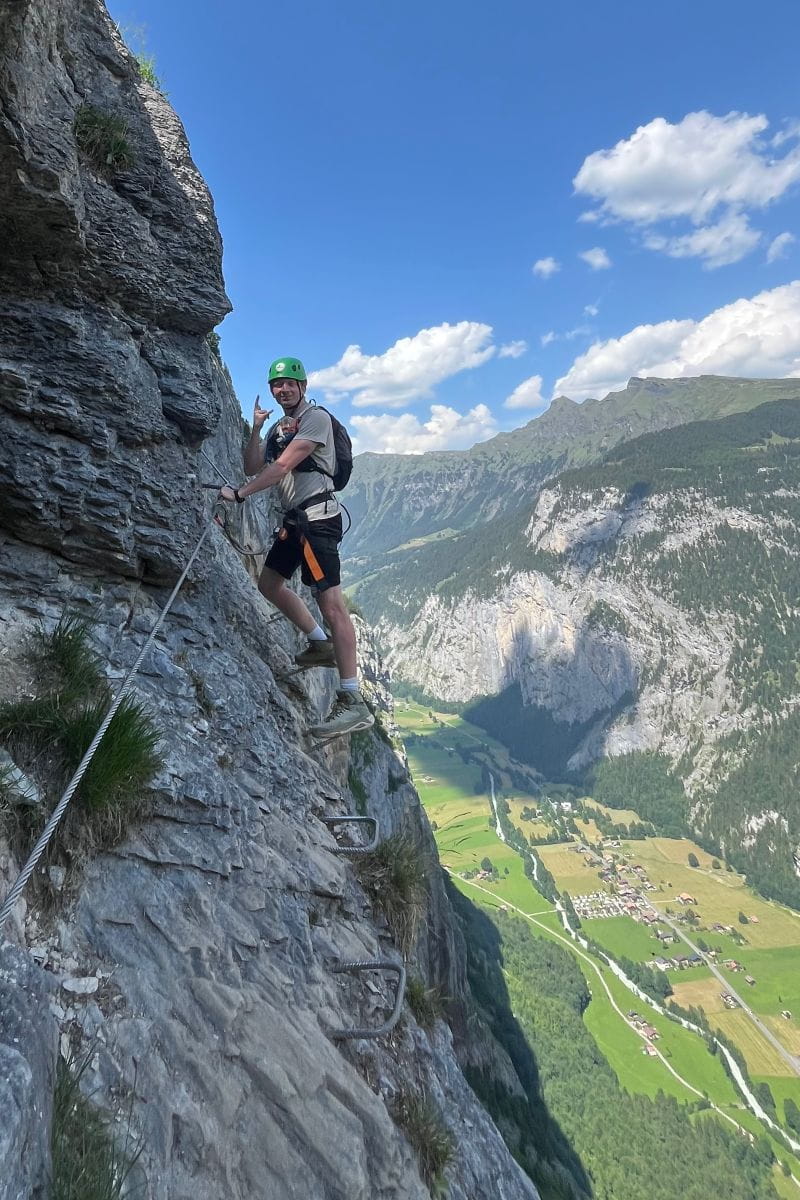
Menzel, an Aeronautical Science student, said he and his peers identified several interacting factors behind the disaster. The Alps contributed to orographic lifting, which occurs when terrain forces moist air upward, causing it to cool and potentially produce clouds, heavy precipitation and thunderstorms.
Mountain valleys further channeled winds and concentrated water flow. Warm, moist air from lower elevations mixed with cooler air near the mountains, increasing atmospheric instability.
“A stalled cold front was the reason for this storm to be so bad because it held the thunderstorms in one place,” Menzel said.
James said the steep terrain on the western side of the Alps slowed that cold front. Strong, moist airflow in the lower atmosphere was then directed up the valley, while wind direction and speed changed with altitude. Those conditions helped organize and strengthen the thunderstorms.
The thunderstorms kept “forming and moving northeastward across the same local area for many hours, producing prolonged torrential rainfall,” James said. “This phenomenon is called ‘echo training,’ where storms sequentially move across the same area, leading to flash flooding.”
The team’s initial question focused on an often-overlooked aspect of severe weather: the soil.
“We were interested in whether previous rainfall in the days before the flood would have weakened the soil enough to cause the avalanches, the rockslides and the mudslides,” Menzel said. “We learned soil degradation is a factor, but it wasn’t the leading cause.”
Students reconstructed the event using satellite and radar imagery. They reviewed reports documenting the flood’s effects and learned directly from MeteoSwiss meteorologists and other experts connected to the region.
“Study abroad gives students a cultural immersion experience that also provides opportunities for hands-on, applied meteorology research,” James said. “This project was an ideal example of what students can learn firsthand while on a short, four-week study-abroad program.”
The project gave the students a clearer understanding of how quickly weather systems can become dangerous over complex terrain — knowledge Menzel hopes to carry into a future aviation career.
“When I am flying, everything is always about the weather,” Menzel said.
Related News