The Worldwide & Online College of Arts & Sciences develops and supports career-ready graduates and advances all students to be lifelong learners and leaders in their professional disciplines.
Through the general education program, the college emphasizes academic rigor in critical thinking, global perspectives, creative problem solving, communication skills, scientific and cultural literacy, as well as ethical interaction with the contemporary world. In its academic degree programs, the college focuses on applied studies that implement state-of-the-art curriculum to educate students for long-term success in their profession.
The college conducts basic, applied and translational research and engages in creative work, providing mentored research opportunities for undergraduate and graduate students. In doing so, it fosters unique and innovative disciplinary, multidisciplinary and interdisciplinary research, approaches and applications to STEM, social and behavioral sciences, humanities and comprehensive civil security studies that have a societal impact.
Our industry and real-world-inspired courses build on the foundations
of critical thinking, quantitative reasoning, information literacy,
communication and scientific and cultural literacy, complemented by
opportunities to gain practical experience in your chosen field through
experiential learning.
Our academic degree programs emphasize applied studies that implement
state-of-the-art curricula to educate students for long-term success in
their professions.
Results
Focus on the flow of passengers and cargo through automated baggage systems. Learn integration, safety and operational coordination to support reliable airport movement and service continuity.
Airport Baggage Handling Systems Implementation program photo
Explore intelligent systems through ethical reasoning and creative problem solving. Examine how AI interacts with human values, cultural impacts and responsible innovation. Prepare to guide technology development that supports society rather than replaces it.
Artificial Intelligence, Ethics and Creativity program photo
Explore how messages shape technology, society and aviation environments. You’ll study media, technical writing and digital platforms to translate complex information into clear communication that engages diverse audiences in aviation, aerospace and STEM-driven settings.
Prepare to communicate effectively under pressure. You’ll explore how messaging and media strategies support organizations in crisis, analyze risk communication frameworks and develop skills to support resilience in high-stakes environments.
Crisis, Risk and Resilience Communication program photo
Translate complex datasets into actionable insight. You’ll develop expertise in programming, statistics and visualization to extract meaning from information and support evidence-based decisions across business, engineering and aviation sectors.
Explore how communities prepare for and respond to disasters. You’ll study planning, leadership and coordination across aviation, fire and public safety contexts, developing the skills needed to manage emergencies and support recovery efforts.
Develop leadership and coordination capabilities for emergency response environments. You’ll study risk assessment, operational planning and crisis communication to support organizations preparing for or managing high-impact events.
Focus on modern fire and emergency response systems. You’ll examine leadership, risk reduction and operational planning through aviation and fire service perspectives, earning credentials recognized by national fire and emergency management organizations.
Examine how national systems protect people and infrastructure. You’ll study emergency planning, intelligence coordination and policy development while learning how to manage threats and strengthen community and organizational resilience.
Study how people interact with machines, systems and environments. You’ll apply psychology, engineering and design to improve performance, safety and usability across operations.
Explore cognitive, physical and organizational factors that influence performance. You’ll study perception, decision making and system design to enhance human efficiency and safety.
Where global stability meets community preparedness. Examine how nations and organizations respond to conflict, disaster and environmental change. You’ll learn to design programs that build resilience and reduce vulnerability in complex systems.
Build a flexible academic path that integrates multiple disciplines. You’ll combine coursework from science, business, humanities or aviation to align your education with your personal interests and career goals across emerging global industries.
Learn the principles that keep workplaces safe. Study inspections, regulations and risk control methods that help protect employees, equipment and facilities across aviation and industrial environments.
Explore how organizations build safer workplaces. You’ll study hazard recognition, compliance and leadership while learning how to create safety programs that reduce risk and strengthen organizational performance.
Focus on preventing workplace incidents and promoting well-being. You’ll study safety planning, risk evaluation and regulatory compliance to build safer environments in aviation industries and beyond.
Where national security meets data analysis. Study intelligence collection, cyber operations and threat assessment to prepare for work in government, defense or private-sector security fields.
The Worldwide College of Arts & Sciences provides mentored research opportunities for undergraduate and graduate students. In doing so, we foster unique and innovative disciplinary, multidisciplinary and interdisciplinary research, approaches and applications to STEM, social and behavioral sciences and humanities.
Research
Our research projects have been supported by grants from the National Science Foundation (NSF) and the Natural Hazards Center (NHC), among others.
Worldwide College of Arts & Sciences faculty stand apart due to their varied backgrounds and commitment to a comprehensive and global perspective on education. All faculty are adept at specialized learning concepts in our wide range of degree programs.
The Worldwide College of Arts & Sciences delivers a flexible, high-quality education designed for students wherever they are. Through a blend of science, mathematics, humanities and social sciences, the college builds the critical thinking, communication and analytical skills that support success across aviation, aerospace and a wide range of professional fields.
Programs are designed with working adults and nontraditional students in mind, offering the ability to balance education with career and personal commitments. Courses emphasize real-world application, allowing students to immediately connect what they learn to their professional environments while developing new perspectives and capabilities.
Graduates of the Worldwide College of Arts & Sciences are prepared to adapt, lead and contribute in a rapidly changing global landscape. With a strong academic foundation and the flexibility to learn from anywhere, they are equipped to achieve their goals and make an impact in their organizations and communities.
The Embry-Riddle Worldwide College of Arts & Sciences develops and supports career-ready graduates and advances all students to be lifelong learners and leaders in their professional disciplines in digitally enabled, globally distributed learning environments.
Through the general education program, the college emphasizes academic rigor in critical thinking, global perspectives, creative problem solving, communication skills, scientific and cultural literacy, responsible engagement with emerging technologies, and ethical interaction with the contemporary world. In its academic degree programs, the college focuses on applied studies that implement state-of-the-art curriculum to educate students for long-term success in their profession.
Experienced faculty from diverse backgrounds prepare students to be analytically comprehensive by promoting disciplinary knowledge and the ability to conduct defensible analysis. The college supports learners through comprehensive student success components, experiential learning opportunities and engagement with public and private sector partners as well as international academic and professional collaborations.
The college conducts basic, applied and translational research and engages in creative work, providing mentored research opportunities for undergraduate and graduate students. In doing so, it fosters unique and innovative disciplinary, multidisciplinary and interdisciplinary research, approaches and applications to STEM, social and behavioral sciences, and humanities, as well as comprehensive security and resilience studies that have a societal impact. Furthermore, the college serves as a hub for education, research and engagement with government and industry in security and resilience and builds focus areas in fields such as humanistic STEM, data science or critical artificial intelligence studies.
The vision of the college is to be a destination college for multidisciplinary studies and impactful collaborative research as well as continue to be a national leader in general education, developing opportunities for our diverse student population to fulfill their educational goals and become responsive, responsible global citizens.
Strategic Guidance 2026-2028
Under the umbrella of Embry‑Riddle Aeronautical University's Strategic Plan, the College of Arts & Sciences pursues the following goals and strategies within its Vision and Mission Statement:
Goal 1: Enhance our students' experience through holistic and rigorous education as well as through research
Strategies:
Pursue to deliver a continuously improved, nationally leading general education program that provides the core competencies for subsequent student success in disciplinary education.
Provide a strong ethics and values foundation, including responsible engagement with emerging technologies.
Increase internal and external undergraduate research opportunities through capstone courses, the research heading in COMPASS (Center of Mentorship Programs and Student Success), the research pillar in VECTOR (Virtual Environment for Communication: Teaching, Outreach and Research), the research quadrant in EQUATES (Everything Quantitative for Teachers and Students) and research internships/partnerships with industry and government entities.
Prepare students for successful graduate studies and career success through state-of-the-art foundations, applied studies, critical thinking and competency for defensible analysis.
Offer out-of-class student enrichment opportunities in the form of professional society and honor society chapters, speaker series and international experience programs.
Institutionalize existing strategic initiatives into a coordinated and quality-managed set of student success components.
Offer research-based culminating experiences in flexible formats (such as capstones, internships, independent study courses, etc.)
Goal 2: Evaluate and advance our programs, certificates and curriculum
Strategies:
Grow the student base for our undergraduate and graduate degree programs:
Increase enrollments by systematically working in a coordinated effort to matriculate new students and re-engage with inactive students through a comprehensive communication approach, working together with enrollment management and advising.
Continue our strategic focus on minors to:
Develop professional education programs to serve additional constituencies, offer refreshers for graduates (state-of-the-art update webinars or executive short courses) and create an additional conduit into our degree programs.
Ensure the relevancy of academic programs and courses to enterprise (industry, government, military, private sector and international organizations) demand, including through pursuing program accreditation when applicable.
Maintain the quality and integrity of our degree programs with innovative, pedagogically sound, preventative and mitigating measures.
Goal 3: Elevate the profile and reputation of our college through excellence in education, research, creative works, professional leadership and innovation
Strategies:
Continue to have an agile social media presence with the goal of also connecting to more of our prospects, current students and alumni.
Achieve and demonstrate sectoral thought leadership through virtual and in-person speaker series, seminars, workshops and symposia.
Pursue joint, multi-disciplinary and interdisciplinary research through intra- and interdepartmental collaboration within the college, across the Worldwide Campus, across the University’s three colleges of Arts & Sciences, with other universities, with professional organizations, as well as through structured engagement with local/regional communities and federal agencies.
Consolidate the college’s footprint as a research provider and underpin our strategic dissemination goal through the curation of a quality student paper and faculty open-access publication repository on AERO Commons (Embry‑Riddle Hunt Library).
Develop student and alumni affinity through outreach and engagement activities.
Increase the visibility of college research and scholastic accomplishments through traditional and non-traditional channels.
Goal 4: Strengthen our faculty and college through engagement, coordination, collaboration and partnership
Strategies:
Promote a strong community of excellence of highly engaged full-time and part-time (adjunct) faculty.
Focus on and support the enhancement of teaching quality and teaching to the state of the art in the respective field(s), which also sets our undergraduate programs apart from community colleges.
Establish and resource targeted focus areas or faculty research groups in:
Create a comprehensive approach to faculty mentoring and development.
Create a comprehensive approach to faculty appreciation and recognition.
Work with various University units to create a greater global awareness of our degree programs and innovative scholastic and professional contributions.
Review and effectuate business processes within the college and continue to build a solid internal communication and information-sharing structure.
Improve the college’s research potential and footprint; in particular, through programmatic engagement with stakeholders and professional communities.
Goal 5: Implement an interdisciplinary, interdepartmental virtual collaboratory for security and resilience education, research and engagement, as well as implement additional focus area(s)
Strategies:
Achieve research excellence as evidenced by peer-reviewed scholarly publications, externally funded research grants, and industry and academic research collaborations.
Achieve academic excellence as evidenced by the development of strategic interdisciplinary courses that provide highly desirable career competencies as well as undergraduate and graduate student research experiences.
Build the core for an interdisciplinary, cross-departmental Graduate Academy for Advanced Security and Resilience Studies.
Become an educational partner for local, state and federal agencies in the homeland security enterprise.
Establish a Virtual International & National Guest Scholars (VINGS) Program.
Become a consortium partner in a U.S. Department of Homeland Security Center of Excellence by participating in relevant grant requests for proposals.
Establish a conference, workshop and webinar series.
Establish at least one new research partnership per academic year for each additional focus area beyond Embry-Riddle (e.g., with other scholars at other institutions, public sector agencies, private sector and non-profit organizations, industry and NGOs)
Department of Emergency, Disaster and Global Security Studies
College of Arts and Sciences
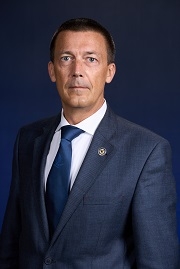
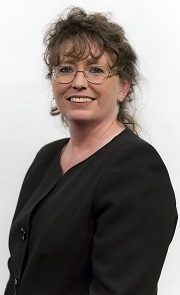
Meet the Dean
Welcome to the Worldwide & Online College of Arts & Sciences at Embry-Riddle Aeronautical University. Through a blend of science, mathematics, humanities and social sciences, the college builds the critical thinking, communication and analytical skills that support success across aviation, aerospace and a wide range of professional fields. Our general education program and STEM-designated degree programs develop career-ready graduates and advance all students to be lifelong learners and leaders in their professional disciplines. I invite you to explore our programs, connect with our community and discover what is possible at Embry-Riddle.
Department of Human Factors, Safety and Social Sciences
College of Arts and Sciences
EQUATES: Elevate Your Quantitative Skills
Everything Quantitative for Teachers and Students (EQUATES) supports both faculty and students through videos that enhance teaching and learning, a peer tutoring center, professional development workshops and research. Learn more about Equates.
H-STEM: Empowering an Interdisciplinary Mindset
Humanistic STEM (H-STEM) is an interdisciplinary student success component that integrates perspectives from STEM disciplines (science, technology, engineering and mathematics) and the humanities to prepare students with the interdisciplinary mindset, creativity and communication skills needed to address complex problems that transcend disciplinary boundaries.
PATHWAYS is the home for various resources united by their commitment to fostering a culture of achievement and growth. With a mission to empower students to excel in their academic pursuits and beyond, PATHWAYS offers a wide array of resources and opportunities tailored to both meet individual interests and goals and to foster a community of scholars. Learn more about PATHWAYS.
VECTOR: A Trajectory for Student Success
Visual Environment for Communication: Teaching, Outreach and Research (VECTOR) supports student success and faculty excellence through the Virtual Communications Lab (VCL), a hub for communication, instruction, research and collaboration. VECTOR also fosters a vibrant community of teaching and scholarship by supporting faculty through professional development, collaborative research, writing groups and the Communication Across the Curriculum program. Learn more about VECTOR.
The coursework was immediately relevant to my career goals, and I appreciated how assignments allowed me to apply lessons to real-world scenarios... With the support of outstanding faculty and peers, I developed practical skills that helped turn academic projects into professional accomplishments.”
Emma Villarreal (’22), M.S. in Occupational Safety Management