
Displaying 145-156 of 182 Results

Embry-Riddle Team More Than Doubles World Record for Amateur Liquid Rocket Flight
On April 16, all eyes in the launch bunker were on Deneb, a rocket built and designed by nine undergraduate students from Embry‑Riddle Aeronautical University.
May 11, 2023

Eagle Earns NASA Fellowship for Contributions to Ongoing Gravity Research
Ryan Kinzie, an Embry‑Riddle Aeronautical University doctoral student, has been selected as a NASA Space Technology Graduate Research Fellow, a recognition that comes paired with an $84,000 grant, which can be renewed for up to four years, plus a yearly stipend.
May 1, 2023

Undergraduate Researchers Target Space Debris Removal in Rare Publication Opportunity
Aerospace Engineering student Spencer John has translated his lifelong love of space into a significant accomplishment: publishing a paper in an academic journal as an undergraduate student.
February 23, 2023

Eagles Design Experimental Fuel System to Power Liquid-Propellant Rocket Engines
Aerospace Engineering students Alex Clay and Samir Ahmed have spent the past four years at Embry‑Riddle Aeronautical University manufacturing complex liquid-propellant rocket engines. Now, as they near graduation, there is one last thing they’d like to do: Prepare for ignition.
February 21, 2023

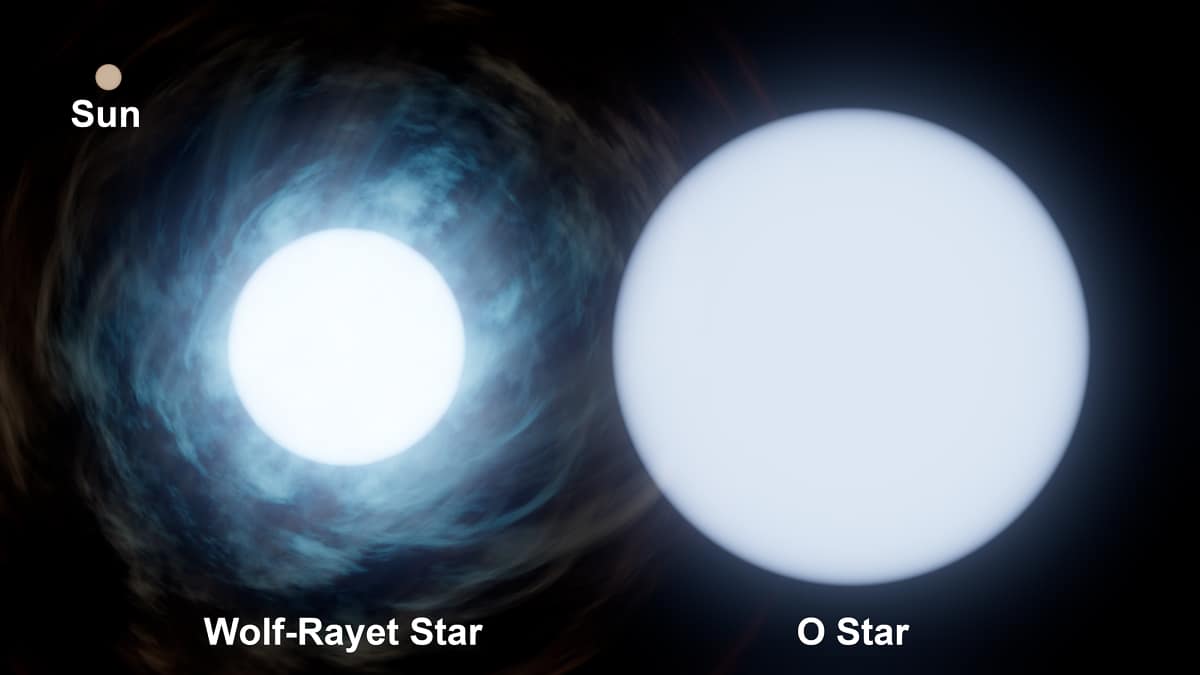
When Your Supernova’s a Dud: Rare Binary Star Features Weirdly Round Orbit, Embry-Riddle Researchers Report
After crunching a mountain of astronomy data, Clarissa Pavao, an undergraduate at Embry‑Riddle Aeronautical University’s Prescott, Arizona, campus, submitted her preliminary analysis. Her mentor’s response was swift and in all caps. “THERE’S AN ORBIT!” he wrote.
February 1, 2023

Simulated Space Mission Inspires New Thinking
Watching your payload shatter as it hits the ground at 50 mph would be disheartening to most, but to the members of a unique Embry‑Riddle Aeronautical University club, failure is just an opportunity to improve.
January 30, 2023
Eagles Visit Intuitive Machines to Make Final Preparations on EagleCam CubeSat
Two students from Embry‑Riddle Aeronautical University’s Space Technologies Laboratory recently visited Intuitive Machines (IM) in Houston to put the finishing touches on the EagleCam CubeSat, which is scheduled to launch to the moon later this year.
January 25, 2023

Teenage Eagles Earn Black Belts, Upperclassmen Status Before 18th Birthdays
Luca Guida was just 12 years old when he took his first college course.
January 23, 2023

Intuitive Machines and Columbia Sportswear Launch New Scholarship Program at Embry-Riddle
Taylor M. Yow set her career path in high school. More than anything, she wanted to become an engineer, working on spacecraft and orbital calculations. She didn’t realize just how quickly she would become a part of science history after arriving at Embry‑Riddle Aeronautical University.
January 10, 2023
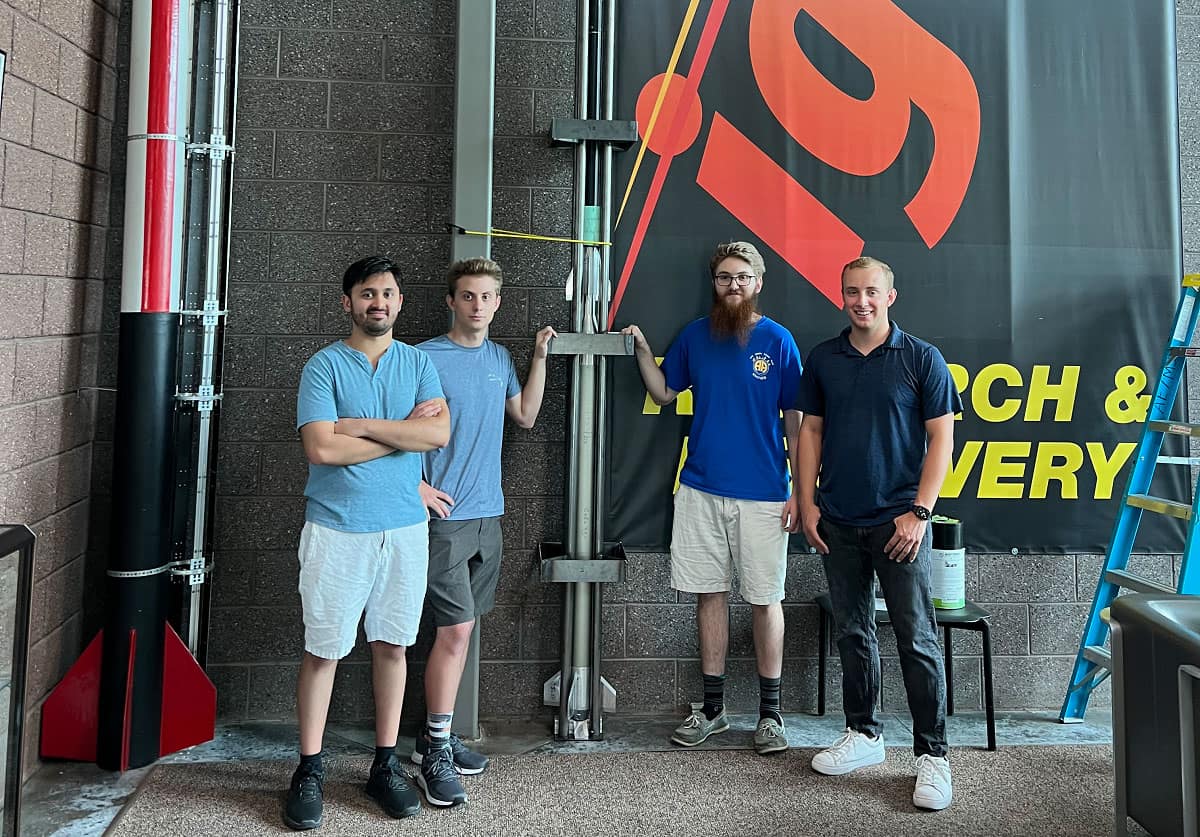
Embry-Riddle Student Team Developing Low-Cost Recoverable Rocket
Embry‑Riddle Aeronautical University students are designing a rocket that can soar through the Earth’s atmosphere and reach outer space, only to be recovered through a parachute system for reuse. The project’s aim is to make spaceflight more affordable to researchers — especially student researchers and those working in higher education.
December 7, 2022
Embry-Riddle Astronomer Helps Analyze Stunning New Stardust Image
Just as a rock thrown into a pond creates an undulating pattern of circular ripples, some double star systems called binaries can push rings of dust into space as one star orbits around its partner, Embry‑Riddle Aeronautical University astronomer Noel D. Richardson explains.
October 12, 2022

Famous Poem Helps Eagle Decode Gender Discrimination in STEM
Graduate student Kayla Taylor, mentored by professor of Humanities Dr. Ashley Lear, will present a unique study on women in astronomy, at the International Astronautical Congress (IAC) in Paris this fall.
September 9, 2022