
Displaying 13-24 of 48 Results

Eagle-Built Interactive Dashboard Offers Insight Into FAA Data on Drone Sightings
An Embry-Riddle student has built an interactive public dashboard that visualizes FAA drone sighting data by location, time and type, making it easier for researchers and safety officials to identify trends in uncrewed aircraft activity.
September 12, 2025

Drones, AI Give Embry‑Riddle Researchers a Fresh Look at Florida Lake
Embry-Riddle researchers are partnering with Stetson University to survey aquatic plant life on Lake Beresford in DeLand, Florida, using drones and AI image analysis to assess the health of the lake's ecosystem.
August 20, 2025
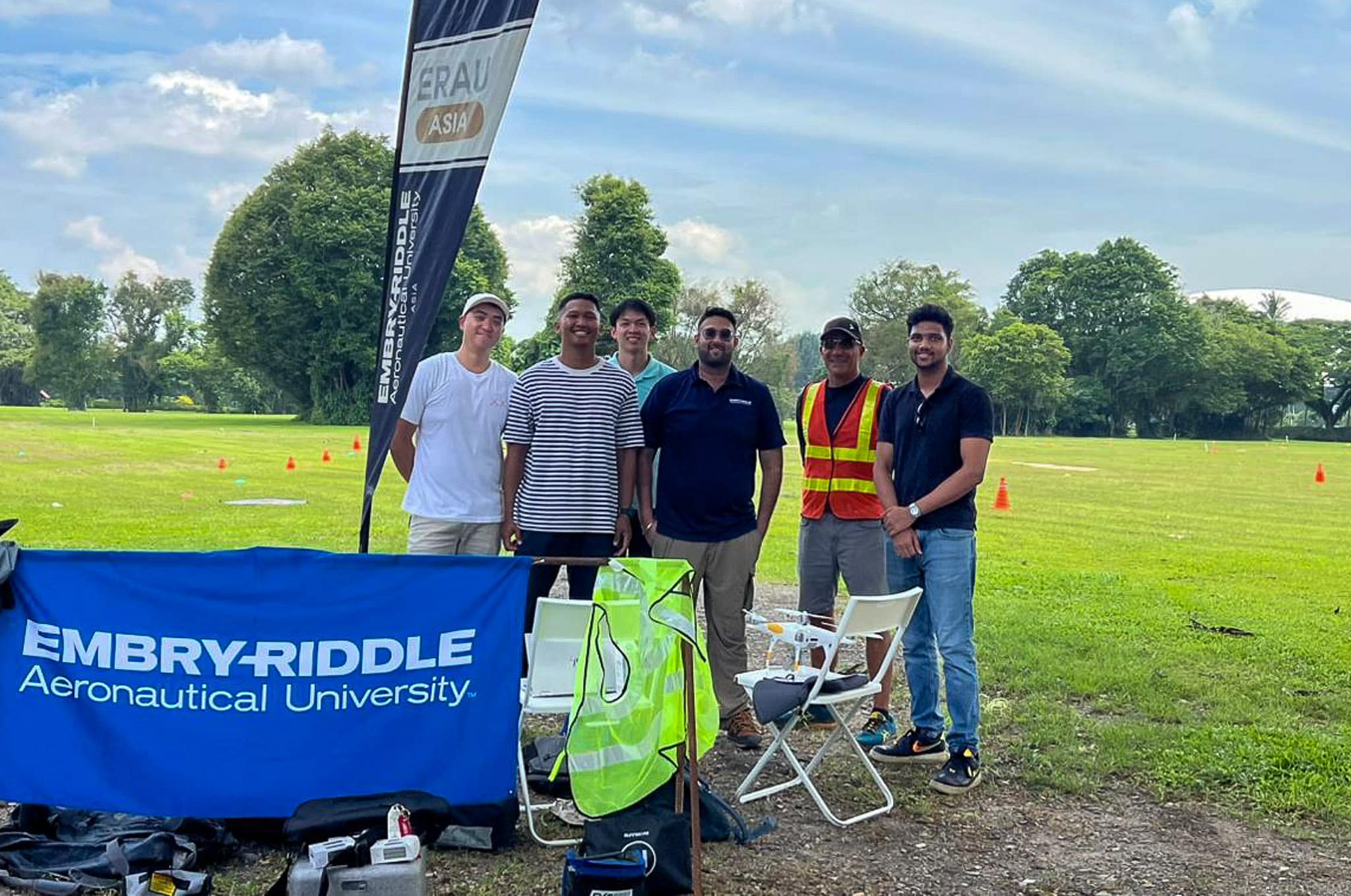
First Embry‑Riddle Worldwide Students Earn Pilot Licenses to Operate Drones in Singapore
Embry-Riddle's Worldwide Asia Campus has launched a new course through which students can earn official drone pilot licenses recognized by Singapore's Civil Aviation Authority, completing the country's regulatory requirements for commercial UAS operations.
August 18, 2025
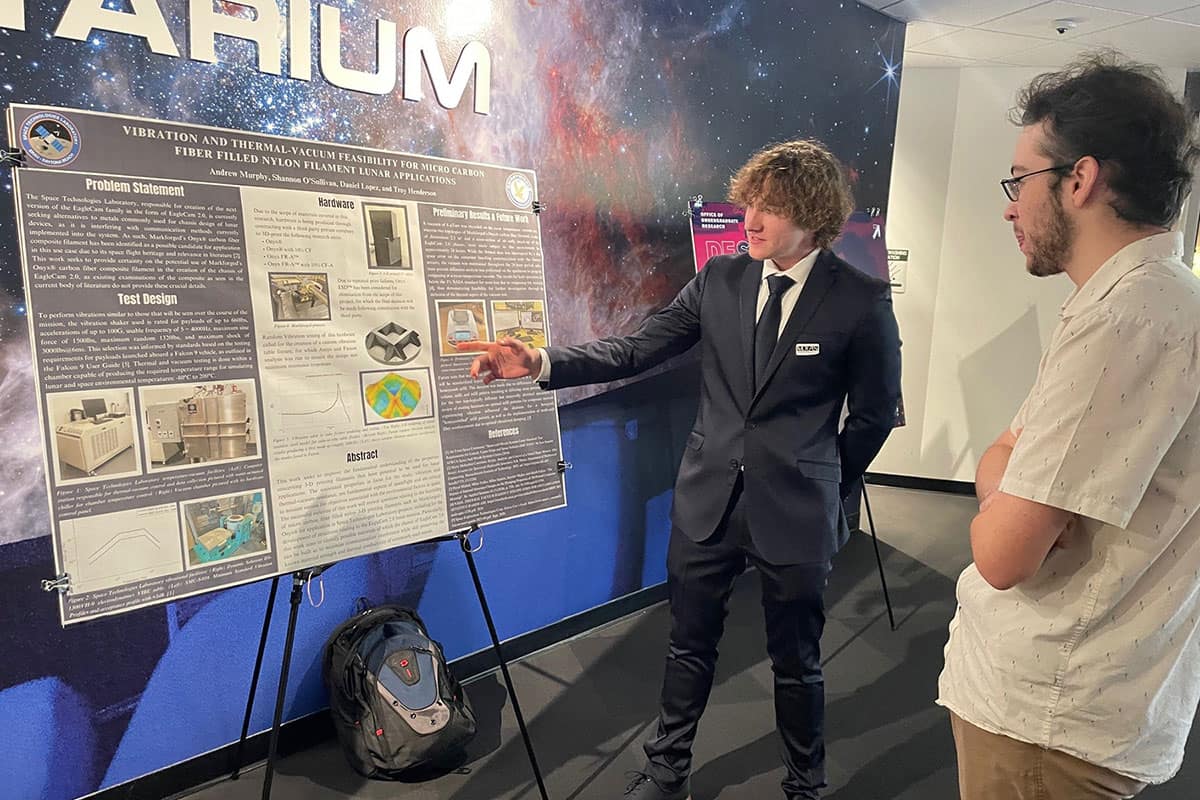
Embry-Riddle Students Share Research With Community at Museum Event
Embry-Riddle students showcased their undergraduate research to the public at the Museum of Arts and Sciences in Daytona Beach, bringing aerospace and applied science projects out of the lab and into the community at the university's inaugural museum showcase.
July 29, 2025

FAA Study Led by Embry‑Riddle Warns of Drone Risks to Aircraft
An FAA-commissioned study led by Embry-Riddle researchers found that drones are routinely flying above the 400-foot regulatory ceiling, raising significant safety concerns about the growing risk of mid-air conflicts with crewed aircraft.
July 15, 2025

Two Embry-Riddle Undergraduates Named Goldwater Scholars
Aerospace Physiology junior Natalie Brattain and Space Physics sophomore Grace Gratton have been named 2025 Goldwater Scholars - the first time Embry-Riddle has had two recipients in a single year - in recognition of their research in space medicine and heliophysics.
June 26, 2025

Aviation Week Op-Ed: Gaetz Aerospace Career Academy Provides Clear Path to Aviation and Aerospace Careers, Embry‑Riddle President Writes
Embry-Riddle President P. Barry Butler argues in an Aviation Week op-ed that the Gaetz Aerospace Career Academy - which connects high school students with college-level aviation coursework - can serve as a national model for building the next generation of aviation and aerospace professionals.
May 29, 2025

Drone System for Managing the Herd Takes Eagle Team to NASA's Blue Skies Competition Finals
An Embry‑Riddle team has been named a finalist at NASA's Blue Skies Competition, which challenged students to develop innovative aviation-related systems to support agriculture.
May 21, 2025

Embry‑Riddle Team Receives Federal Grant to Train First Responders in Drone Operations for Disaster Response
May 8, 2025

Embry‑Riddle Student Team Creates a Life-Saving Aircraft for Emergency Response
April 16, 2025
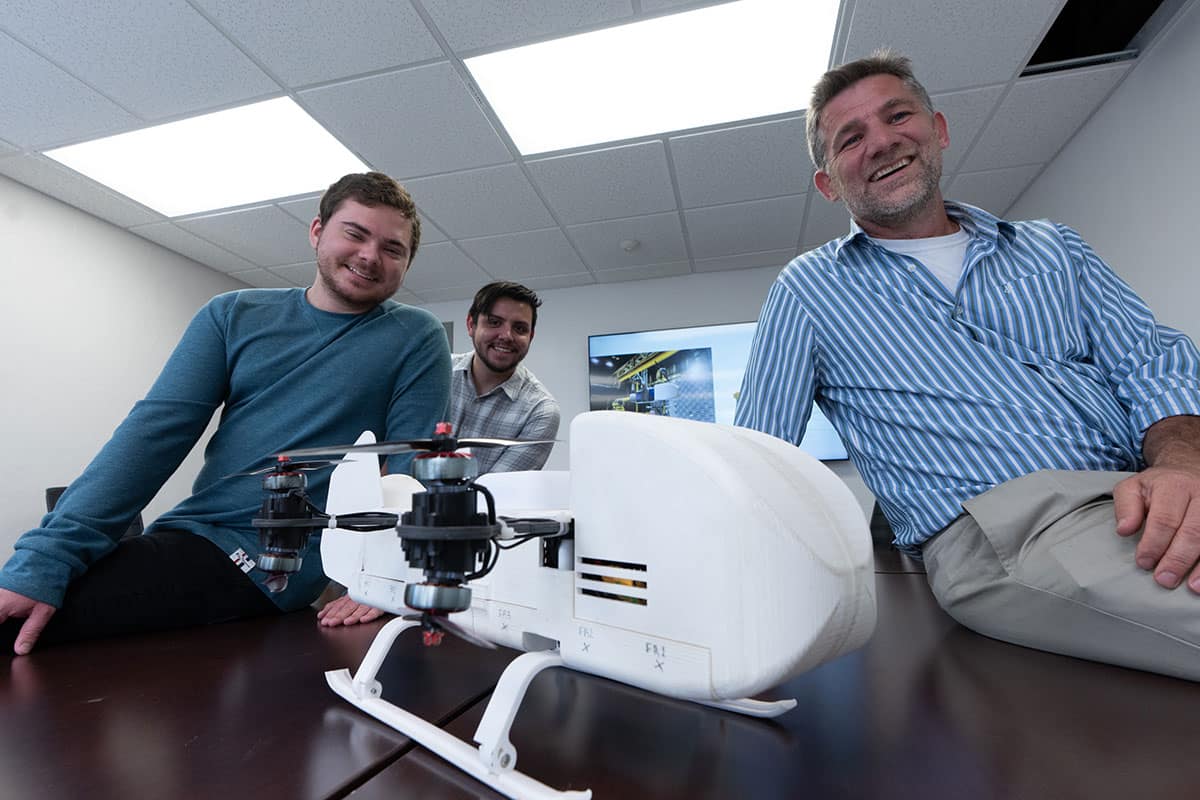
Embry‑Riddle Team Contributes to Design of NASA Rotorcraft Destined for Saturn’s Moon Titan
March 17, 2025

Embry‑Riddle Team to Lead $6.7 Million NASA Project to Advance Safety of Next-Generation Air Mobility
March 11, 2025