

The Advanced Dynamics and Control group focuses on the development and implementation of guidance, navigation and control of aerospace systems and research on a broad range of topics focused on flight dynamics.
The group supports activities aimed at advancing aviation and space technologies through the development of concepts, implementation and demonstration of solutions with research efforts that span several areas, including but not limited to: investigation of technologies to integrate UASs into the National Air Space; design of intelligent systems to increase aviation flight safety; application of robotic technologies for future space missions; fundamental and applied research in manned and unmanned aerospace systems including avionics and payload systems design, aircraft modeling and parameter identification, multiple sensor fusion, formation flight control, human-machine interface, and remote sensing.
The research group involves graduate and undergraduate students motivated to learn and performing research on a broad range of topics in Dynamics and Control.
Advancing Autonomous Flight Through Intelligent Systems
See how Embry-Riddle’s Advanced Dynamics and Control group is pushing aerospace forward with AI-driven autonomy, GPS-independent navigation and resilient system design. Watch how students and researchers collaborate across disciplines to solve complex challenges and build smarter, safer aircraft.
Research
Free-Flying Unmanned Robotic Spacecraft for Asteroid Resource Prospecting and Characterization
In this project, Embry‑Riddle Aeronautical University (ERAU) and Honeybee Robotics (HBR) are developing an integrated autonomous free-flyer robotic spacecraft system to support the exploration and subsequent resource utilization of asteroids as well as other planetary bodies and moons. The proposed spacecraft will address the first step towards In Situ Resource Utilization from Near Earth Object bodies; namely, it will prospect it with sample acquisition devices and characterize the NEO for ISRU potential. Embry‑Riddle and Honeybee Robotics are focused on an innovative resource prospecting mission concept based on autonomous small marsupial free-flyer prospector spacecraft. Such technologies are currently being developed at ERAU. The spacecraft will utilize unique technologies such as MicroDrills and Pneumatic Samplers previously developed under other SBIR projects by Honeybee Robotics. In particular, the proposal will focus on flight control and reconfiguration for guidance under extreme environments, vision-aided navigation approaches, and sampling systems design, testing and evaluation. The successful completion of the proposed research is anticipated to provide a theoretical and experimental framework to investigate the capabilities of a marsupial-based robotic system to explore and extract samples from terrains that would be inaccessible to traditional rover-type vehicles and where traditional flight guidance and navigation sensors, such as GPS receivers and magnetometers, are not functional.
Sponsors:
- National Aeronautics and Space Administration (NASA)
- SBIR/STTR Technologies
Mini Free-Flyer Spacecraft: Autonomous Motion in Microgravity
Watch two free-flying robotic spacecraft demonstrate independent attitude control and reorientation in a simulated space environment. This test highlights the control and navigation approaches being developed for autonomous asteroid prospecting and in-situ resource exploration.


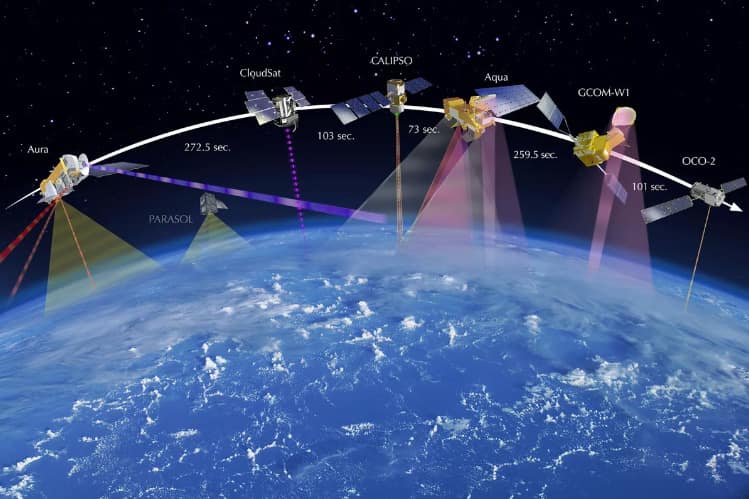 As space system technologies continue to progress, space systems will require more robust, online health monitoring systems that are capable of identifying and compensating for faults or threats to the system. Due to unforeseen circumstances and naturally occurring threats, an on-board fault diagnosis system for space vehicles capable of autonomous Threat Detection, Isolation, and Recovery (TDIR) is necessary to maintain space operations and mitigate operational gaps as mission complexities increase. Data-driven methods are being explored for FDIR in aerospace systems.
The ADCL lab has developed a health monitoring system tool that employs machine learning algorithms such as Support Vector Machine, incremental learning and the principle of self-nonself-discrimination to distinguish between nominal and failure data. This methodology addresses the complexity and multi-dimensionality of aerospace system dynamic response in the context of abnormal conditions and is aimed to assist spacecraft with recovery maneuvers in real-time.
Machine Learning-Based Fault Detection in Action
Watch how a machine learning model classifies system behavior in real time as operating conditions evolve. The shifting regions reveal how the model adapts its fault detection boundaries as more data is introduced.
Integrated Gravity Off-Loading Robotic System
The IGOR facility is an alternative solution for testing guidance and control algorithms of Aerospace Unmanned Systems where it is possible to have six degrees of freedom plus translation in all three axes. The system has the capability of carrying spacecraft using a cable and following its motion by using a X-Y tracking active system. It also has a gravity offload device that simulates reduced gravity, which allows different space environments to be simulated.
Sponsor:
- National Aeronautics and Space Administration (NASA)


IGOR System: Controlled Motion Testing
Watch the IGOR system execute precise, controlled movements along a defined path to demonstrate its motion capabilities. This test highlights how the platform tracks and responds to commanded inputs in real time.
Motion-Based Flight Simulator Research
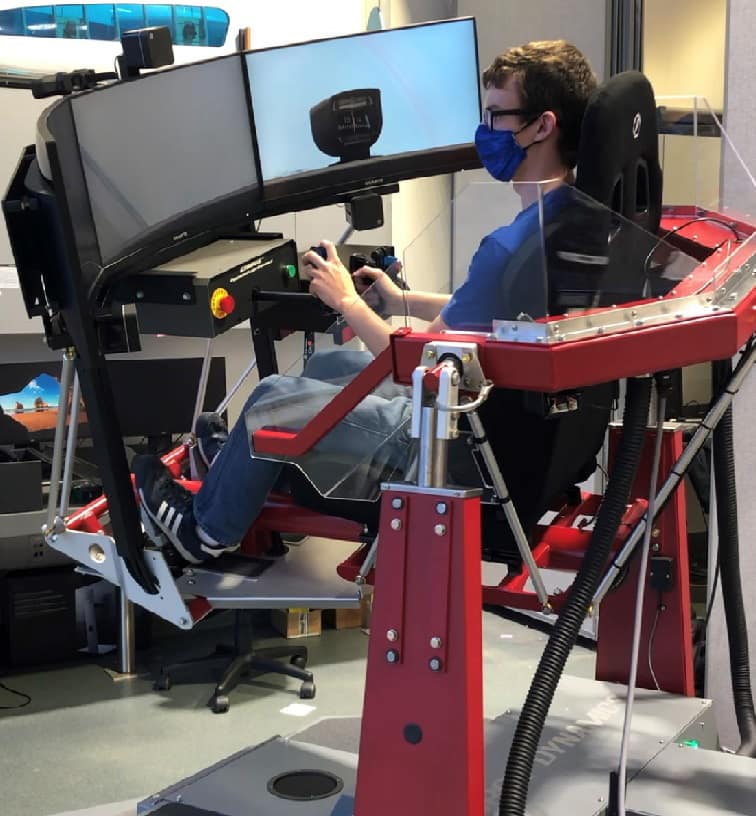 This motion-based six-degree-of-freedom flight simulator supports the design, development and testing of advanced intelligent algorithms to enhance aviation operational safety and technology. This device allows the validation and verification of advanced flight control systems and algorithms to preserve an acceptable level of safety during real flight operations. Another important area that this simulation tool supports is the analysis and evaluation of the pilot’s behavior and his/her interaction with onboard flight control mechanisms. This leads towards research and development to detecting pilot abnormal conditions or inadequate response, assessing adverse interactions with intelligent control laws, and developing mechanisms that can mitigate their effects through design and ad-hoc countermeasures.
Sponsor:
- Florida Department of Education UAS Facility
Flight Simulator in Motion
A student tests a motion-based flight simulator as the cockpit tilts and rotates with him inside it. The shifting angles and responsive controls give a clear sense of how real-world flight dynamics are recreated in the lab.
Pilot-in-the-Loop Mobile Research Test Bed
This project aims at developing and implementing a Mobile UAV Ground Control Station (GCS). The system will support aviation safety research with pilot-in-the-loop capabilities using unmanned aerial systems platforms and where flight conditions, such as subsystems failures, could be simulated in real-time to characterize pilot response, control laws performance, and human-machine and control laws interactions. A fruitful achievement of this project will provide a platform to validate and assess new concepts and technologies that are beneficial for improving engineering fidelity of early systems integration testing based on pilots feedback and their interaction with on-board flight controls systems.
Sponsor:
- Embry‑Riddle College of Engineering


Resilient Multiagent Robotic Systems
Several mission applications that involve the deployment of groups of autonomous vehicles demand decentralized swarming capabilities and require advanced and novel technologies to increase overall mission performance, particularly if they are operating under complex and dynamically changing environments. These advanced autonomous systems based on single-agent or multi-agent cooperative networks require adequate intelligent systems to increase mission safety and optimize performance within complex, unstructured and dynamic operating environments. The purpose of this project is to develop intelligent algorithms to improve resilience of multi-agent systems (MAS). A general architecture inspired by the functioning of biological mechanisms is designed to increase autonomy in a swarm of unmanned aerial vehicles (UAVs) through self-learning, self-organizing and optimal flight trajectories. We demonstrate and evaluate on-board intelligent techniques at different levels by combining self-detection, self-diagnosis, self-recovery and self-organization as a means to increase the safety of swarm missions, optimize endurance and maintain performance within hazardous operating environments with minimal human intervention.
Sponsor:
- Internal Grant
Resilient Multiagent Drone Swarm in Flight
Watch a team of autonomous drones fly in coordinated formation using decentralized control and swarm intelligence. This demonstration shows how multi-agent systems maintain stability and performance while adapting to dynamic, real-world environments.
Intelligent Algorithms for Mission Protection of UAVs
The general objective of this research effort is the design, development and proof-of-concept demonstration through simulation and flight tests of intelligent algorithms for mission protection of aerial systems. The goal is to develop a UAV research platform with fully autonomous capabilities that would support broad areas of guidance, navigation and control technologies. This includes sensor fusion, vision-aid navigation, modeling and simulation of aerospace systems.
Intelligent Systems have been developed, implemented and tested in flight test using a 3DR quadcopter testbed. Through an autonomous decision-making process, the vehicle is capable of re-planning its trajectory in real time. Few capabilities the vehicle has are unknown obstacle avoidance, re-planning capabilities due to low battery in the system, re-planning capabilities if the system has an internal failure and more.
Further testing and design is in progress for a more robust autonomous intelligent system.
Sponsor:
- ERAU Student Internal Grant


This research focuses on autonomous spacecraft to not only identify and travel toward moving targets but also repair them, inspect them or assemble new objects entirely from scratch, using a vision-based navigation system that employs wireless communication for tracking and formation flight. The proposed algorithm also uses neural network-based machine learning to identify, track and estimate the positions and intent of other nearby flying agents. This research project was featured in the Embry-Riddle news article, "Eagle-Designed Space Drones Target In-Orbit Construction."
Sponsor:
- Award from the U.S. Air Force


Flight Demonstration of Novel Atmospheric Satellite Concept
The Dual-Aircraft Platform (DAP) is a Phase II NASA Innovative and Advanced Concepts (NIAC) research effort investigating a novel concept for achieving a low-cost atmospheric satellite in the lower stratosphere, which utilizes a combination of wind and solar energy capture. DAP consists of two glider-like unmanned aircraft connected via a thin, ultra-strong cable. Long-duration flight simulations have shown the platform could literally sail without propulsion, using levels of wind shear persistently found near 60,000 feet, and substantially increase the energy available for useful payload operations. The central objective of the Phase II effort is to perform autonomous proof-of-concept flight demonstrations of the DAP concept using a small-scale prototype at low altitude. Related objectives are developing specific flight maneuvers and mechanisms required for station keeping and validating the autonomous guidance and control software.
Sponsors:
- National Aeronautics and Space Administration (NASA)
- SBIR/STTR Technologies


Cybersecurity Research of Unmanned Aerial Vehicles
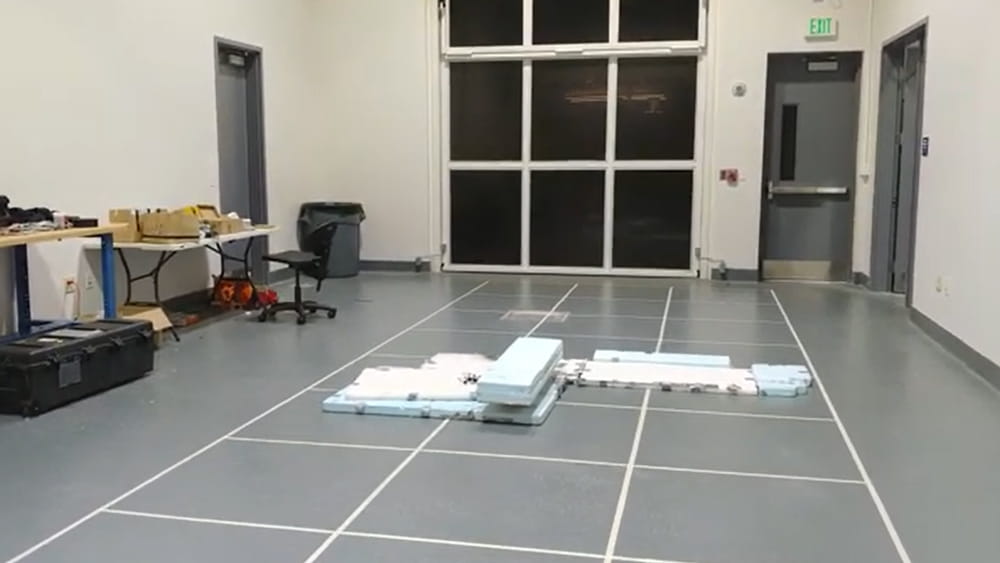
This project, funded by the National Science Foundation (NSF), establishes a new Research Experiences for Undergraduates (REU) Site at Embry‑Riddle Aeronautical University. This project focuses on cybersecurity research for unmanned aerial vehicles (UAVs). Each summer, undergraduate students participate in research to understand cybersecurity challenges for UAVs and how to design algorithms and techniques to protect UAVs from cyber-attacks. Research activities in this project explore the cybersecurity of UAVs from multiple angles, including secure communication, data privacy protection, secure control systems for autonomous UAVs, etc.
This past summer, three students (two from ERAU and one from UNLV) initiated this project at ADCL. They were able to perform successful flight tests with a quadcopter that they had set up and commenced the design of a control system for cyber-attack detection in UAVs.
Sponsor:
- National Science Foundation
Test Flight
Watch an indoor test flight of the students' quadcopter.
Vicon Room
The UAS Indoor Testing Facility features a 40'x20'x20' test area with a 16-camera Vicon motion capture system. This facility provides substantial footprint and technology for use in guidance, navigation and control development and testing for autonomous flight and ground vehicles, formation flight, sense and avoid in complex environments, and cooperation between multiple autonomous agents. The ability to perform indoor free flight testing enables research teams to implement and test position estimation on small to medium-sized vehicles within a safe, controlled setting.Check the availability and schedule your test.

Media
- The Advanced Dynamics and Control Group is pleased to highlight the participation of its students in the book Advances in Intelligent Fault-Tolerant Aerospace Systems and Applications, edited by Dr. Hever Moncayo and published by AIAA. Graduate students and researchers, including Michael Budihartono, Edison Martinez, and Rocío Jado Puente, contributed to chapters of the book.
- The Advanced Dynamics and Control Group is proud to announce a new academic and research collaboration with Universidad del Valle in Colombia, enabled by the Fulbright Scholar Grant awarded to Dr. Hever Moncayo. Through 2028, Dr. Moncayo will travel to Colombia each summer to collaborate with faculty, students, and researchers at Universidad del Valle. This effort will help expand the group’s international impact and contribute to the development of aerospace research and education in Colombia. Read more about the Fulbright Scholar award.
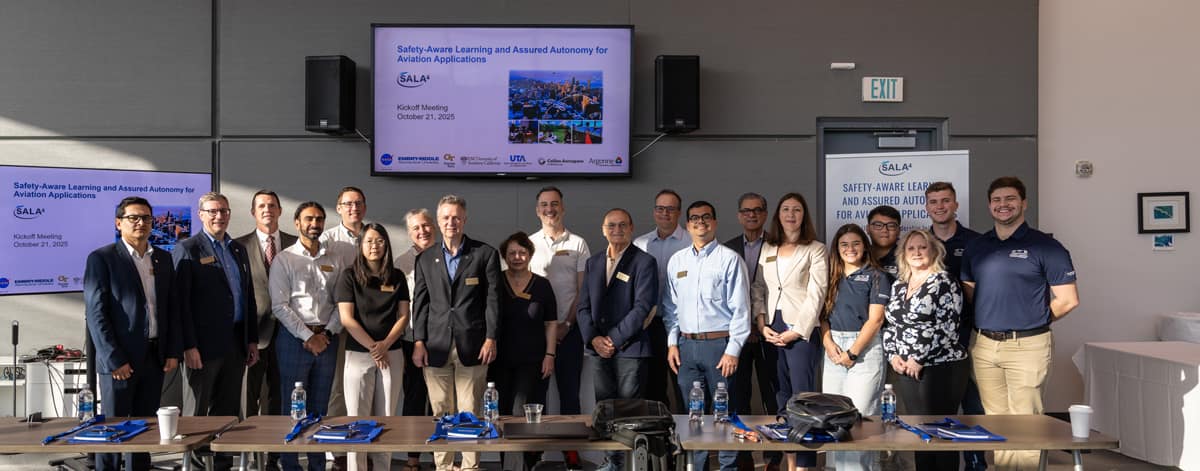
- The NASA SALA4 Project Team gathered for the official kickoff meeting at Embry‑Riddle Aeronautical University on October 21, 2025. The event featured productive technical discussions and opportunities to connect with colleagues across all partner institutions.
- Our research group is proud to lead a new NASA University Leadership Initiative (ULI) project focused on advancing the future of air mobility through increased autonomy and operational safety. This exciting effort brings together a strong collaborative team, including Georgia Tech, the University of Texas at Arlington, the University of Southern California, Collins Aerospace, and Argonne National Laboratory. Together, we aim to develop transformative technologies that will shape the next generation of intelligent and resilient air transportation systems. Read more about the NASA ULI project.
- We are thrilled to announce our most recent paper published in Acta Astronautica Journal, discussing the use of machine learning generative models to enhance the accuracy of vision-aided relative positioning in space proximity operations. Access the online publication.
- Our research work on mitigation of pilot-induced-oscillations using machine learning was recently highlighted by Embry-Riddle News! Learn more in Eagles Use AI to Improve Aviation Safety.
- We are very proud to announce that one of our graduate students, Gabriela Gavilanez, was recently named one of Aviation Week Network’s 20 Twenty Class of 2024. Big news! Congratulations, Gabriela! Follow this link to the press release.
- Our Ph.D. student Michael Budihartono attended AUVSI Conference and demonstrated the capabilities of Vicon system performing coordinated flight of multi-agent crazyflie system.
- Our group presented five conference papers at the AIAA SciTech Conference 2023, held in Baltimore, Maryland.
- Hever Moncayo was a Visiting Researcher at the NASA Jet Propulsion Laboratory during Summer 2022.
- Hever Moncayo is now AIAA Associate Fellow, Class of 2022.
- Research project sponsored by the U.S Air Force was featured in the Embry-Riddle News article, "Eagle-Designed Space Drones Target In-Orbit Construction."
- Our group presented five conference papers at the AIAA SciTech Conference 2022, held in San Diego, California.
- Martinez E., Moncayo H., Morillo E., Rivera K., On-Board Intelligence for Safe Trajectory Generation and Protection, Advances in Intelligent Fault-Tolerant Aerospace Systems and Applications, https://doi.org/10.2514/5.9781624107665.0345.0400
- Budihartono M., Moncayo H., Jado R., Intelligent Distributed Health Management for Aerospace Applications, Advances in Intelligent Fault-Tolerant Aerospace Systems and Applications, https://doi.org/10.2514/5.9781624107665.0069.0112
- Moncayo H., Cuenca Demidova A. A., Geomagnetic-aided passive navigation, US Patent 12,265,162, https://patents.google.com/patent/US12265162B2/en
Gallery


Our People
Associated Labs & Facilities
- Daytona Beach College of Engineering
- Daytona Beach Campus
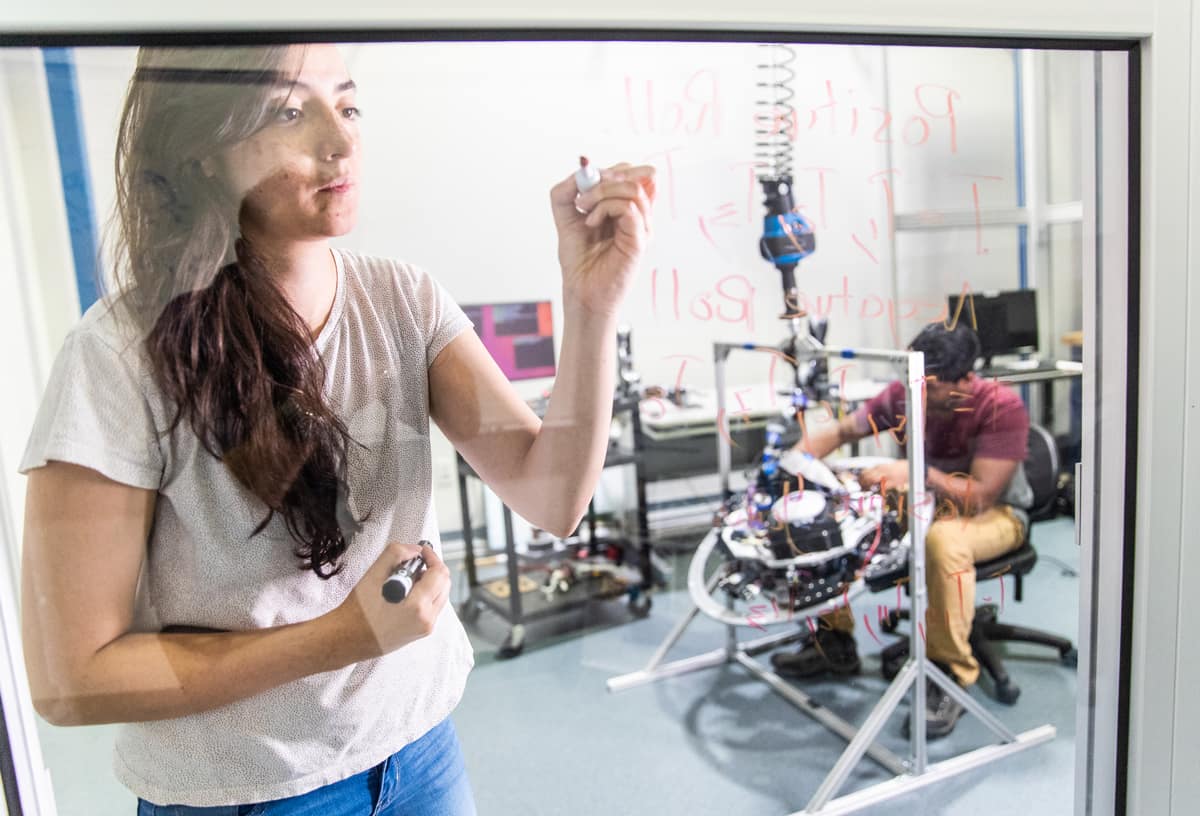
- The Advanced Dynamics and Control Lab (ADCL) supports research activities aimed at advancing aviation and space technologies.
Related Resources
Contact Us
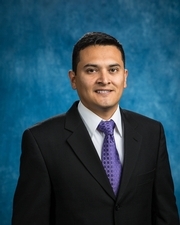
Hever MoncayoGroup Director
MicaPlex 107 and 108, LB 231
Daytona Beach, FL 32114