Skip Navigation
  • Online
  • On-Campus
Embry-Riddle logo
  • Get Info
  • Visit
  • Apply
  • Admissions and Financial Aid
    • Explore Embry-Riddle
      • Request Info
      • Visit Campus
      • Virtual Tours
      • Virtual Info Sessions
      • Admissions Events
      • Chat With Admissions
      • Your Degree Path
    • Undergraduate Admissions
      • First Time Students
      • High School Graduates
      • Returning Students
      • Transfer Students
    • Graduate Admissions
      • First-Time and Transfer Students
      • Bachelor's to Master's Students
      • Doctoral Students
      • Returning Students
    • International Admissions
      • International Students
      • Embry-Riddle Language Institute (ERLI)
        • How to Apply
          • Arabic Language Application Process
          • Chinese Language Application Process
          • Japanese Language Application Process
          • Portuguese Language Application Process
          • Russian Language Application Process
          • Spanish Language Application Process
        • Academic Calendars
        • Estimated Costs
        • Housing Information
        • Courses, Achievement Scales and Sample Class Schedules
        • Student Information and Handbook
        • Pathway Program
        • Frequently Asked Questions
        • Admitted Student Checklist
        • College Prep Academies for International High School Students
    • Estimate Your Transfer Credit
    • Tuition and Costs
    • Financial Aid
      • Getting Started
        • Apply for Financial Aid
        • Net Price Calculator
          • Daytona Beach
          • Prescott
          • Worldwide & Online
        • Financial Aid FAQs
      • Types of Aid
        • Grants
          • Pell Grant Lifetime Eligibility Used
        • Loans
        • Scholarships
          • Boeing Scholars Program
          • International Scholarships and Financial Aid
        • Military and VA Benefits
          • Active Duty, National Guard and Reserves
          • Veterans
          • Military Scholarships
          • ROTC Scholarships
        • Student Employment and Work Study
      • Processes and Eligibility
        • Specialty Programs
          • Combined and Accelerated Bachelor's to Master's Programs
          • Understanding Flight Budgets and Borrowing for Flight
        • Academic Eligibility
          • Return of Title IV Funds Policy
          • Standards of Academic Progress Policy
        • Professional Judgment
        • Verification
        • Terms and Conditions
        • Code of Conduct
      • Resources
        • FATV Video Library
        • Forms
        • Glossary
        • Important Financial Aid Dates
    • Future Eagle Parents
    • School Counselors
    • Applied Students
    • Admissions FAQs
  • Academics and Faculty
    • Degrees and Programs
      • Degree and Program Directory
      • Areas of Study
        • Applied Science
        • Aviation
        • Business
        • Computers and Technology
        • Engineering
        • Security, Intelligence and Safety
        • Space
      • Program Minors
      • Combined and Accelerated Programs
      • Professional Education
      • Military Programs
        • Army Credentialing Assistance Program
        • SkillBridge for Transitioning Military
          • Aviation Maintenance Technology SkillBridge Program
        • USNCC Partnership
          • USNCC Associate of Science in Aviation Maintenance
          • USNCC Associate of Science in Uncrewed and Autonomous Systems
          • USNCC Associate of Science in Emergency Management
          • USNCC Associate of Science in Engineering Fundamentals
        • Air University Associate-to-Baccalaureate Cooperative (AU-ABC)
          • BSA
          • BSES
          • BSIS
          • BSLSCM
          • BSPM
          • BSSM
          • BSTM
          • BSUAS
        • General Education Mobile Courses
      • Free Online Courses
        • Aviation 101
        • Private Pilot 101
        • Remote Pilot 101
      • K-12 Programs
    • Colleges
      • Daytona Beach College of Arts & Sciences
        • Department of Human Factors and Behavioral Neurobiology
        • Department of Humanities and Communication
        • Department of Mathematics
        • Department of Physical Sciences
        • Department of Security Studies and International Affairs
      • Daytona Beach College of Aviation
        • Department of Aeronautical Science
        • Department of Applied Aviation Sciences
        • Department of Aviation Maintenance Science
        • Aviation Safety Department
        • Aviation Sustainability Initiative
        • Eagles Flight Team
        • Aviation Week
        • FAA Testing Center
        • Department of Flight
          • Aviation Medical Information
          • Flight Course Costs and Payment
          • Flight Courses and Ratings
          • International Students Information
          • Pre-Flight Checklist
          • R-ATP Information
        • School of Graduate Studies
      • Daytona Beach David B. O'Maley College of Business
        • Department of Accounting, Economics, Finance and Information Sciences
        • Department of Management, Marketing and Operations
      • Daytona Beach College of Engineering
        • Department of Aerospace Engineering
        • Department of Civil Engineering
        • Department of Electrical Engineering and Computer Science
        • Department of Engineering Fundamentals
        • Department of Mechanical Engineering
        • Engineers Week
      • Prescott College of Arts & Sciences
        • Department of Behavioral and Social Sciences
        • Department of Biology and Chemistry
        • Department of Humanities and Communication
        • Department of Mathematics
        • Department of Physics and Astronomy
      • Prescott College of Aviation
        • Department of Aeronautical Science
        • Department of Applied Aviation Sciences
          • Applied Meteorology Weather Models
        • Department of Flight
        • Department of Safety Science
        • Golden Eagles Flight Team
        • Aviation Safety Department
      • Prescott College of Business, Security and Intelligence
        • Department of Cyber Intelligence and Security
        • Department of Global Security and Intelligence Studies
        • School of Business
      • Prescott College of Engineering
        • Department of Aerospace Engineering
        • Department of Computer, Electrical and Software Engineering
        • Department of Mechanical Engineering
      • Worldwide College of Arts & Sciences
        • Department of Emergency, Disaster and Global Security Studies
        • Department of Human Factors, Safety and Social Sciences
        • Department of Humanities and Communication
        • Department of Mathematics, Science and Technology
        • PATHWAYS
      • Worldwide College of Aviation
        • Department of Aeronautics
        • Department of Applied Aerospace Science
        • Department of Aviation English
        • Department of Flight
        • School of Engineering
      • Worldwide College of Business
        • Department of Business Administration
        • Department of Decision Science and Analytics
        • Department of Management
    • Faculty
      • Faculty Directory
      • Fulbright Scholar and Specialist Programs
    • Academic Experience
      • Aircraft Fleet and Flight Simulators
      • Industry Advisory Boards
        • Daytona Beach College of Arts & Sciences
        • Daytona Beach College of Aviation
        • Daytona Beach David B. O'Malley College of Business
        • Daytona Beach College of Engineering
        • Prescott College of Arts & Sciences
        • Prescott College of Aviation
        • Prescott College of Business, Security and Intelligence
        • Prescott College of Engineering
        • Worldwide Industry Advisory Board
        • Worldwide College of Arts & Sciences
        • Worldwide College of Aviation
        • Worldwide College of Business
        • Asia Campus
      • Daytona Beach Honors Program
      • Awards and Fellowships
      • Libraries
      • Office of the Registrar
      • Academic Calendars
      • Artificial Intelligence
  • Student Experience
    • Campus and Community
      • Housing
        • Housing Calendars
        • Housing Rates
        • Daytona Beach Residence Halls
          • Adams and Wood Halls
          • Apollo Hall
          • Chanute Complex
          • Doolittle Hall
          • O'Connor Hall
          • Residence Hall 1 and 2
          • Residence Hall 3
          • Stimpson Hall
        • Prescott Residence Halls
          • Mingus Mountain
          • Thumb Butte
          • Village Complex
      • Dining
      • Fitness and Recreation
      • Health and Wellness
        • Counseling
      • Athletics
        • Daytona Beach Athletics Email Newsletter Signup
      • Clubs and Organizations
      • Faith and Spirituality
      • New Student Orientation
      • Graduation Ceremonies
        • Daytona Beach
        • Prescott
        • Worldwide
    • Online Learning
    • Student Services
      • Academic Advising
      • Career Services
      • Tutoring and Academic Support
      • Student Financial Services
      • Student Accessibility Services
        • Documentation and Disclosure
      • Bookstore
    • Safety and Policies
      • Safety and Security
        • Daytona Beach
        • Prescott
        • Asia
        • Campus Hazing Transparency Report
      • Student Code of Conduct
      • Student Grievances, Feedback and Reporting
      • Title IX
        • Non-Discrimination Policy
        • Sexual Harassment Policy
        • Sexual Misconduct Policy
    • Military and Veterans
      • ROTC
        • Daytona Beach
          • Air Force
          • Army
          • Naval
        • Prescott
          • Air Force
          • Army
        • Marine Corps Platoon Leaders Program
      • Military and Veteran Students
        • Residential
          • Request Information
        • Worldwide and Online
          • U.S. Military in Europe
          • PACOM
    • International Programs
      • Study Abroad
      • Center for International Education
        • International Student and Scholar Services
        • International Engagement
        • Incoming Exchange and Visiting Scholars
  • Research and Innovation
    • Centers and Institutes
      • ASSURE
      • Aviation and Space Data Analytics
      • Aviation Safety and Security Archives
      • Boeing Center for Aviation and Aerospace Safety
      • Center for Advanced Air Mobility
      • Center for Aerospace Resilient Systems
      • Center for Innovation and Entrepreneurship
      • Center for Space and Atmospheric Research
      • Florida Test Bed
      • Robertson Safety Institute
      • Jim and Linda Lee Planetarium
        • Fulldome Productions
      • STEM Education Center
    • Research Labs Directory
    • Research Groups Directory
    • Research Projects Directory
    • Undergraduate Research
      • Daytona Beach
      • Prescott
      • Undergraduate Research Scholars Program
    • Research Park
      • MicaPlex
        • Launch Your Venture
    • Service Centers
    • Technology Transfer and Commercialization
      • Patents
    • Institutional Review Board
  • About
    • Who We Are
      • Leadership
        • President
          • Presidential Speaker Series
          • State of the University
          • Thought Leadership
          • Dr. Audrey Butler
        • University Leadership
        • Board of Trustees
          • Message From the Chairman
          • Meet the Trustees
          • Meet the Delegates
          • Trustees in the News
      • Our People
        • Faculty Directory
        • Eagle Authors
      • History
      • Accreditation
        • Program-Level Student Achievement Data
          • Daytona Beach Campus
          • Prescott Campus
          • Worldwide & Online Campus
        • State Authorizations
          • California Disclosures
            • Annual Report
        • University-Level Student Achievement Data
        • Continuous Improvement
    • Why Embry-Riddle
      • The Embry-Riddle Experience
      • Facts and Rankings
      • Partnerships
        • AeroSECURE Consortium
        • Airline Transport Pilot School
        • Asia Partnerships
        • Boeing Learning Together Program
        • Breaking Down Barriers
        • Embry‑Riddle and Panhandle Helicopter Academy
        • Lunken Flight Training Center
        • Women and Drones
        • Government Relations
      • Conference Services
    • News and Stories
      • News
      • Stories
      • Podcasts
      • Media Experts
      • Media Resources
    • Locations
      • Daytona Beach Campus
        • Daytona Beach Campus Map
        • Conference Services
      • Prescott Campus
        • Prescott Campus Map
        • Conference Services
      • Worldwide & Online Campus
      • Asia Campus
      • Europe Campus
      • Central and South America
    • Contact Us
  • Get Info
  • Visit
  • Apply
  • Online
  • On-Campus

Discover More

  • Newsroom
  • Give to Embry-Riddle
  • Alumni Engagement
  • Industry Partners
  • Athletics
  1. Home
  2. About Embry-Riddle
  3. News and Stories
  4. News

New Embry‑Riddle SPACE Lab Advances Science to Improve Astronaut Health, Combat Disease on Earth

Embry-Riddle professors Dr. Emel Sen Kilic and Dr. Cassandra Juran are co-directors of the new SPACE lab,
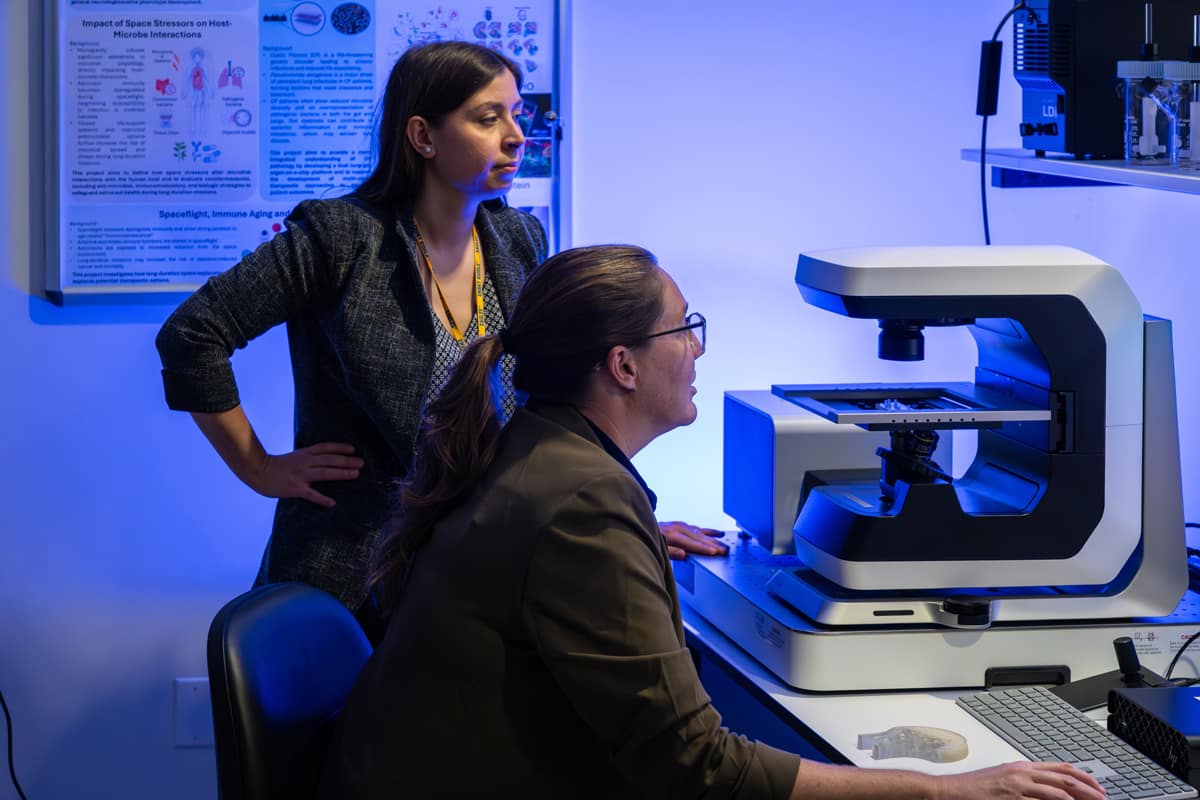
Dr. Emel Sen Kilic and Dr. Cassandra Juran are co-directors of Embry-Riddle’s new SPACE lab, where they are leading their students in advanced science to counter the effects of spaceflight on astronauts — research that could also deliver health benefits for humans here on Earth. Here, they observe the interior structure of space-flown mouse bone visualized with confocal microscopy. (Photo: Embry-Riddle/Daryl Labello)
  • Author
  • Michaela Jarvis
  • Date
  • October 1, 2025
  • Share
  • Facebook
  • Twitter
  • Linkedin

Researchers at Embry-Riddle Aeronautical University are creating “living” models using human tissue that can be experimentally subjected to the damaging conditions of spaceflight to observe how the models are affected at cellular and even molecular levels.
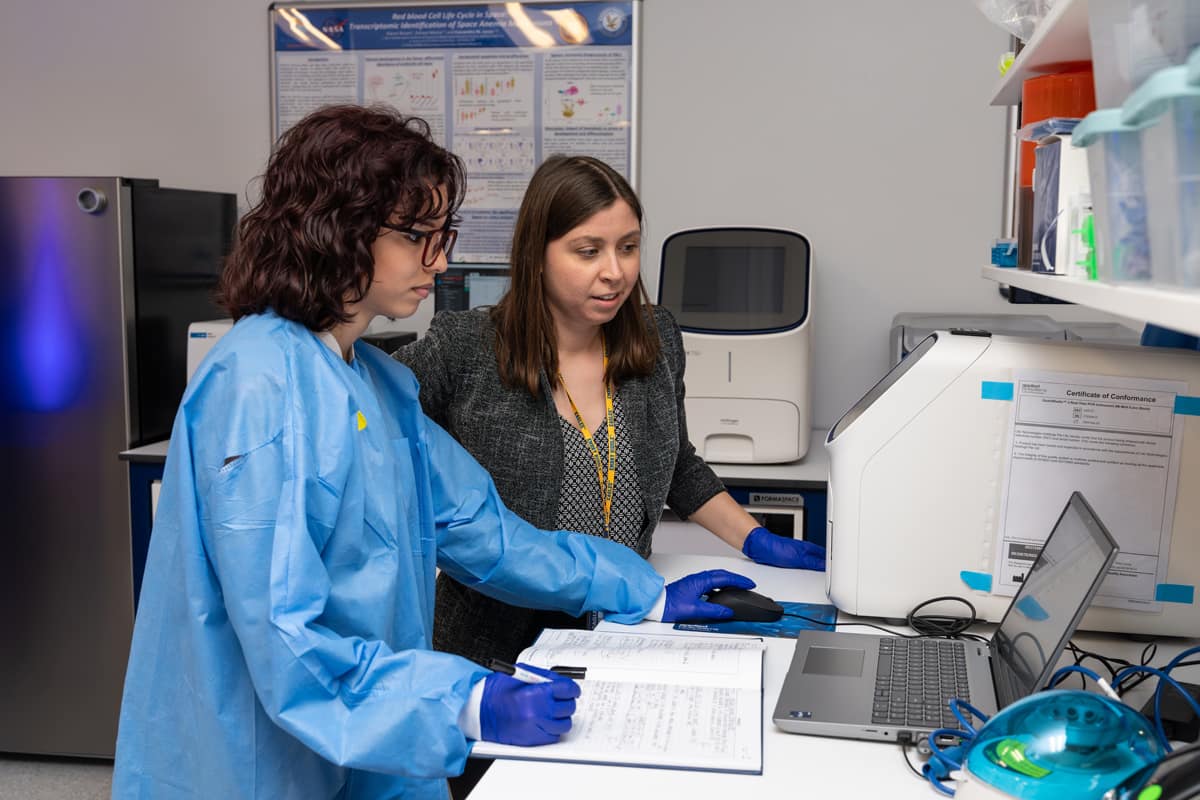
Embry-Riddle professor Dr. Sen Kilic works with a student.

The research is intended to help create therapeutics that could mitigate the harmful health effects caused by spaceflight, or by aging and disease here on Earth.

Such bioengineering is just one of the advanced technologies made possible by Embry-Riddle’s new Space Physiology Antibody and Cellular Engineering (SPACE) Laboratory “to solve spaceflight-related health issues,” said lab co-director Dr. Cassandra Juran.

The SPACE lab, launched in Embry-Riddle’s Department of Human Factors and Behavioral Neurobiology’s Aerospace Physiology Program, is investigating ways to combat degenerative conditions such as bone loss, anemia and central nervous system degradation, as well as to fight off the increased virulence of bacteria and other microbes — all health threats associated with the low-gravity, high-radiation space environment.

Lab co-director Dr. Emel Sen Kilic said she and Juran, both assistant professors in the Human Factors and Behavioral Neurobiology Department, “aim to understand how space environment stressors affect physiological systems, and to use emerging technologies to discover countermeasures,” adding that such interventions can “address challenges both in space and here on Earth.”
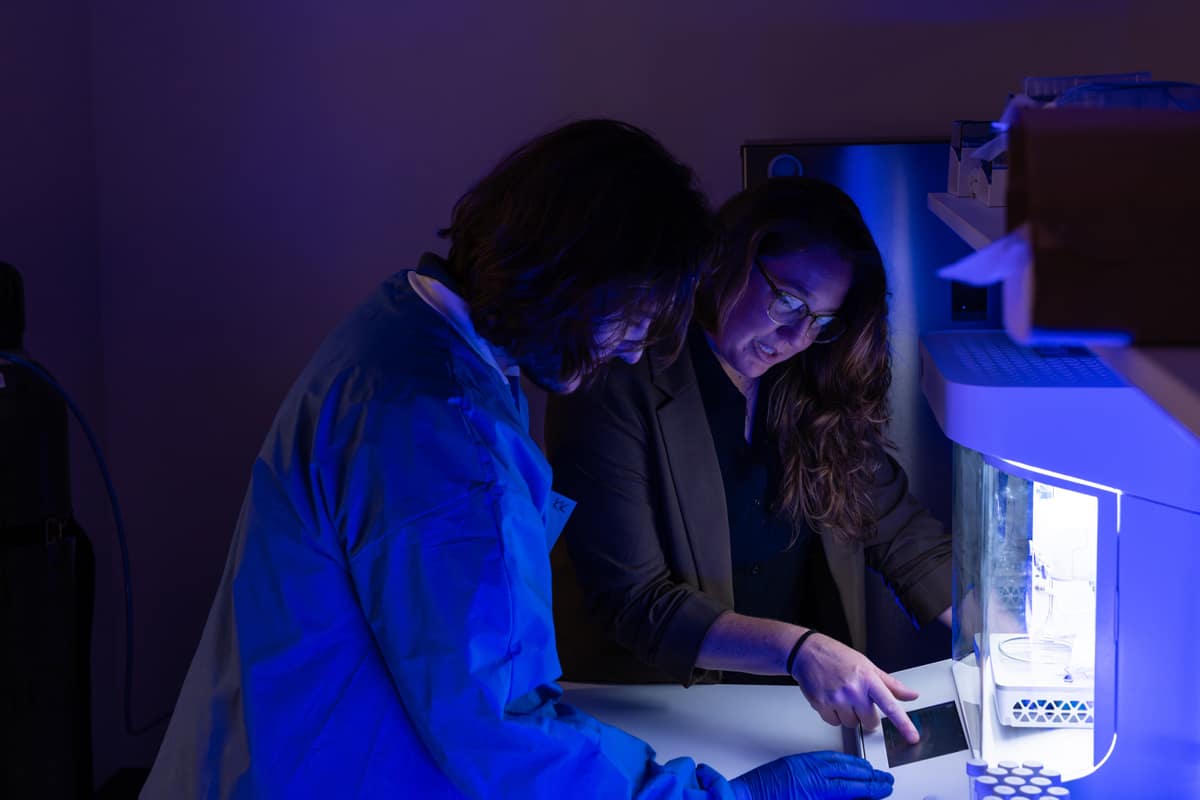
Embry-Riddle teacher shows student how to use a 3D bioprinter.

Working human models can be developed by taking human pluripotent stem cells, meaning stem cells that can form all types of human tissue, and giving them chemical “growth factors” to form specific tissues such as what is found in the brain, bone marrow or lung, Juran explained. The tissues are then incorporated into a “tissue chip,” or a miniature, engineered cell system, which allows researchers to subject the simplified model to simulated spaceflight conditions in the lab to observe its effects. Therapeutics can also be applied to these working models of human biology.

In some cases, such “living” models can be sent into space, Juran said.

“NASA, NASA’s Center for Advancement of Science in Space, and the National Science Foundation have already sent tissue chips and organoid technologies to the International Space Station,” Juran said, adding that she is a principal investigator on a NASA experiment using a brain-liver-gut model subjected to high levels of radiation that researchers hope to send to space. The model is being designed for automated operation for up to six months, a period of automation that would be necessary on the Gateway lunar space transit vehicle, which will remain unoccupied in space between transport missions.

Juran also said that Embry-Riddle’s SPACE lab “works toward supporting” NASA’s AVATAR (A Virtual Astronaut Tissue Analog Response) studies by continuing to advance tissue-chip engineering and multi-organ systems. NASA’s AVATAR mission will send “organ-on-a-chip” devices to orbit the moon on the Artemis II mission.

Customized Therapies for Astronauts

“We can evaluate potential astronaut-on-a-chip personalized medicine for an astronaut’s response to spaceflight before they go to space,” by growing pluripotent stem cells developed from an astronaut’s own cells, said Juran.
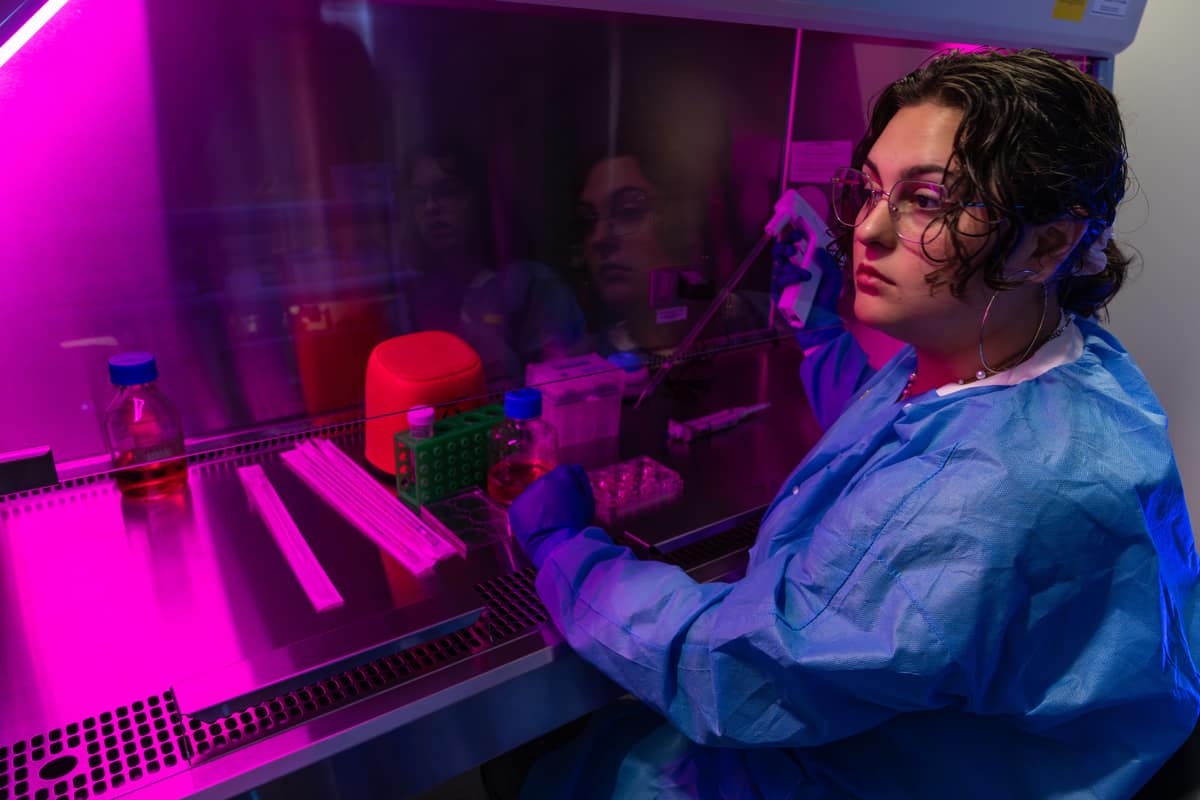
Embry-Riddle student Mariposa Magee uses a biosafety cabinet.

“Then we can pack the most effective medication for flight, the best dietary supplements, the best exercise regime — all preplanned before the individual astronaut ever flies,” she said.

The SPACE lab collaborates with Embry-Riddle’s Omics Lab for Health and Human Performance, which is directed by Dr. Amber Paul, also an assistant professor in the Department of Human Factors and Behavioral Neurobiology.

Paul was hired in 2021 to bring molecular research capability to Embry-Riddle’s nascent Aerospace Physiology program. The program, which was the first of its kind, is a significant broadening of Embry-Riddle’s research scope and student offerings as the aeronautical university marks its centennial anniversary.

Paul’s lab has worked with Weill Cornell Medicine and many other universities and organizations on research into what happens to tissues and organs in the space environment. One of her research projects investigated biological samples from the civilian-crewed Polaris Dawn mission, which launched in September 2024.

More recently, the Omics and SPACE labs hosted visiting researchers who processed blood samples from the FRAM-2 mission, which was the first crewed mission to orbit the Earth’s poles. Details of that research have not yet been released.

Effects on the Immune System and Skeleton

Sen Kilic’s research focuses on the impaired immunity and increased susceptibility to infectious illness that can occur in altered gravity. With the SPACE lab’s advanced capabilities, she aims to engineer antibodies designed to boost immunity and fight off infections. Her work also involves models of human physiology, in this case lung organoids, which she subjects to simulated microgravity.
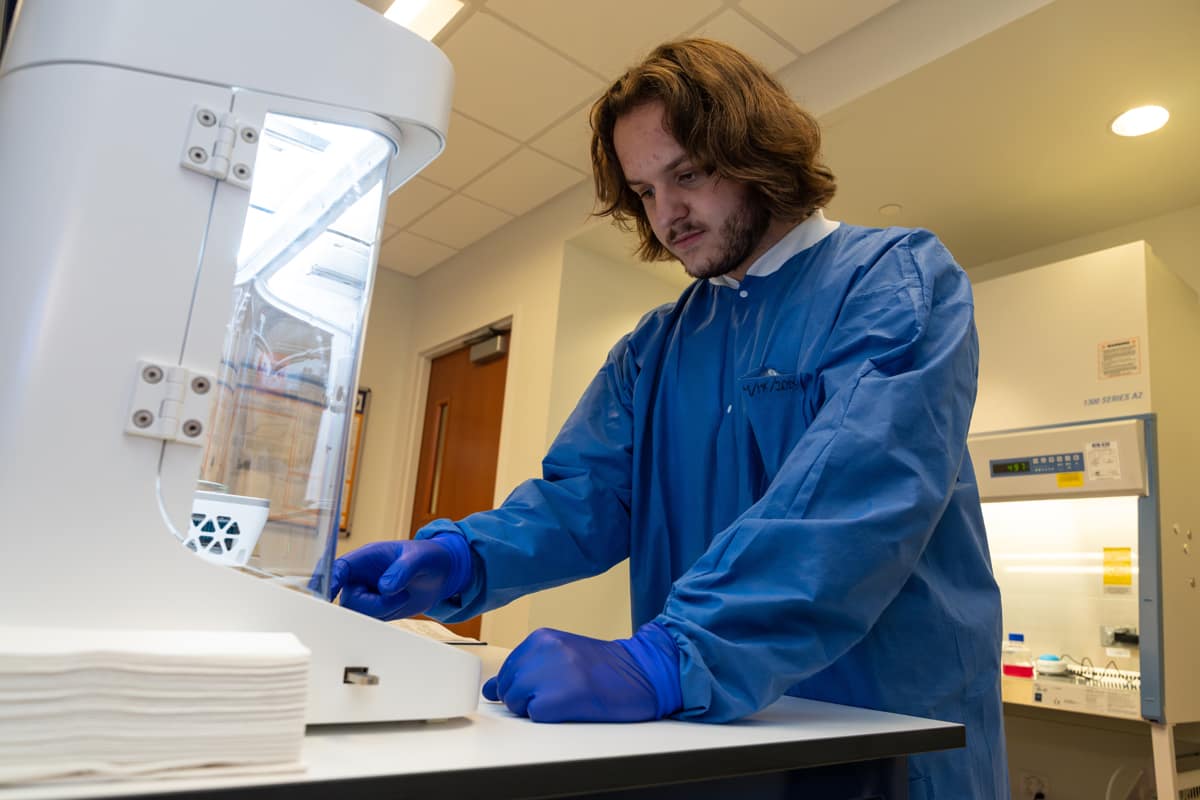
Embry-Riddle studen Kevin Kowalski working in the SPACE lab.

“We’re building platforms that replicate complex lung environments to better understand how infection and immunity behave in altered gravity. I aim to identify vulnerabilities and develop targeted therapeutics,” Sen Kilic said, adding that such research will support astronaut health while also illuminating aging and immune dysfunction on Earth.

Kevin Kowalski, a sophomore in the biomedical engineering track of a Mechanical Engineering major, works in the lab “brewing” previously frozen bone cells from mice in a warmed nutrient-rich medium so they will multiply for use in experiments.

He points out that astronauts’ bones suffer hundreds of microfractures in space that, without intervention, are unable to heal in the microgravity environment. With an interest in muscle and bone regeneration biomedical equipment, Kowalski said he looks forward to working with the lab’s bioprinter, which can print live cells into bone tissue or joint replacement material.

Kowalski said he was amazed at the research that can be done in the SPACE lab, after being introduced to it in a presentation by Juran during a mechanical engineering class.

“I would have never known about any of this,” he said, “and yet it’s some of the most interesting stuff when you think about space travel.”

Kowalski said his interest in biomedical engineering came about at least partly because it is “directly impacting humans and extending people’s lives.”

Yegor Bushnev, a senior majoring in Aerospace Physiology, has planned to attend medical school since before he transferred to Embry-Riddle as a junior. Unclear early on about what he would specialize in as a doctor, he said he liked the challenge of “the plethora of problems that affect the body in space.”  When he learned about Embry-Riddle’s aerospace physiology research, he knew he wanted to participate.

“Coming to Embry-Riddle solidified my love for aerospace medicine,” Bushnev said.
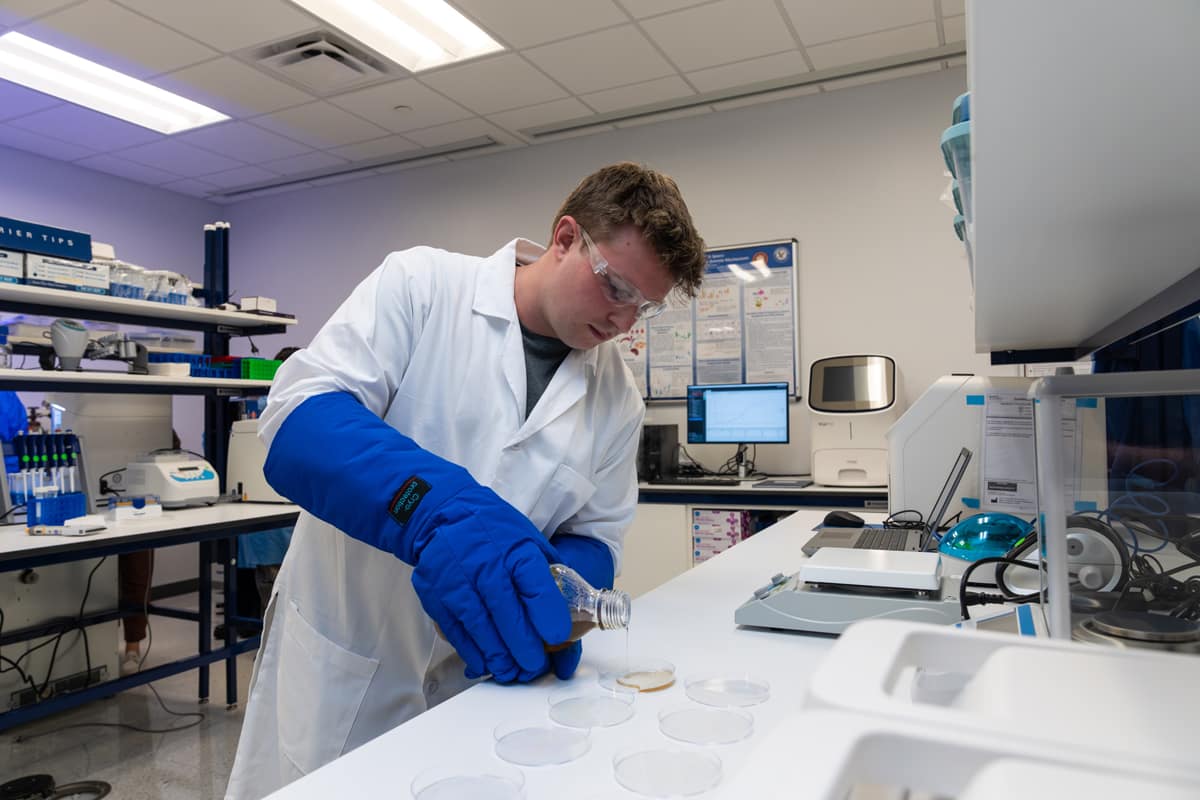
Embry-Riddle student Yegor Bushnev works in the SPACE lab.

In the SPACE lab, Bushnev is experimenting with combining flavonoids with antibiotics in the hope of reducing the amount of antibiotics needed to stop bacterial infection. Flavonoids are natural, plant-derived compounds found in foods and drinks such as apples, berries, chocolate and tea, and many of the compounds have been found to have antioxidant and antibacterial properties.

“We can use them to potentially combat anti-microbial resistance,” said Bushnev.

Such a technique could be helpful in space, where bacteria can become more virulent, but also here on Earth, where drug resistance has also developed.

Bushnev said one of the requirements of the SPACE lab is that the research “can both help astronauts in space and science on Earth.”

The work Bushnev is doing allows him to learn about space medicine as an undergraduate, whereas most doctors who specialize in the field do so only after their residencies, he said.

Both Juran and Sen Kilic are proud to point out the opportunities offered through the SPACE lab to Embry-Riddle students. Juran refers to the students as “uniquely qualified” for having had a chance to link fundamental biology to aviation and aerospace fields.”

“Students learn molecular biology techniques and engage in research relevant to both spaceflight and human disease,” said Sen Kilic. “They develop interdisciplinary skills that are valuable in biotech, biomedical research and aerospace health.”

Related News

A collage of four Embry-Riddle students named NSF Graduate Fellows.
Four Embry-Riddle Graduates Awarded Prestigious NSF Graduate Research Fellowships
June 26, 2026
Embry-Riddle faculty members Drs. Hever Moncayo and Elisabeth Hope Murray.
Two Embry-Riddle Faculty Members Earn Fulbright Awards for International Projects
June 24, 2026
Woman stands in front of the Embry-Riddle Centennial plane.
Student Leader at Embry-Riddle Asia Sees ‘So Much Runway Ahead’ After Centennial Celebration
June 23, 2026
A group of students pose in front of the Prescott Campus.
From Campus to Cosmos: NASA Selects Two Embry-Riddle Teams to Present at National Competition
June 22, 2026
Explore More News

Take the Next Steps

  • Get Info
  • Visit
  • Apply
Embry-Riddle logo

Daytona Beach Campus
1 Aerospace Boulevard
Daytona Beach, FL 32114-3900 

Prescott Campus
3700 Willow Creek Road
Prescott, AZ 86301-3720 

Worldwide & Online Campus
1 Aerospace Boulevard
Daytona Beach, FL 32114-3900 

Asia Campus
70 Seletar Aerospace View; #02-01
Air 7 Asia Building
Singapore, 797564 

  • Parents and Family
  • Faculty Directory
  • Alumni
  • Giving
  • Scholarly Commons
  • Course Catalog
  • News and Stories
  • Accreditation
  • Consumer Information
  • Financial Disclosures
  • Institutional Research
  • Working at Embry-Riddle
Log in to ERNIE
© Embry‑Riddle Aeronautical University. All Rights Reserved.
  • Accessibility
  • Nondiscrimination & Title IX
  • Privacy Statement & GDPR
  • Terms of Use
  • Web Feedback
  • Technology Support
This website uses cookies and similar tools and technologies to understand visitors’ experiences. By continuing to use this website, you consent to Embry-Riddle Aeronautical University’s use of cookies and similar technologies, in accordance with the Embry-Riddle Privacy Statement.