Four Eagles Tapped for AIAA’s 30/30 Class Recognizing Young Aerospace Leaders
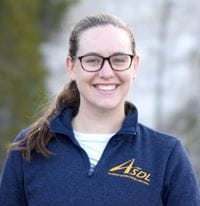
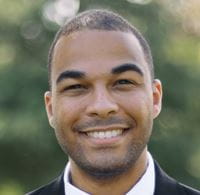
From left, Embry-Riddle Ph.D. candidate Sang-A Lee and alumni Taylor Fazzini, Kerianne Hobbs and Chad Stearns. They have been recognized as 30/30 honorees by the American Institute of Aeronautics and Astronautics.
The American Institute of Aeronautics and Astronautics (AIAA) has named an Embry-Riddle doctoral candidate and three university alumni to its inaugural 30/30 class, which recognizes young professionals whose work is advancing aerospace and shaping its future.
In its announcement of the 30/30 Recognition Program recipients this week, AIAA, one of the world’s most prestigious aerospace professional societies, said the honorees were selected for the impact of their work, including “informing research, influencing innovation and inspiring the next generation of scientists and engineers.”
Among the aerospace leaders included in the 30-member class are Ph.D. candidate Sang-A Lee and alumni Taylor Fazzini, Kerianne Hobbs and Chad Stearns.
“Embry-Riddle Aeronautical University is proud to have four Eagles named to AIAA’s inaugural 30/30 class,” said Embry-Riddle President P. Barry Butler, Ph.D. “Their leadership, talent, innovation and vision will define the future of aerospace.”
To be recognized by the 30/30 program, honorees must be in their 30s or younger, according to AIAA, which is the world’s largest aerospace technical society, with nearly 30,000 members in 91 countries.
“This program has the weight and prestige of AIAA’s proven record of excellence behind it as we recognize these standouts in aerospace,” said AIAA CEO Clay Mowry in the announcement. “30/30 builds a visible leadership pipeline while celebrating the energy and ingenuity of aerospace’s younger generation. We are thrilled to recognize our profession’s future leaders and pioneers.”
Aviation Scholar Honored as 30/30 Recipient
Sang-A Lee
Lee, who earned her Master of Science in Aeronautics from Embry-Riddle before embarking on her Ph.D. in Aviation at the university, has worked on multiple FAA-sponsored projects focused on uncrewed aircraft systems (UAS), including traffic analysis, collision risk, remote identification and integration into the National Airspace System. She has also researched how fear and trust influence the aviation maintenance workplace and could affect aviation safety.
She was recognized in the Aircraft Technology, Integration and Operations category.
Described in the announcement by AIAA as “one of the leading emerging scholars in aviation safety and [UAS] research,” Lee, 28, said the AIAA distinction has made her appreciate her growth as a researcher. Lee has 17 peer-reviewed publications to her name, including several as first author. As a researcher and manager of the Applied Aerospace Research and Development Lab, she has led multiple interdisciplinary research teams.
One of the projects she worked on was an FAA-sponsored study of nationwide drone traffic. An analysis of the data by Lee and the research team showed hot spots where the risk of a mid-air collision between a drone and crewed aircraft could occur. For instance, the report documented drones flying above the 400-foot limit established by the FAA. According to Lee, the research could “enhance the safety framework” of drone operation and help define regulatory priorities. Lee presented that research to FAA officials, industry leaders, military executives and academic audiences.
Having worked with Lee for four years, Dr. Dothang Truong, professor and associate dean of the School of Graduate Studies, said that he has seen firsthand Lee’s ability to take on complex research questions, work effectively with others and connect academic research with real challenges facing the aviation industry.
“What stands out to me about Sang-A is not only her talent and dedication, but also her curiosity, initiative and genuine desire to make aviation better and safer,” Truong said.
AIAA said in its selection of Lee that she “is shaping the future of aviation safety and advanced air mobility through research that is both scientifically rigorous and operationally relevant.”
Three Alumni Designated as 30/30 Honorees
Taylor Fazzini
Fazzini, who earned her Bachelor of Science in Aerospace Engineering from Embry-Riddle in 2017 and is a modeling and simulation engineer at Northrop Grumman, was recognized in the Aerospace Design and Structures Category.
In the announcement of her selection, AIAA cited her strong advocacy for integrating mission engineering and operations analysis into the traditional aerospace disciplines to help push the industry towards design approaches that connect aircraft capability, operational effectiveness and real-world mission outcomes. This includes her doctoral work, which couples aircraft design and operations analysis through emerging digital tools. Fazzini has also volunteered across a number of AIAA groups and committees.
AIAA said that Fazzini “is pushing the industry toward revolutionary new ways to design while also making the industry more welcoming and a better place to work.”
Kerianne Hobbs
Described by AIAA as a “rare force in aerospace,” Hobbs, senior engineering specialist at The Aerospace Corporation, was recognized as an emerging leader in the Information Systems category. The announcement of Hobbs’ selection cited her impactful career spanning the air and space domains, where she bridges fundamental theory and real-world flight testing.
At the Air Force Research Laboratory, Hobbs led the Safe Trusted Autonomy for Responsible Spacecraft program. She also contributed to the Automatic Ground Collision Avoidance System (Auto-GCAS), which won the 2018 Collier Trophy for preventing 13 pilot fatalities, and she pioneered the Space Trusted Autonomy Readiness Levels.
Now at The Aerospace Corporation, Hobbs is advancing the technology readiness level of safe, machine-learning-based autonomous control. Hobbs has authored more than 70 technical publications, including a 2025 AIAA white paper on “Autonomous Aerospace Systems R&D Priorities,” which AIAA cited as the “roadmap for the future of safe autonomy.”
Hobbs, who earned her Bachelor of Science in Aerospace Engineering in 2011 from Embry-Riddle and holds a doctorate from Georgia Institute of Technology, also serves on 11 graduate committees at seven universities, where she has inspired multiple students to pursue their Ph.D. in aerospace engineering.
“Hobbs exemplifies the future leader who is defining the safety-critical standards that will govern autonomous flight for decades to come,” AIAA said.
Chad Stearns
Stearns, who serves as program management manager and chief of staff for an executive fleet program at Boeing, was recognized as an emerging aerospace leader in the Business and Communications category. The announcement of his selection as a 30/30 honoree cited his “demonstrated rapid, progressive leadership” across high-stakes defense platforms, including E-7 International, Phantom Works and VVIP executive fleet programs.
“He seamlessly manages program integration and administrative operations for portfolios worth hundreds of millions of dollars,” and “his impact on the field lies in his ability to steer these massive, critical defense assets with absolute precision,” the announcement said.
According to AIAA, Stearns is also “leaving his mark on the aviation industry by actively building its future,” including “dedicating his time to teaching and mentoring the next generation of aviation professionals.”
“At just 29 years old, Stearns has already established a profound legacy of operational excellence and workforce empowerment, shaping both today’s defense capabilities and tomorrow’s aviation leaders,” AIAA said.