- Category
- Engineering
- Date
- June 26, 2026
For the second consecutive year, four Embry-Riddle Aeronautical University graduates have earned National Science Foundation (NSF) Graduate Research Fellowships, matching the university’s record for the most recipients selected in a single year.
The NSF program, which supports outstanding graduate students pursuing research in science, technology, engineering and math (STEM) fields, selected three Aerospace Engineering graduates — Anthony Damon, Jasmine Nakladov and Sungje Park — and Astronomy graduate Megan Peatt.
The award letter to recipients stated that they are joining a “group of distinguished scholars who have excelled in careers in STEM research, innovation and education,” adding that the fellowship is “a significant national accomplishment that highlights your potential.”
Fellows receive $37,000 annually for three years, plus $16,000 yearly to cover tuition and fees.
Jennifer Schaeffer, director of Embry-Riddle’s Office of Nationally Competitive Awards and Scholar Development, said the fellowship program looks for the nation’s most promising and accomplished researchers.
“Having four recipients for a second consecutive year is an exciting reflection of the exceptional talent of our students, the impact of faculty mentorship, and Embry-Riddle’s ongoing commitment to advancing innovative research and preparing the next generation of leaders in aviation and aerospace,” she said.
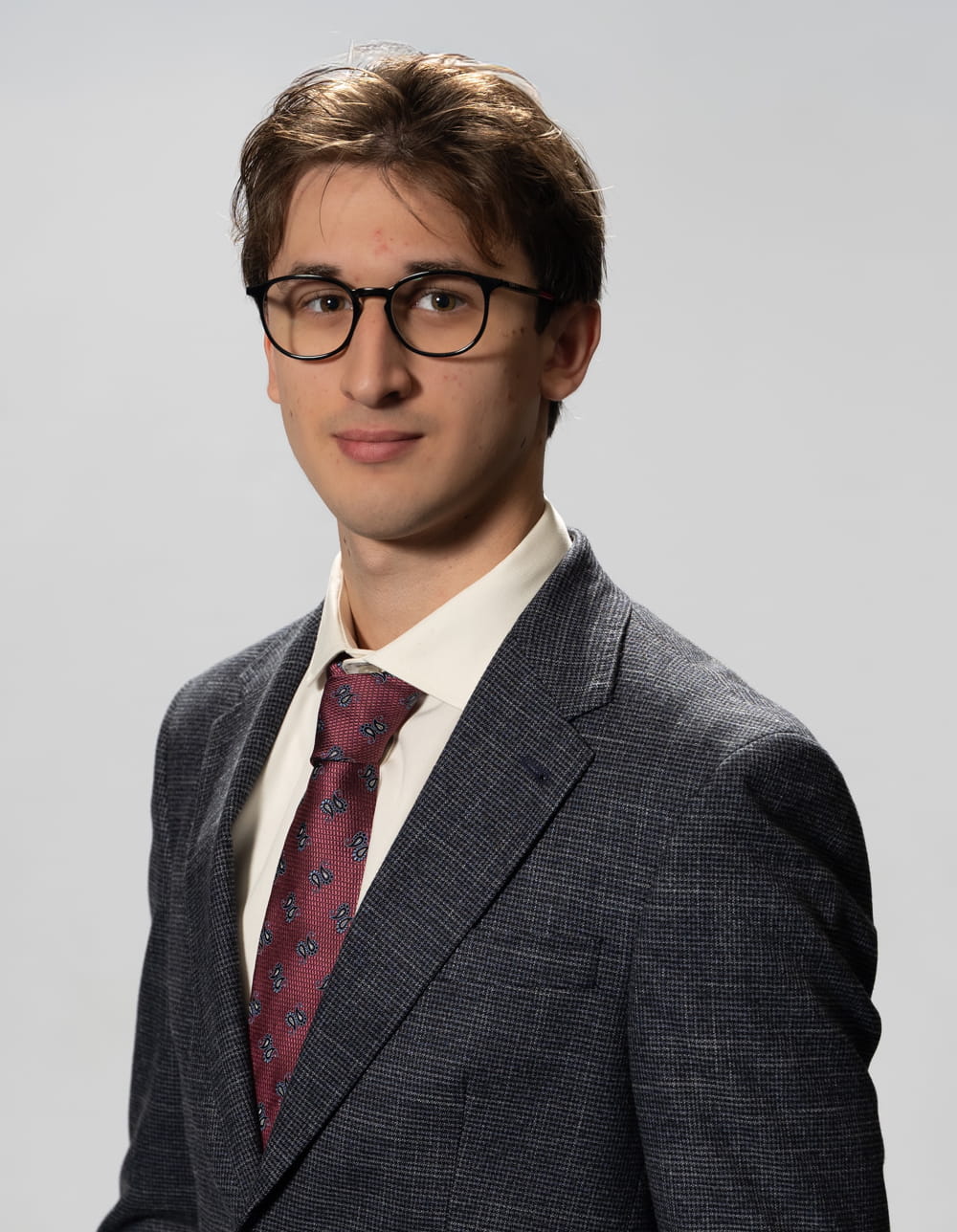
Anthony Damon
A Ph.D. student in Mechanical Engineering at Embry-Riddle, Damon is working on the design of a device aimed at improving survival rates and quality of life among young adults who were born with only one heart ventricle.
“I got involved in this research because I recognized its importance and broad societal impact,” said Damon. "I was particularly interested in the pragmatic engineering approach being taken to help address this problem.”
Damon, who earned his bachelor's degree in Aerospace Engineering at Embry-Riddle, will continue to collaborate with Dr. Eduardo Divo, professor of Mechanical Engineering and vice provost for faculty affairs, and Dr. Arka Das, assistant professor of Mechanical Engineering, in Embry-Riddle’s Cardiovascular Engineering Research Lab.
“I feel a strong sense of gratitude, particularly in recognition of the mentorship and support from my advisors and research team that made this achievement possible,” he said, adding that the award “provided both validation of the work completed so far and motivation to continue pursuing meaningful contributions in this field.”
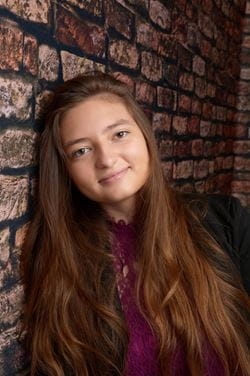
Jasmine Nakladov
An Embry-Riddle Ph.D. student in Aerospace Engineering, Nakladov is working on spacecraft guidance, navigation and control.
“In layman’s terms, I will be teaching a spacecraft how it needs to move to accomplish its mission objective, and how to actually execute that movement,” she said.
The system she is working on will allow satellite servicing in the area between Earth and the moon, she said, creating “a ‘mechanic’ spacecraft that can repair other satellites on the go.” The technology could reduce mission costs and the need to send astronauts into risky environments, said Nakladov, who has been working since January 2025 with Dr. Cagri Kilic, assistant professor of Aerospace Engineering, in his Space Robotics and Generative Estimation Laboratory.
“He has played a major role in shaping my research direction and supporting my growth as a researcher,” she said, adding that the lab has also been instrumental to her work, providing her experience with advanced methods, as well as demonstrating “how research can be strengthened through the collaboration, discussion and mentorship between faculty, graduate students and undergraduate researchers.”
Nakladov said that when she heard she had been selected for an NSF fellowship, she thought they had made a mistake, “not because I doubted the quality of my research plan or application, but because I knew how competitive the fellowship was and felt incredibly honored to have been selected.”
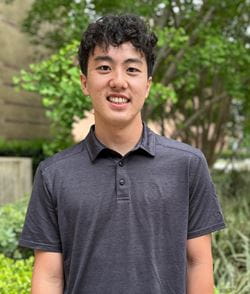
Sungje Park
Having graduated from Embry-Riddle in 2025 with a bachelor’s degree in Aerospace Engineering, Park is now earning a Ph.D. in electrical engineering at the University of Southern California in Los Angeles. His research uses machine learning to solve mathematical equations too complex to be calculated with traditional computational methods. These equations have a wide range of applications, including improving weather and earthquake predictions, as well as advancing superconductors and medical imaging.
“A robust and efficient method” for solving such equations, Park wrote in his research plan, “stands to improve our understanding of the world and catalyze scientific breakthroughs across many fields, benefiting both the STEM community and society at large.”
Park cited three mentors at Embry-Riddle: Dr. Leitao Chen, assistant professor of Mechanical Engineering; Dr. Vladimir Golubev, professor of Aerospace Engineering; and Dr. Ilteris Demirkiran, professor of Electrical Engineering and Computer Science. He credited Demirkiran with helping guide his academic trajectory and solidify his decision to pursue graduate studies. The fellowship will allow Park to pursue foundational questions in scientific machine learning.
“It supports open, interdisciplinary research across machine learning, control and dynamical systems, all of which are essential for long-term scientific and societal impact,” he said.
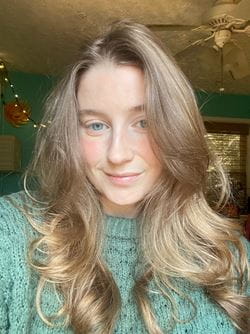
Megan Peatt
Peatt graduated from Embry-Riddle with a bachelor’s degree in Astronomy in 2023. Now in the astronomy Ph.D. program at Georgia State University in Atlanta, Peatt is working on pushing the boundaries of high-resolution imaging techniques for astronomy.
Peatt’s research, which earlier focused on spherical bodies in the solar system, such as Jupiter’s moon Io, has since shifted to objects outside of the solar system. She is particularly interested in “young” stellar objects, or stellar objects that have formed relatively recently, and advanced techniques to create imaging of the objects to explore their makeup and origins.
Peatt’s mentor at Embry-Riddle, Dr. Noel Richardson, associate professor in the Physics and Astronomy Department, helped her to publish two papers as first author in the peer-reviewed Astrophysical Journal before she began her doctoral program. One paper explained how stardust was formed by the near-collision of two hotter-than-the-sun Wolf-Rayet stars.
The fellowship “means that I can focus much more on research,” Peatt said.
After she finishes her doctoral degree, Peatt said she would like to continue as a researcher at “somewhere like the Space Telescope Science Institute” in Baltimore, or at a national lab “where I’m able to wholly pursue my interests.”
Related News