
Degree and Program Directory
We offer a comprehensive collection of academic programs focused on aviation, business, computers and technology, engineering, security, intelligence and space. Use the directory below to explore by campus, degree level or field of study.
Results
Displaying 42 Results
A
Examine the aviation industry through operations, safety, maintenance and air transportation systems. Develop technical understanding and applied problem solving that supports advancement across airports, flight organizations and aerospace networks.

Where operational insight meets data interpretation. Study performance modeling, forecasting and analytical tools to enhance planning, efficiency and strategic outcomes in airlines, airports and aerospace organizations.

Explore flight and space systems through aerodynamics, propulsion, structures and controls. Apply engineering methods in labs, design projects that advance aircraft performance and contribute to the future of space exploration.

Where business systems connect with global air travel operations. Study scheduling, revenue, safety oversight and service quality to support efficient and passenger-centered airline management.

Explore airport operations and emerging air mobility systems through logistics, infrastructure design and sustainability planning. Prepare to contribute to efficient and future-focused air transportation networks.

Where innovation must meet safety and regulatory standards. Study certification, compliance and reliability evaluation to ensure aircraft and space systems perform dependably throughout their operational life.

Study the principles that connect flight operations, safety, management and technology across the aviation industry. You’ll analyze systems and strategies that shape air transport and prepare to lead advancements in an evolving global aerospace environment.

Explore sustainability through the lens of aviation and space operations. Examine environmental impacts, energy use and system design to develop strategies that balance technological progress with global responsibility and long-term operational resilience.

Examine the impact of risk on aviation organizations at all levels, from daily operations to long-term strategy. Learn how to identify and mitigate threats, enhance organizational resilience, utilize business intelligence and cybersecurity, support sustainability initiatives, and make informed decisions that enable organizations to navigate an increasingly complex aviation landscape.

Where aviation operations meet digital protection. Study how aircraft systems, communication networks and air traffic environments can be secured. You’ll learn methods for assessing vulnerabilities and supporting reliable, protected aviation systems.

Examine how financial decisions shape airlines and aerospace operations. You’ll learn how organizations evaluate costs, manage resources and make strategic choices across the global aviation market.

Develop the knowledge required to maintain and manage aircraft systems. Study airframe and powerplant technology along with maintenance planning and safety practices, and apply technical training to support reliable, efficient and compliant aviation operations.

Study how organizations identify hazards and prevent incidents across aviation operations. Examine system safety, human performance and investigation methods, and learn to assess risk and apply safety principles that support reliable flight and operational continuity.

B
Study how organizations operate and make decisions. Explore accounting, management, marketing and strategic planning while learning how businesses allocate resources, support teams and respond to changing markets across industries, including aerospace.

Examine business principles through the structure of aviation organizations. You’ll study budgeting, planning, operations and market strategies used by airlines, airports and aviation service providers, preparing you to support leadership and organizational coordination.

Focus on how business and operational systems function within air transportation. Learn how scheduling, service delivery, finance and workforce management connect to aviation outcomes.

C
Study how infrastructure is planned, designed and built. Explore structural analysis, construction methods and environmental considerations. You’ll learn how engineering decisions shape transportation systems, public works and community development.
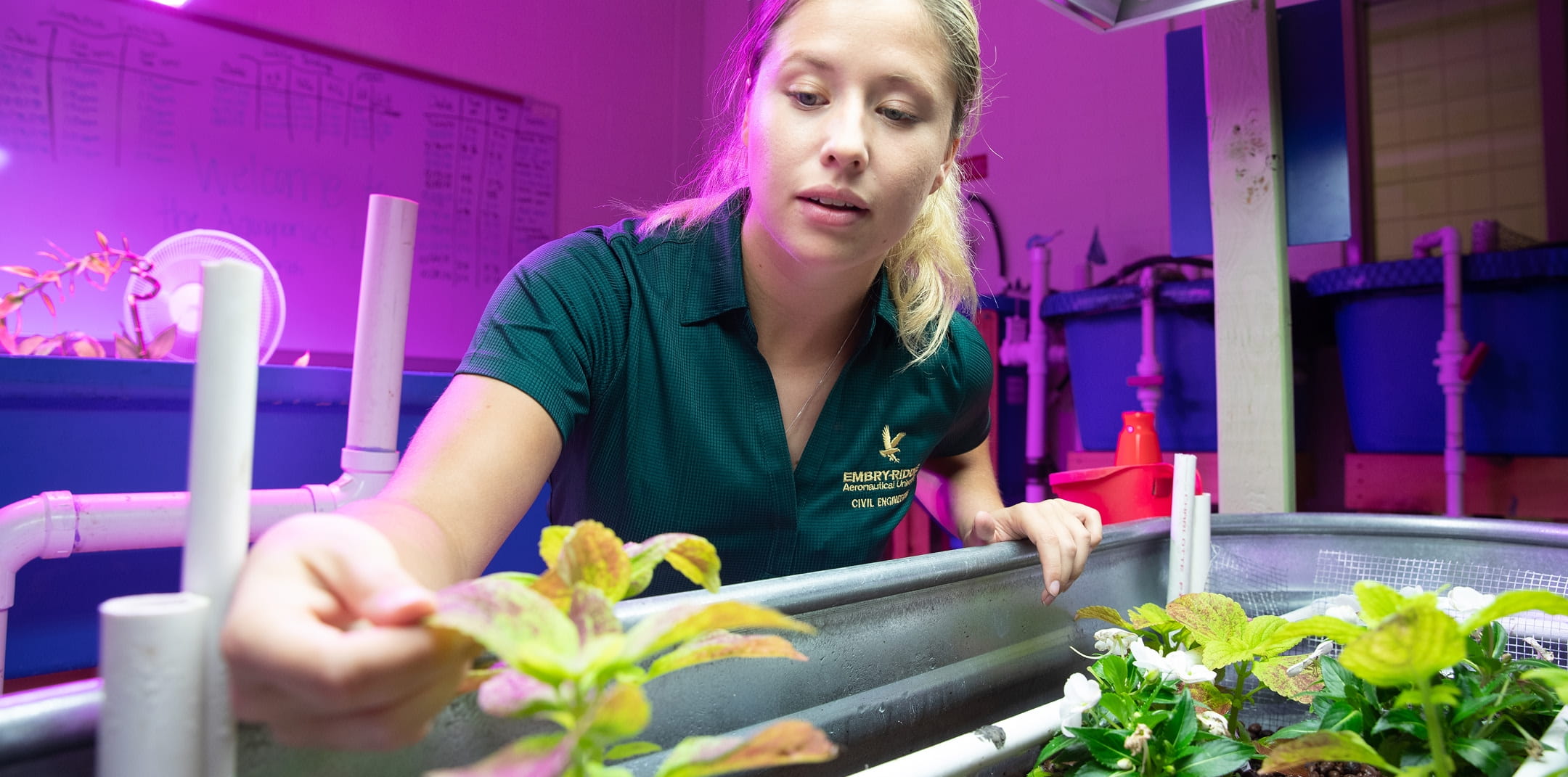
Delve into computing theory, algorithms and software development in a high-tech environment. You’ll build foundational programming skills, tackle challenging problems and develop solutions that power aerospace, defense and global technology industries.

Understand how digital threats affect aviation, aerospace and national security. You’ll study network defense, threat analysis and system vulnerabilities to support safe, resilient operations across connected systems and infrastructure.

D
Translate complex datasets into actionable insight. You’ll develop expertise in programming, statistics and visualization to extract meaning from information and support evidence-based decisions across business, engineering and aviation sectors.

E
Bridge electrical systems and computing design at an advanced level. You’ll explore systems-level integration, signal processing and hardware/software interplay to lead design efforts in aerospace, defense and technology enterprises.

Focus on modern fire and emergency response systems. You’ll examine leadership, risk reduction and operational planning through aviation and fire service perspectives, earning credentials recognized by national fire and emergency management organizations.

Combine technical expertise with organizational strategy. You’ll learn how to plan projects, manage teams and optimize engineering systems while balancing cost, schedule and performance within aerospace and technology environments.

Explore the physical laws that drive innovation in flight and space systems. Study optics, quantum mechanics and instrumentation, applying physics to research and development projects that advance aerospace and technology.

H
Study how people interact with technology, systems and environments. Apply psychology, engineering and design to improve safety, performance and usability in complex systems.

Where global stability meets community preparedness. Examine how nations and organizations respond to conflict, disaster and environmental change. You’ll learn to design programs that build resilience and reduce vulnerability in complex systems.

L
Focus on the skills that inspire and guide others. Study communication, ethics and team development to strengthen your ability to lead with confidence and clarity in aviation, business and public service environments.

Explore how goods and resources move through global systems. Study forecasting, transportation and inventory management to design supply chains that meet the needs of aviation, aerospace and international commerce.

M
Study how organizations plan, coordinate and achieve results. You’ll learn about leadership, finance and operations while gaining insight into how people, systems and strategy combine to drive performance.

Where business insight meets technology solutions. Study databases, analytics and cybersecurity to understand how information systems support smarter, faster and more secure decision making in modern organizations.

Build advanced mechanical engineering expertise to solve real-world challenges in energy, transportation, automation and biomechanical systems. Through hands-on learning and applied research, you’ll explore areas such as high-performance vehicles, robotics and autonomous systems, and thermal-fluid sciences.

O
Explore how organizations build safer workplaces. You’ll study hazard recognition, compliance and leadership while learning how to create safety programs that reduce risk and strengthen organizational performance.

P
Where planning meets execution. Study budgeting, scheduling and leadership strategies that help teams complete complex projects on time and within scope across aviation, engineering and business environments.

S
Explore how science and technology improve safety. You’ll learn about accident analysis, human factors and risk assessment to help organizations make data-driven decisions that protect people and operations.

Where national security meets data analysis. Study intelligence collection, cyber operations and threat assessment to prepare for work in government, defense or private-sector security fields.

Study how complex software systems are designed, built and maintained. You’ll gain hands-on experience developing secure, high-performance applications that support aviation, aerospace and technology industries.

Where flight meets the frontier. Study orbital mechanics, mission design and space systems management. You’ll learn how spacecraft are planned, launched and supported and how operations teams coordinate payloads, communications and safety for government, commercial and research missions.

Where engineering and space science connect. Study orbital mechanics, propulsion, communications and systems integration. You’ll learn how satellites and spacecraft are designed, tested and operated across government, commercial and research sectors.

Focus on how complex projects are planned, built and maintained. Study modeling, integration and process improvement to understand how large engineering systems achieve reliability, efficiency and mission success.

U
Examine the growing role of automation in air, land and sea operations. You’ll study systems design, communication networks and mission planning to prepare for work in industries adopting uncrewed and intelligent technologies.

Focus on the engineering that powers next-generation autonomous vehicles. Study control systems, sensor integration and mission reliability to design technologies that expand how humans and machines work together.
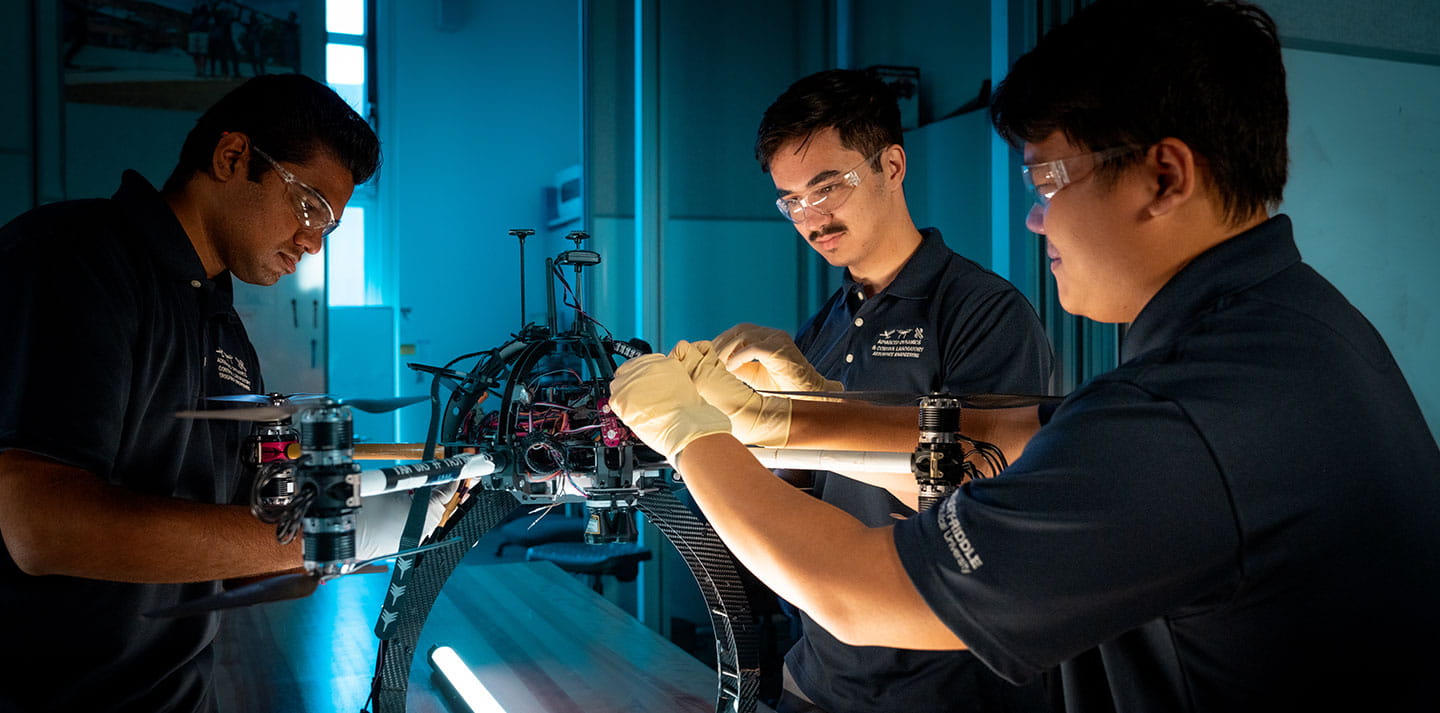
Study the systems and software that guide uncrewed operations. You’ll explore autonomy, human-machine teaming and system design to prepare for work in aviation, defense and research environments.
